Meal Planning: What it is, why you should, and how to do it


A very popular topic in food and cooking related blogs and forums is meal planning. What is it, how can you do it, is it worth the time? I’ll start by saying that this article is going to be just full of suggestions, tips and tools. Everyone’s situation is different, so I cannot write an article that will work for every single person who might read it. I don’t know if you’re single, vegetarian, diabetic, have three kids, on food stamps, or a combination of all those things. I will however try my best to give you general tips with more specific scnearios as we go along.

Feel free to email me at BudgetEpicurean (at) gmail (dot) com if you have a specific question, or any question really.

As featured on Stacking Benjamin’s podcast:
Meal Planning Made Easy

What is Meal Planning?


Meal planning is simply that: planning your meals in advance. The period of planning time may vary, for some you don’t plan dinner until it is 7pm and you’re starving. Some people plan per week, others plan per month. It is up to you how frequently you can and want to think about your upcoming meals.

The most common way to go about planning meals is to use a spreadsheet or pre-made printout. If you are an experienced cook or have adequate food in your home already, you could simply list the day and the meal(s) you intend to make. There are abundant options of formats available for free online, and there are also yearly or monthly services which will plan your meals for you. Most paid services will also create a grocery shopping list to go with the meal plan.

But why pay for a service you can do for yourself in 20 minutes on one weeknight? I am after all, the Budget Epicurean!

Why should I bother?


Well, if it really seems like too much trouble, you don’t need to read any further. Or pay for someone to do it for you. But meal planning can save you the loss of significant money in the form of food waste.

Americans waste billions of pounds of food per year, up to 40% of the food that households purchase!! This is due mostly to bad planning. You make too much and no one likes the leftovers. Or you cook, then go out, then cook again, and it goes bad before you can rotate the leftovers. Or you miss an expiration date and the goods expire. 

By planning your meals in advance, you are creating several opportunities to save money. You are also bettering your health. This is what planning meals and cooking at home does for you:

  • You can feature weekly sale items in your meals, saving you $$
  • You can buy in bulk for similar meals, saving you $$
  • You cut down on food waste, saving $$ and landfill space
  • You control portion sizes, helping your health
  • You control what ingredients go in it, meaning you can ‘have it your way’
  • You determine what meals to make, avoiding boredom
  • No preservatives or extra chemicals are added, boosting your health

How to make a meal plan

A typical week’s meal plan for me.

As stated above, there are plenty of free and paid templates online. But the simplest way to do it is make it on your own. If you are super new to cooking in general, take a gander at Real Simple’s “Cooking Basics” checklist. Then follow these steps:

Step 1: Make a list of meals you/your family likes to eat, and meals you know how to make.

Step 2: Draw out a grid for the week. Seven columns, and 3-5 rows for individual meals and snacks.

Step 3: Start filling in spaces you know. For example, if you have kids, you can fill in the “lunch” squares with “school” if they buy a lunch, or “PB&J + apple + string cheese + juice” if you make their lunches. Feel free to add in things like “Eat out” or “Leftovers buffet” for nights you know will be busy.

Step 4: Check your local grocery ads. Figure out what is on sale that could go into meals you would like to make. For example, if romaine, tomatoes, chicken, and salad dressings are on sale, you should schedule in a grilled chicken salad for dinner and/or lunch a few days this week.

Step 5: Once you have figured out what meals you are making, do a quick check of your cupboards and refrigerator. Write down any items you need to buy at the store. This is your week’s grocery list.

Step 6: Take your list to the store, and buy only what is on the list. Don’t let yourself be lured by that juicy looking steak or the whole rotisserie chicken, unless it was on your list. This will take willpower and practice, but will be a huge money-saver.

Step 7: Post your week’s (or month’s) meal plan where you will see it, maybe on the refrigerator door. Then simply follow it each day. 

Grocery cart

The planning process should take you only 20-30 minutes on a weekend or weeknight, and a 30 minute trip to the store. Once you get the hang of a basic meal plan, you can get much more detailed. For example, you can plan to make large amounts of a basic ingredient, like beans or rice, on the weekend. Then throughout the week take the portion you need for that day’s dinner out. Or have notes to yourself to defrost the pork chops you will cook Wednesday on Tuesday night.

Don’t forget to add in little things like snacks, desserts, and occasional days out so you don’t get ‘frugal fatigue’. 

For more information & ideas:
The CDC has a great article on cutting costs and calories by planning meals at home as well as one the go.
EatThisMuch has an awesome calorie calculator/meal planner that allows you to input a calorie amount, and it automatically gives you three meals (or more depending on what you choose) with that amount. You can change out meals you don’t like, or add more.
Cooking Light also has a weekly meal planner which allows you to choose recipes from their archives and drag & drop to create your week.



Do you plan meals in advance?


Cinco de Mayo drink: Margarita Spritzer

Happy Cinco de Mayo!


 Most people will be celebrating early since the 5th of May is a Monday, so I figured I’d post this early as well. 

As with most holidays, I always wonder how they started and what they really mean. As I dug into the history of this one, I was surprised and learned quite a bit. 

Most people tend to think this holiday commemorates Mexico’s Independence Day, but that is not true. Mexico’s independence day is actually September 16th, not May 5th. The 5th of May is the day a Mexican city won a huge battle with the French. For a great 2-minute video, check out the History Channel. 

In 1861, Mexico was so far in debt to so many countries that the president Benito Juarez declared that they could not pay back any countries they owed. This made the French super mad, and they invaded. Good cheese isn’t cheap, you know.

So the French rampaged across Mexico, winning battle after battle. Then on May 5, 1862, in the state of Puebla, the Mexicans finally defeated the French, despite being less prepared, not well trained or equipped, and outnumbered 2:1 on the battlefield!

The French quickly regrouped and eventually took Mexico City, but that euphoria of an unlikely victory tasted sweet. Just like a cold margarita. The victory was so inspiring, American generals began using it as “inspiration for the Union struggle in the Civil War”. (*All quotes from the History Channel video mentioned above)

Mexican-Americans, and Americans of all kind, took to remembering that battle every May 5th with food, drinks, parades, dancing, game, and bullfights (from About.com “Cinco de Mayo – the Basics“). Over time, the holiday died down in most of Mexico, except in Puebla where the battle was originally won. However, north of the border we never got out of the habit, and Cinco de Mayo is still celebrated every year with margaritas, Meixcan food, and other festivities. And now you know the “surprisingly American history behind this Mexican holiday”.

So to celebrate these brave Mexican fighters who didn’t want their tacos replaced with baguettes, make yourself a big ol’ pitcher of these Margarita Spritzers! With less “extras” and sugar, this version of the lime classic is lower on calories but big on taste, and how hard it hits is up to how much tequila you pour!

This margarita requires NO triple sec, the source of most margarita’s zing and pucker, but it’s also a sugar bomb with calories galore. This is a super simple recipe, with endless customization choices.


Ingredients:

  • 1 oz gold tequila
  • 1 oz simple syrup*
  • 1 oz lime juice
  • 1 cup soda water (lemon-lime flavor is best)
  • Salt for rimming if you like
  • Fresh lime slices for garnish

Step 1: *Simple syrup – add 1 cup sugar, 1/2 cup brown sugar, and 2 cups water to a pot. Bring to a gentle boil, or at least heat until all sugar is dissolved. Chill for ~1 hour.

Step 2: On two flat plates, pour onto one a tbsp lime juice and on the other some sea salt. Take a glass, and rub the rim in the juice. Then swirl it around in the salt so it sticks.

Step 3: In a shaker, combine (per drink) 1 oz tequila, 1 oz simple syrup, and 1 oz lime juice. Shake with ice until cold.

 Step 4: Pour over ice in rimmed glass, and top with soda water. Stir and garnish as desired.

Try any juice you like in place of lime; cherry, pomegranate, strawberries. I’m a total purist and prefer simply lime over ice, but you can blend it if you must. Check out CookingChannel‘s list of top 20 Margarita Recipes for inspiration.

This 5th of May, raise a glass to those brave Mexicans who kept the French in France and enabled this long tradition of May festivity. ¡Que viva México!


What do you do on May 5th? Do you celebrate Cinco de Mayo? Do you have any special margarita recipes I need to know about?


Breaking Out of a Rut Without Going Broke: Financial Tips for Career Transitioning


I’ve recently come to realize I’ve lost something I’ve had my whole life. Something that some, if not all, people never have. Direction. I didn’t really appreciate it until it was no longer there, like most important things in life. For me, it is science.

Science has been an inevitable, magnetic pull as far back as I can remember. I never even hesitated when people asked “What do you want to be?” or “What will you major in?”

Biology of course.

There are other things you can study and do? Who knew.

Biology in action.

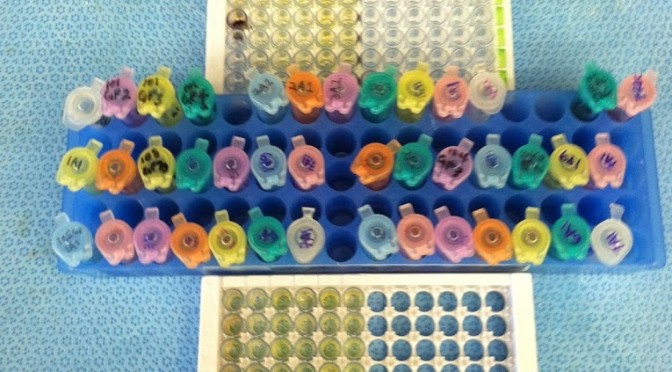
Therefore, my whole life thus far has been laser-beam-focused on science. And I’ve certainly achieved my objective. From four different lab internships throughout undergrad, to a published masters thesis, to a PhD candidate position on a top medical campus, I’d say in terms of ‘doing science’ I have succeeded so far. 

Problem is, one day I realized that magnet was getting weaker.

And I fought it. I tried to re-focus, to think about it differently. But it faded away like a sunset, leaving the darkness of confusion in its wake. That thing which defined me, drove me, inspired me; now there is no pull. There is no sense of purpose, no goal to strive for.

Now what? 

I’m very fortunate that my parents taught me how to manage money from a young age. I started my first savings account at 13 with my meager allowance. I had many a lemonade stand and bake sale, babysat as soon as any parent would allow me, and had a part time job at a roller rink by 15.

My dad made me a deal to pay for half of my first car, and by the time I had my license in hand, I’d paid cash for a cute little green Saturn. Throughout college and my masters degree, I worked two jobs to cover rent, food, gas, and books. My high test scores had rewarded me with a full tuition scholarship. Because of this life-long money awareness, I made it out of six years of school with less than 1/3 the average college debt. 

I will be forever grateful to my parents for those lessons in frugality and saving.

Those lessons are ones I continue to apply every day in my life. My savings account is by no means impressive, but it would be enough at this point to allow me to be unemployed for about 5 months without changing my lifestyle one bit. If I cut back dramatically I could probably stretch that to 8 or 9 months. That is such a peace of mind when looking at a possible huge life change, like a major career transition.

As if the thought of not having a job weren’t stressful enough, I just think how much worse it would be if I literally needed that paycheck to pay my necessary bills. And I know a lot of people are currently in, will soon be, or have been in that exact situation, and my heart goes out to you.

If you are, or think you may soon be in a career transition situation, I have a few pieces of advice you should consider now to make it easier when that day comes.

1. Pay yourself first.

This is the most important rule of money. You pay your landlord rent, you pay the dealer for your car, you pay the grocery store for your food, you pay Uncle Sam his taxes. Why would you not pay yourself? After all, you are the one doing the hard work at whatever your job is to bring that paycheck home.

Statistics from December 2013 reveal that 40% of Americans are not saving for retirement, while 25% have no savings at all. That is a very scary thing. And when you pay all the required bills, there is not much left over for silly things like, say, food and gas. I understand. But that’s why it’s imperative you save 10% first. 

Use automatic transfers to make it easier. On the first of the month, just take 10% of your paycheck, whether that is $10 or $1000, and transfer it into a savings account.

It may be slow, but over time it will build. And you will find that you can still make it to the end of the month. Maybe you will have to cut out a trip to the store, or a movie night. But think how much better you will sleep at night when there is a cushion of cash you can call your own.

2. Scale back on non-necessities.

If you know for a fact that a period of transition is coming up, scaling back on your lifestyle can make a huge difference between being comfortable and feeling squeezed. If you know you will be transitioning to a different field, might be unemployed for a few months, or will have to take a lower paid position, try to estimate how your income will change and start living off that lower amount now. Save the difference. 

Maybe cut back on eating out, going to happy hours, or buy fewer groceries, and stop smoking now. Find ways to minimize the cost of things you like to do. Go to a matinee on Saturday instead of a Friday night if you like theaters. Have a potluck game night with friends rather than going out to a dinner. Host your own wine tasting; $30 goes a lot farther at home than in a club.

3. Make a budget and stick to it.

The first step here is to figure out how much you are currently spending. For one month, track every cent that leaves your accounts. You can do this by hand, or try using an online tracking tool like You Need a Budget or Mint.com. Here’s a handy article I wrote on using Mint if you’re new.

The next step is to figure out how much you want to or should be spending in these categories. Things like rent/mortgage, car or loan payments, and utilities are rather concrete. Focus on categories you have control over, such as entertainment, hobbies, gas, and groceries.

Find more great tips in How to Make & Stick to a Budget.

4. Learn to cook, and cook at home the majority of the time.

Eating out can cost $5-$15 for lunch and $10-$20 or more per person for dinner. If you have lunch with co-workers every day, and dinner at a restaurant 2-4 times per week, that is a significant expense. It will save you hundreds per year if you cook your own meals at home. Obviously I am a huge proponent of learning to cook! 

In the archives here you should find plenty of simple, cheap meals as inspiration, and the internet has seriously infinite ideas. Even just picking up a loaf of bread, peanut butter, and jelly will give you two week’s worth of lunches for less than you probably spend in one day eating out.

If you don’t think you have time to cook, check out my 10 Minute Chili Mac, Fancy Ramen Soup, or Easy Steak Stir-fry. Search “less than 5” here for meals that cost less than $5, take less than 5 minutes, and require less than 5 ingredients.

For even more tips on getting your grocery bill as low as it can go, check out How to Save Money on Your Grocery Bill.

5. Find frugal entertainment & frugal friends.


If your social circle is based on events where you are pressured into spending money, then you need to start branching out. Big trips, buying ‘toys’ like boats and golf clubs, and going out drinking cost you big bucks. Try new hobbies that don’t require money, like taking up jogging or walking, join a book club, hike, start a garden, or find a local sport club.

You could entertain yourself with a visit to the park, your local museums, or volunteering. Help Habitat for Humanity, your local church or soup kitchen, or go to Volunteer Match to find something that fits your interests in your area. You can get involved in your community, help people, and meet new friends along the way.

More ideas on cheap/free hobbies:
23 Fulfilling Hobbies You Can Start Right Now from Thought Catalog
The Only Thing You’ll Need to Spend is Time from The Simple Dollar
100 Cheap Hobbies – Spend Time Not Money from Free in 10 Years 
The 35 Best Ways to Spend Your Free Time (Frugally) from WiseBread 

Job transitioning articles:
When Your Dream Job Disappoints, How to Find Plan B from The Wall Street Journal
Don’t Burn Bridges: 10 Ways to Maximize a Job Transition from Monster Working
Transitioning From One Job to Another from Business Insider
Advice for People who Want to Quit Their Jobs from Thought Catalog

This post began with the intent of giving tips for making a career transition easier, but these tips are applicable to any stage of life. If you start incorporating these ideas into your daily life, you will notice your bank balances going up, maybe your debts going down, and your worries starting to ease. You may even find a whole new world of things you didn’t know existed, and make new life-long friends.

Though a career transition is scary, being prepared can help make it easier. The more you have saved, and the fewer your bills and expenses, the more comfortable you will feel financially. Then you can focus on perfecting that resume, building your network, and polishing your interview skills instead.

I have no idea where I will go from here, but I know that having some money in the bank and minimal expenses makes it a lot less scary to not know.


Have you ever transitioned between careers? What advice do you have?