Category Archives: Healthy

How to Can Homemade Pasta Sauce


Since moving to Connecticut, we have slowly made friends with the neighbors. We are lucky enough to live in a pretty safe and quiet area, where the people are very kind and welcoming. My good fortune is knowing a guy named Tony, a few houses down the street, who gardens for his health.

Now, there are lots of well-known reasons why gardening is good for the body and soul. Being out in nature brings a sense of peace and calm, helps relieve stress and lower blood pressure, and may boost your immune system. Having home-grown fruits and vegetables enables healthier food choices and better nutrition, while keeping you active and exercising. All those hours of digging, planting, weeding, tending, picking, and preserving burns serious calories and keeps you toned and limber.

Not to mention the fact that gardening can save you serious cash! Just buy the seeds and materials once (better yet, swap seeds with other local gardeners for better-adapted produce, and save your own seeds for next year!) and you can garden for free almost forever. It is easy to find local, free sources of soil amendments like fertilizer and mulches if you ask around and get creative.

Tony takes this to a new level! His garden is literally the size of a football field, all out in his large 2-acre New England backyard. He and his wife single-handedly till, plant, weed, and tend this garden every year. His wife tells me that he has even shrunk the garden a little this year, due to time constraints and health issues, so the garden used to be even larger before I knew about it. Amazing.

IMG_1511 - Copy

Tony says his favorite thing about the garden is the sense of community. Everyone on the block knows Tony, and knows they can come by anytime to pick a bag full of produce to take home. His garden produces far more than he and his family alone could enjoy, so he gives freely to everyone around him.

This is the beauty of gardening. You make friends, share food, recipes, and stories, and build a true community.

Needless to say, I was hooked.

By mid-August, I had my kitchen table and counter literally covered in tomatoes, and needed to finally take the time to do something with them all. A large batch I simply cut into quarters and put in gallon freezer bags. They will sit in the freezer until I need to make a soup or chili; then I will thaw them, and the skins will fall right off, and I can use them in whatever recipe is on my mind.

Another large portion goes into cans as sauce to rest in the pantry until it’s pasta night. Tony shared his “lazy Italian” way of making sauce, which saved me tons of work and hours in the kitchen!

The typical way of making sauce is to boil the tomatoes briefly, then submerge in ice water. This makes the skins easy to remove. You then separate the seeds and skin from the inner flesh, and cook down for hours until it thickens into a sauce.

IMG_1514 - Copy

This cooking down process makes the house smell amazing, and warms it up on a chilly day. But this also takes a lot of time, and energy from the stove. I’m a fan of the new “lazy” way, and the sauce tastes just as good! So pull out your blender, and lets get started!

This recipe will make about 5 quarts of sauce.

Don’t add the spices if you want a plain tomato sauce, or change up the spices to whatever you want in the end product. This does use the water-bath canning method, read up on all possible dangers of canning or use a pressure canner if you are unsure.

Ingredients:

  • 8-10 pounds assorted tomatoes
  • 5-6 canning jars, lids, & rings
  • Per jar:
    • 1 tbsp dried onion
    • 1/2 tbsp dried garlic
    • 2 tbsp basil
    • 2 tbsp parsley
    • pinch of salt
    • 1 tbsp vinegar
  • Blender
  • Strainer
  • Cheesecloth or coffee filters

IMG_1426

Step 1: Sterilize your jars by boiling for 5 minute,s or run them through the dishwasher. To each jar add the spices for the sauce. I also chose to add one whole tomato just diced to each jar, because I like a little texture in my sauce. You can skip that step and just add the pureed tomatoes.

IMG_1427

Step 2: Wash all your tomatoes, and cut out the middle hard part & stem. Remove any brown or black spots or mushy areas. If you want to and have time, you can remove the seeds (and save them for next year!).  Cut the tomatoes into quarters.

IMG_1512 - Copy

Step 3: Put the tomatoes into a blender, and blend in batches. My blender can handle about a dozen large tomatoes at a time. You may need to squish some juice out of them to get the blender going at first.

IMG_1513 - Copy

Step 4: Line a strainer over a large pot with coffee filters or cheesecloth. Pour the tomato puree into the strainer and let it sit. You can wait a few hours, or leave it over night if you have a lid. This lets most of the watery juice drip out, leaving the thicker sauce on top. Saves you the hours of boiling down, and now you can keep the tomato water too!

IMG_1438

Step 5: Pour your separated sauce and tomato juice into prepared jars. Wipe the rims and put on the lid and ring. Process in the water bath for 35 minutes (adjust for altitude). Remove the jars to a cloth and let them cool 8-10 hours.

The jars are ready if you hear the “pop” of the lids seal, or if when you press down in the middle the lid does not spring back. Any jars that do not seal, put in the refrigerator and use within a week, or process them again.

The tomato broth that filters out is like liquid gold, and will be great as a base for soups and stews, or you can freeze it in ice cube trays to cook veggies in instead of using oil. The sauce will bring back the taste of summer later on in the dead of winter.

And this is how I processed and preserved about 50 pounds of tomatoes in two days time!

And it is so easy. As long as you use vinegar or lemon to acidify the tomatoes and broth, they are perfectly safe to water bath can at home. Enjoy preserving your bounty. Do you have more tomatoes than you know what to do with?

More things you can do with tomatoes:

Do you can or preserve? Have any other ways to save tomatoes? Tell us about it in the comments below.

Slow Cooker Sausage & Kale Stew


Last week, a terrible thing occurred.

No it has nothing to do with upcoming elections. It wasn’t weather related. Everyone I know and love is just fine. (as far as I know.)

My Crock Pot broke.

It was in the sink with dirty dishes, and one thing lead to another, somehow in the mountain of dishes the crock got split right down the middle. The lovely workhorse of my kitchen, and it’s hardy ceramic bowl was now split in twain, to be used no more. I was heartbroken to say the least.

Any reader of the blog knows how in love with my slow cooker I am. This thing is amazing, making my life so much easier by preparing dozens, even hundreds, of slow cooked meals for me while I work or play or do whatever somewhere else. Then we come home to a house that smells amazing and a hot and healthy meal.

Though I will of course replace my crock as soon as humanly possible, I dedicate this post to the crock pot, as its last documented meal prior to fatal injury. May your crock last many years more.

Ingredients:

  • 1 head kale, torn into small pieces
  • 1/2 pint cherry tomatoes
  • 1/2 pound sausage, cut in slices or ground
  • 1 can white beans
  • 1 cup water or broth
  • Optional: parmesan cheese and rustic whole grain bread

IMG_8984

Step 1: Rinse and tear the kale into pieces and place in the slow cooker. Cut the cherry tomatoes in half and add those. Open the white beans and either dump it all in or rinse them first then add to the crock pot. Add in the water or broth to your desired thickness.

IMG_8987

Step 2: Brown the sausage quickly in a frying pan, and add to the crock pot. At this point you can add any spices you want such as garlic, onion, paprika, rosemary, etc. Set on high for 4-5 hours or on low 6-8 hours and let it cook.

IMG_8988

Honestly, this really only needs heated through to be eaten, but the longer you let it stew the more the flavors meld and the broth thickens to become more stew-like and less soupy. Up to you how long you want/need to wait.

IMG_8989

This is amazing on its own, or you can serve it with some nice thick bread on the side. This makes plenty for about 4 servings, and you can of course double or halve it to your needs.


[amd-zlrecipe-recipe:43]


Cherry Pepper Poppers


Cherry Peppers, also known as pimiento peppers, are a common sight on an antipasti bar. Pickled, or stuffed with prosciutto and cheese, these little babies are sweet but with a slight kick that endears them to all lucky enough to taste one. While jars of pickled or stuffed hot or sweet cherry peppers can cost you upwards of $10, you can plant just one bush and have more than enough to make your own to last all year.

photo 3

The cherry peppers grow “upside-down”, with the stem end underneath the developing fruits. They start green and mature to red. Contrary to most peppers, the green ones actually tend to have more “bite” while the riper red peppers are sweeter overall. It does depend upon your particular strain and your water/soil compilation, as the cherry peppers I am able to obtain had more bite than I bargained for!

I am blessed to live in a nice community in which the majority of my neighbors garden, and love to share their bounties amongst the locals. One guy has a literal football field sized garden, just for the ‘therapeutic effects’. Methinks he also is a generous guy who loves sharing his love of gardening & food. =)

Anyhow, this guy has some pretty legit pepper and tomato heirloom strains, passed down through many generations of Italians. These hot/sweet cherry peppers came from him. He has told me of his family’s recipe to stuff them, but I didn’t have any prosciutto, capicola, or mozzarella on hand, so I did a super-quick-and-easy stuff that I sometimes do with jalapenos, and it came out pretty tasty!

photo 1(1)

If you don’t have your own peppers, or access to a neighbor who shares, you could try a local farmer’s market, or the grocery store in mid to late summer. Any mild to hot pepper would work, however. You can also substitute in whatever type of cheese you prefer, and use just about any thinly-sliced deli meat. Additionally you can just use a nice cheese and no meat for a vegetarian appetizer.

These itty-bitty pepper poppers are perfect as an appetizer. They are super simple and will surely impress at your next picnic, barbeque, birthday, or tailgating party.  This recipe makes about a dozen, but you can easily scale up or down based on how many you need/have. They are also pretty “pinchy” (my family word for spicy) so if you have picky palates you might want to soak them in vinegar overnight first.

Ingredients:

  • 1 dozen cherry peppers
  • 1 oz cream cheese
  • 2 slices deli ham or bacon

photo 2(1)

Step 1: Cut the tops off of the peppers. Use a small spoon to scoop out the seeds (and save them for next year!). Tear the ham into small pieces and line the hollow pepper with a slice or two.

photo 3

Step 2: Take a teaspoon and spoon in a chunk of cream cheese, until pepper is fully stuffed. Each pepper will be a slightly different amount based on how large it is.

photo 2(1)

Step 3: Bake at 250F for 10-15 minutes, until cheese is melted and pepper are soft. Let cool until you can touch them, and then try not to wolf down the whole plate in one sitting. Or do. No judgment.

If you make oodles of these and still have peppers out the ears, you can try making your own pickled peppers, just like Peter Piper!

photo 4


[amd-zlrecipe-recipe:41]

How to Save Tomato Seeds


As the world settles into the summer-fall change of pace, kids going back to school, traffic patterns adjusting, temperatures cooling off, birds are migrating, stores change their displays to autumn holidays, and gardeners are busy preserving the tapering bounty of produce.

In season now are fresh juicy peaches, heavy enough to break limbs as they nearly fall off the tree, pears of all shapes, sizes and colors, summer squashes like butternut, delicata, and sweet dumpling, the tail end of watermelon and cantaloupes, and the heat lovers like peppers and tomatoes are ramping down production.

Tomato_Seeds.1
Although, this doesn’t look very ramped-down to me!

Meanwhile, the cold weather lovers like spinach, bok choi, brussels sprouts, pumpkins, and winter squash are coming alive and some may be planted now for a second fall/early winter harvest.

One of my absolute favorite things about gardening is the seeds. And the miracle that one tiny seed is capable of producing pounds upon pounds of produce. And that one single fruit from that plant, if you keep one single seed and plant it again, you can again get pounds and pounds of produce!

I honestly sit and wonder sometimes how many growing seasons it would take for one tomato seed to reproduce enough to cover the planet.

Say one tomato makes 200 seeds, and each seed is planted the next year to create 200 plants. Then each plant creates twenty fruits, each with 200 seeds. Now you have 40,000 seeds, each capable of being planted again the next year.

And so on.

Tomatoes could inherit the Earth in about 10 years, I think.

Tomato_Seeds.12
Seeds from heirloom Italian tomato varieties

There are so many good reasons to save seeds:

  • It promotes heirloom varieties – non-GMO and non-altered versions of a plant that will create new, similar plants the following growing season; each unique
  • You produce plants that are best-adapted to your individual climate, elevation, and soil. No store-bought seeds can be ideally suited to every location, but a few growing seasons of choosing the best fruit and saving the seeds will breed the traits that are best for you & your plants
  • It is essentially free food! If you save seeds, you only have to buy them one time, but can plant indefinitely
  • It promotes self-reliance. If you can grow your own food year after year, it doesn’t matter if the store runs out or doesn’t have any nice-looking produce, you know you can harvest your own right out of your back yard
  • You can create ‘designer produce’. Seed saving is a little bit like genetic modification, only much slower and done as nature does. You can choose fruits based on how quickly they mature, how many leaves the plant grows, or color, and by choosing the trait(s) you want you can enhance the chance that more of the next generation will have those traits. Eventually you can create an entirely new, true-breeding species!

With that said, here’s how to save seeds from tomatoes easily. It is much simpler than you may think!

Ingredients:

  • 1 large tomato of a variety you want to save
  • Cup of water
  • Time

Tomato_Seeds.2

Step 1: Cut the top off the tomato & discard or compost it.

Tomato_Seeds.11

Step 2: Cut the tomato into wedges, and squeeze out the pulp and seeds into a cup. It’s okay to get juice and goo in with the seeds, you will get rid of it soon.

Tomato_Seeds.5

Step 3: Cover with a paper towel or cloth and let it sit at room temperature for a day or two. The water may get frothy, and some seeds may sink while a few float. The goo will slowly degrade, leaving the seeds uncovered.

photo 1(1)

Step 4: Strain through a fine mesh strainer or cheesecloth, or simple pour off the cloudy water and re-cover until there is nothing left but seeds. Spread onto a plate and let air dry for 24 hours.

photo 3

Step 5: Put the dry seeds into an envelope or other container, and store it in a cool, dry area where it is not likely to get wet or be invaded by insects.

Tomato_Seeds.4
Canned tomato sauce from my garden tomatoes

Step 6: The next planting season, plant your seeds and watch them grow! Soon your seeds may have stories attached to them, you can create your own fun names for the new species, and pass them down to your friends and family for their enjoyment too.

Mushroom & Asparagus Barley Risotto


As summer is winding to a close, I am still in denial.  I don’t want to let go of the beautiful unfolding of spring, the delicate greens and fragrant blossoms, the heavy fruits ripening on the vine, the cornucopia of riotous color at the farmer’s market.  Spring and summer make this farm-loving, healthy-cooking, veggie-eating foodaholic girl’s heart sing.

IMG_8532

So when I saw some end of season asparagus and some shiitake mushrooms on sale, I had to nab them.  For a fleeting taste of spring, summer & autumn all rolled into one, this risotto is earthy and vegetal, and completely delicious.

And the best part is, if you use canned mushroom & frozen asparagus you can make this all year round!  A well-stocked fridge/freezer/pantry can bring any season to your plate.

Ingredients:

  • 1/2 pint chopped mushrooms
  • 1/2 pound asparagus
  • 1 cup barley
  • 2 cups chicken stock or water
  • Optional add-ins: diced tomato, garlic, onions, spices to taste

IMG_8531

Step 1: Rinse your asparagus and wipe off any dirt from the mushrooms. Dice them into bite-sized pieces.

IMG_8534

Step 2: Put the barley in a pan with 1 cup of stock or water. (This can be vegan if you use vegetable stock or water in place of the chicken stock). Bring to a boil, and then simmer.

IMG_8535

Step 3: Let the barley cook, watching the liquid level. When it gets low, add a few more tbsp of stock and stir. Continue for 20-25 minutes, until barley is chewy and nearly cooked through. Add the diced veggies for the final 5-10 minutes of cooking.

IMG_8536

At this point, you can season to taste, I only used a little garlic salt. This tastes amazing on its own, or you can add any of the option mix ins suggested, or anything else you happen to have laying about.

IMG_8538

This recipe makes about 2 cups worth of risotto, enough for 4 small side dish servings or two full meals.

[amd-zlrecipe-recipe:39]


Nutrition Facts
4 Servings
Amount Per Serving
  • Calories 246.8
  • Total Fat 2.2 g
  • Saturated Fat 0.5 g
  • Polyunsaturated Fat 0.6 g
  • Monounsaturated Fat 0.8 g
  • Cholesterol 3.6 mg
  • Sodium 178.2 mg
  • Potassium 399.9 mg
  • Total Carbohydrate 49.8 g
  • Dietary Fiber 9.3 g
  • Sugars 3.8 g
  • Protein 9.3 g
  • Vitamin A 4.2 %
  • Vitamin B-12 0.0 %
  • Vitamin B-6 15.2 %
  • Vitamin C 8.0 %
  • Vitamin D 0.0 %
  • Vitamin E 3.9 %
  • Calcium 2.6 %
  • Copper 32.9 %
  • Folate 17.0 %
  • Iron 10.8 %
  • Magnesium 13.9 %
  • Manganese 41.1 %
  • Niacin 25.7 %
  • Pantothenic Acid 15.0 %
  • Phosphorus 17.2 %
  • Riboflavin 15.5 %
  • Selenium 44.6 %
  • Thiamin 13.2 %
  • Zinc 12.5 %
*Percent Daily Values are based on a 2,000 calorie diet. Your daily values may be higher or lower depending on your calorie needs.

Tomato Basil Chicken Cacciatore


One of a busy and/or tired cook’s favorite things is being handed an idea for an easy dinner. Don’t you just hate thinking to yourself or asking the family “what do you want for dinner?” and getting blank stares, or hearing the wind whistle between your ears? Cooking fatigue can happen to the best of cooks. And especially those who are new or new-ish to cooking on the fly have a tough time with this exact question.

Something I’ve used since college to help get the creative kitchen juices flowing (literally and figuratively) is a website called Supercook.

This website curates thousands of recipes from site members and other sites all around the web. All you do is input what ingredients you have in your kitchen or pantry, or what ingredients you want to use, and presto, hundreds of recipe ideas at your fingertips!

Let’s say you have a can of black beans, a can of corn, and some tomatoes from your garden. Those three simple ingredients bring up 26 recipes alone! And by adding in staples that most all of us have (hello, black pepper and salt, flour, oil, sugar, etc) your options expand even more. You can filter by type of dish you want to make, what cuisine you are in the mood for, and even filter by dietary restrictions like excluding nuts, fish, or dairy.

datauri-file

Supercook is sponsoring a Back to Work cooking challenge, whereby they asked who can make magic using super simple pantry ingredients: chicken, rice, and tomatoes.

PICK ME! I can make kitchen magic with next to nothing, as abundantly proven over the years on this blog.

Conveniently, those are three of my favorite ingredients of all time. Entering them into Supercook’s website opens up over two dozen options. Several are too simple (plain steamed rice? yawn), but a recipe for chicken cacciatore catches my eye. With a few more ingredients I have on hand from an abundant harvest (fresh basil, yum!), I know this is what’s happening for dinner.

The recipe is for chicken cacciatore in the crock pot, which is even better for busy working adults! But, I’m impatient, so it had to be made tonight, and that meant on the stove top. Keep in mind you can indeed take all the ingredients and simply chuck it in the slow cooker for a truly hands-off meal that turns out like you slaved for hours.

photo 5
See? Pretty dinner, but oh so easy.

A basic cacciatore recipe includes, of course, chicken, vegetables sauteed in the chicken oils, and diced or peeled tomatoes. The seared chicken is returned to the pot of vegetables and simmered about an hour until done. I of course added a few extras, which you can choose to include, or keep it simple. I used a quart of pasta sauce I’d canned myself, with garlic & basil included. You can just use a can of diced tomatoes for the same effect.

photo 2(1)

Ingredients:

  • 2-3 pounds chicken (breast, thigh, legs)
  • 1 cup brown, wild, or white rice
  • 1-2 cups diced tomatoes or tomato sauce
  • 1/2 an onion, diced
  • 2 medium carrots, diced
  • 1 small red bell pepper, diced
  • Optional extras: spinach, garlic cloves, zucchini, bay leaves

photo 1(2)

Step 1: In a frying pan, sear the chicken on all sides, about 5-7 minutes. Pour off most of the oil and set the chicken aside.

photo 2(2)

Step 2: Add the onion, and any other vegetables or spices you’re using, and cook 10-15 minutes, until onions are soft and translucent and the carrots are soft when poked with a fork.

photo 4

Step 3: Pour in the tomatoes, and bring to a simmer. Add the chicken back to the pan, cover and cook 10-12 minutes.

Pro Tip: The longer you simmer this, the softer the veggies get and the more the flavors meld. But if you’re pressed for time and don’t mind slightly crunchy carrots, this can be done in as little as 15 minutes total.

photo 3(1)

Step 4: Serve warm over pasta, rice, or with a thick rustic bread on the side. I just made some rice in my cooker while the rest of the dish simmered on the stove.

photo 4(1)

This dish is super tasty & satisfying, and also quite healthy. Especially if you pack it full of delicious veggies! You could throw all kinds of things in there, like cauliflower, beans, or broccoli. This flavor combination worked out very well.

photo 3(2)

This dish is also quite frugal in addition to being healthy and delicious. A pack of chicken quarters is often on sale for $0.99/lb or less, rice is an affordable staple, and the veggies were mostly free at the height of gardening season.

I hope you enjoy this as much as I did, and that discovering Supercook can help you too save time and energy by answering the age-old question, “What’s for dinner?”


[amd-zlrecipe-recipe:40]


This recipe & post have been entered into the Supercook “Back To Work” Cooking Challenge! #SupercookChallenge #BacktoWork

Preserving Hot Peppers


Peppers are probably the kind of plant which has most wow-ed me with its prolific seeds. Every time I crack open a bell pepper to make stuffed peppers, or hollow a jalapeno to make poppers, there are mounds of seeds inside. Even in the tiniest pepper, there are likely more seeds than you can count on just your hands.

Pro tip: you can save these seeds and dry them out, and then plant your own pepper garden! Just one jalapeno may produce dozens of plants. Yes, even peppers you buy at the grocery store. Just cut the stem side off, scrape the seeds away from the ribs inside, and dry them on a piece of paper. Store in a cool dark place until you’re ready to plant outside or in a container.

photo 1(1)

Another thing that is amazing about peppers is the sheer variety. From the mild sweet bell pepper to the jalapeno, habanero, or even the ghost chili, there are literally thousands of varieties. Peppers can spontaneously mutate, so even if you save seeds year to year, you can get new color patterns or heat levels. The amount of water and sun, location and type of soil can also affect the peppers.

I’ve been trying, for the past few years, to get more brave about cooking and eating spicier foods. The chemical that makes peppers taste hot & spicy is most often capsaicin. This compound irritates mucous membranes and causes inflammation, and pain if in too high a dose. However, capsaicin also has many health benefits for your heart, blood pressure, anti-diabetes, and more.

photo 4

One of the ways I’ve found to incorporate more spicy foods into my cooking is by using jarred jalapenos. These little guys store forever, and add a bit kick to pizza, salads, sandwiches, chili, pasta, and more. I’ve bought jalapenos in a jar at the store, but this year I had access to an heirloom Italian jalapeno variety, as well as several others like cayenne, poblano, and red cherry peppers.

Thus, I needed a way to use them all up. As state, peppers are very prolific. On one plant, I’ve seen nearly 100 peppers, if the fruit is tiny. No joke.

So given all the health benefits, and the fact that I cannot use them up fast enough before they spoil, jarring seemed like the best way to preserve the summer’s spicy bounty. Turns out, they are ridiculously easy to make. Just look on a jar of peppers at the store, you will see there is likely fewer than ten ingredients. This homemade version needs three.

You can of course can hot or regular peppers, but you must use a pressure canner, not a water bath. There are significant botulism risks if you do not use a pressure canner. However, by adding vinegar, you are effectively pickling the peppers. This prevents harmful bacterias and other nasties from growing. I also store mine right in the fridge.

photo 2(1) copy 2

Ingredients (this makes about a pint):

  • 1-2 cups of peppers (all one kind or a variety)
  • 1/2 cup white vinegar
  • 1 tbsp sea salt

photo 2(1)

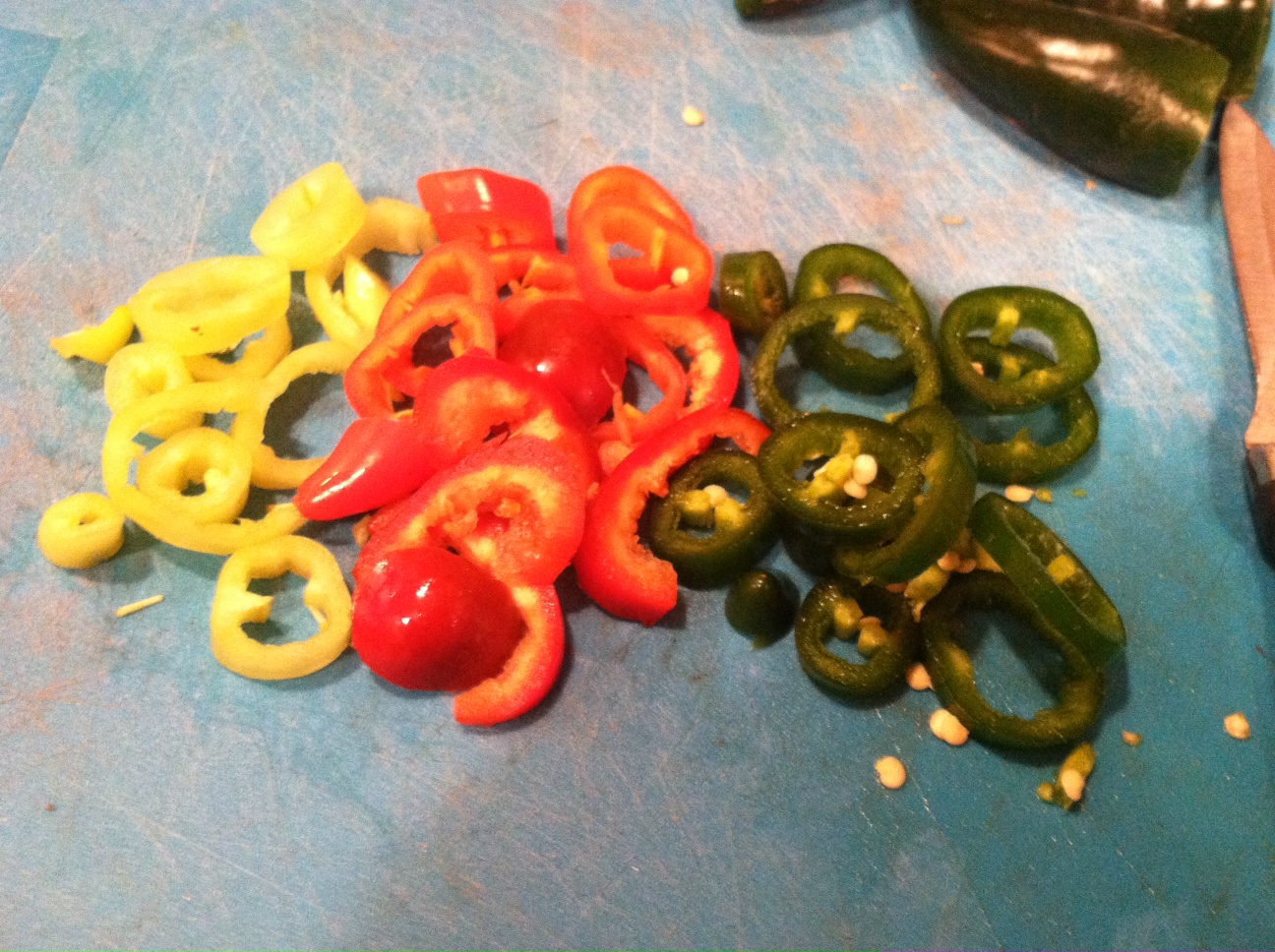
Step 1: Cut the tops off the peppers, then cut down the side ribs and pull out the seeds. Leave the seeds in if you want it extra spicy. Also, it is highly recommended to wear gloves while cutting hot peppers! I made the mistake of not wearing gloves the first time, and my hands were on fire for days.

photo 1(1) copy 2

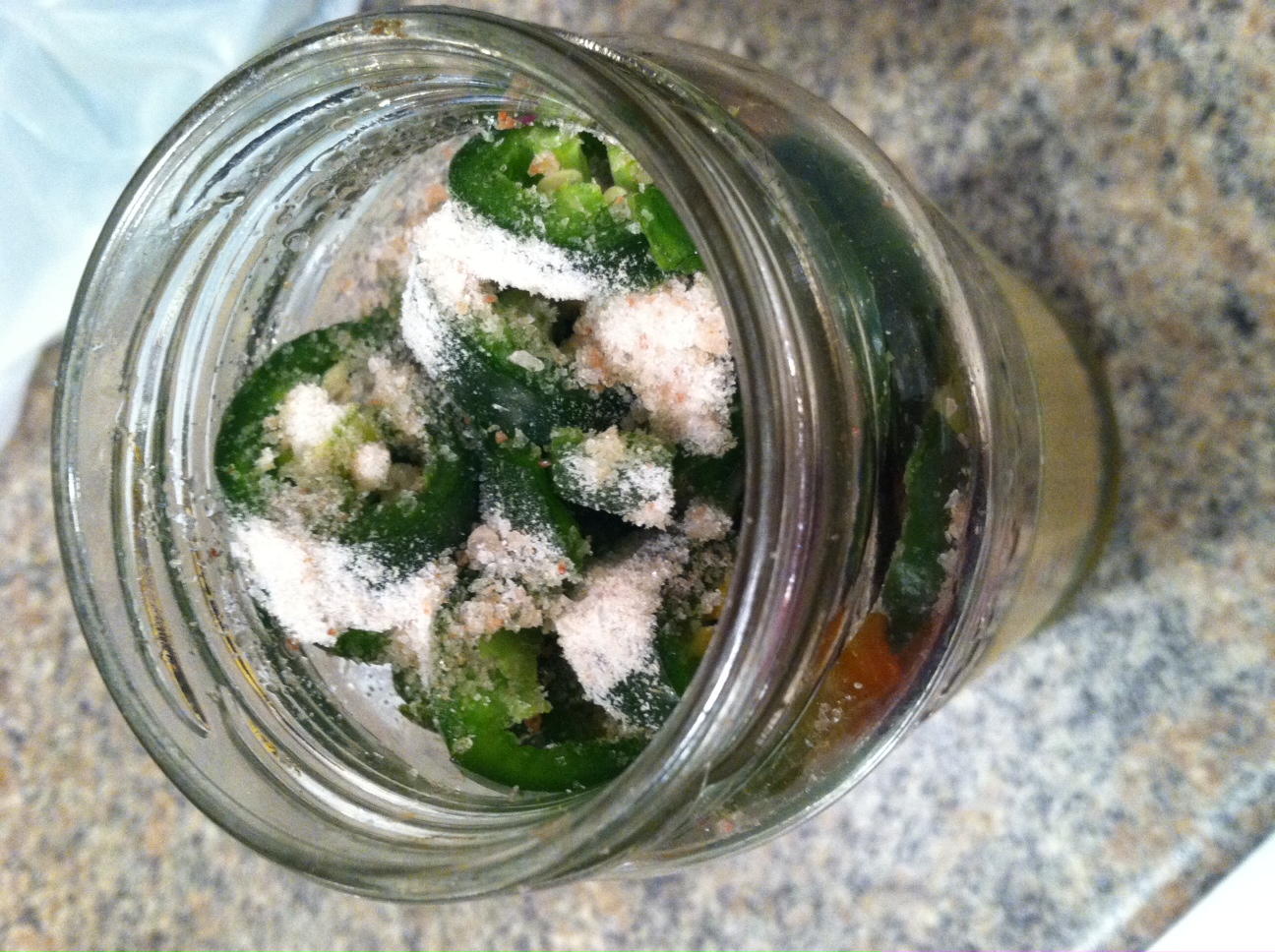
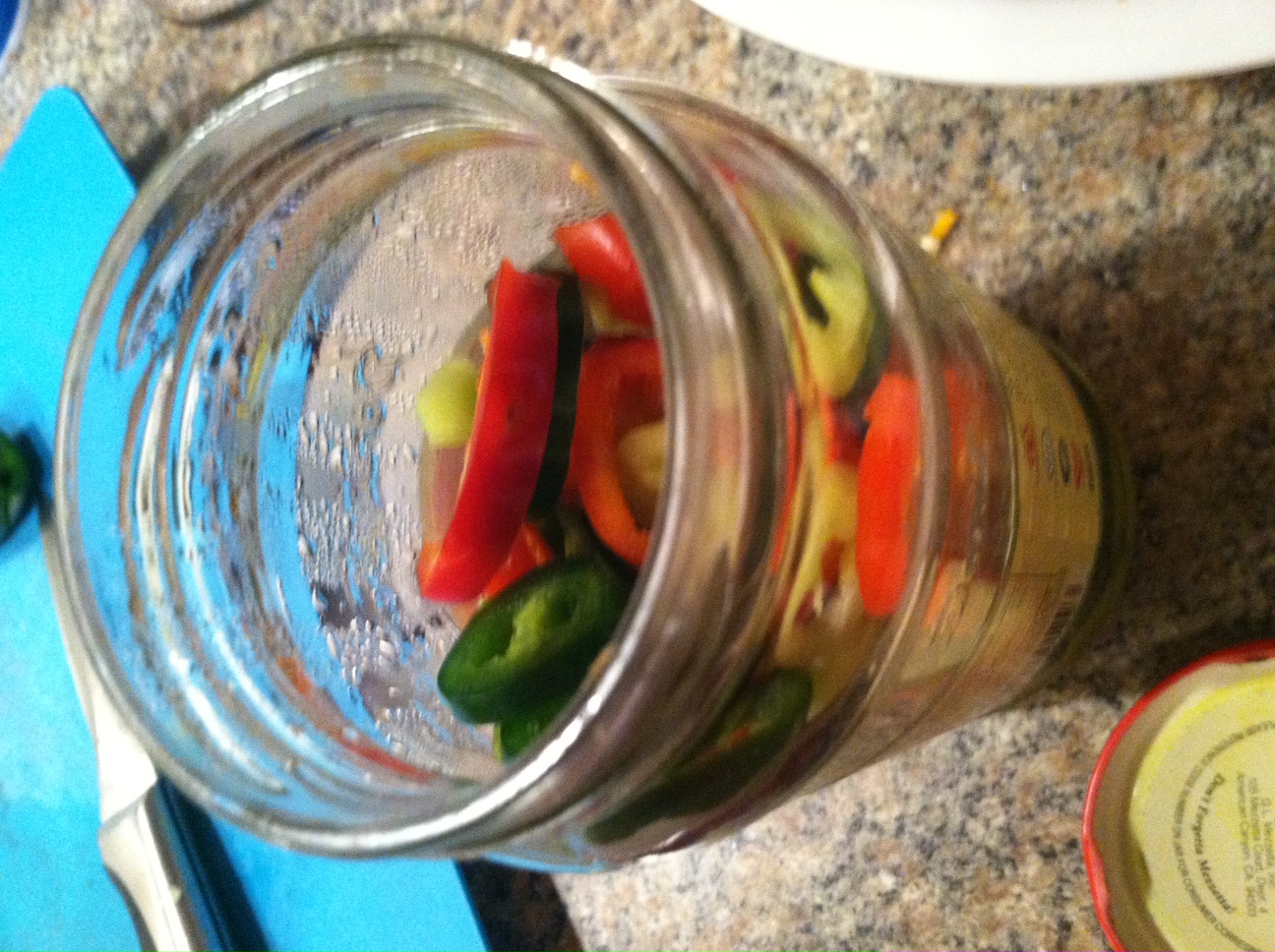
Step 2: Shove all your pepper rings into the jar. Cover with the vinegar about 2/3 full. Pour on the sea salt.

photo 4 copy

Step 3: Add distilled water to the top of the jar, then close it and shake it up, until the salt dissolves. You can of course actually can them, using glass mason jars and steam or pressure canning methods. These processed jars can be stored at room temperature for a longer period of time.

photo 3 copy

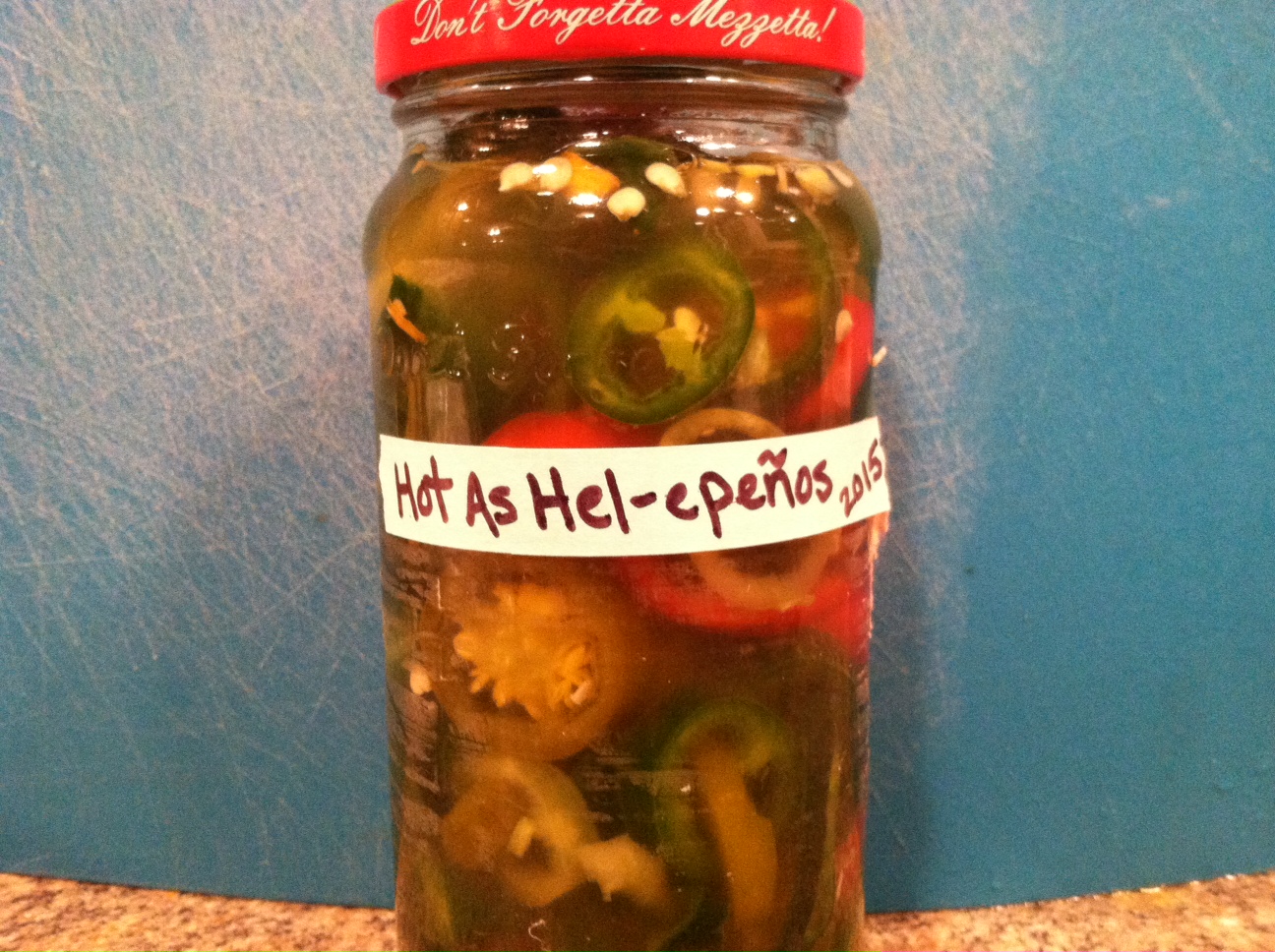
Put the jar in the fridge, and it will be there until you’re ready to use them!

These peppers can make a great little gift, especially if you layer multi-colored peppers in a clear jar. They are quite pretty. These peppers can be eaten as is, on pizza, in soups or chili, and more. It will keep in the refrigerator for several months.

photo 1(1) copy

For a great way to bring back the warm thoughts of summer during the bitter cold of winter, try planning out your garden for spring! Go to websites like Pepper Joe’s Gardening Tips, Hot Pepper Seeds, or the Almanac to find answers to questions, tips on what types of species grow best where you live, organic and heirloom seeds, and more.


[amd-zlrecipe-recipe:38]

Shrimp Salad


While I may be spoiled now, living so near the coast, shrimp is also on sale at the grocery store this week (BOGO ftw!). Shrimp is an amazing protein source because it is so low in fat, super versatile, and cooks up in literally minutes.

From shrimp cocktail to shrimp scampi, from jambalaya to tacos to fettuccine, shrimp is a great addition to just about any dish. This simple salad makes use of some leftover cooked shrimp from a party tray, but you could also brown them in Cajun seasoning, or grill them with some pineapple sauce.

If you’re looking for a healthy way to use up some of summer’s fresh veggies, or a healthy-but-tasty lunch or dinner option that takes but a minute to put together, you’ve found just the thing!

Ingredients:

  • 2 cups greens (spinach, romaine, iceberg, arugula…)
  • 1 cup diced fresh veg (bell pepper slices, mushrooms, carrots, cucumber, radishes…)
  • Handful cooked shrimp
  • 2 tbsp dressing
  • Optional: shredded or crumbled cheese, croutons, sunflower seeds, chia seeds…

IMG_7397

This quick salad can literally be tossed together in under a minute if you eat the shrimp cold out of the salad, or 5 minutes if you brown it in a pan first. Use any combination of greens, veggies, and dressings you want.

This can also be layered into a mason jar for a quick on-the-go healthy lunch, snack, or dinner.


Creamy Tomato Basil Soup


For those who do not know, late summer is when the garden bounty is rolling in, including tomatoes and herbs like basil. Home gardeners are likely giving away baskets of fresh veggies and herbs to friends, family, and neighbors. Those who know how and have the time & inclination are putting up the excess for the long, cold winter ahead by canning, drying, and freezing.

basil (1)

I planted a few basil seeds in late April, and had no idea they would take off so well! They were tiny seedlings when I had them in a pot in the window, but when I put them outside they just flourished! Now I have a basil bush just outside my front door. It is wonderfully convenient to just run out and grab a few leaves.

This tomato soup recipe is stunningly simple. Don’t let its simplicity fool you though, it is also amazingly delicious. There is nothing quite so amazing as fresh, local produce simply prepared. Orange goo in a can doesn’t even come close.

With only 3 ingredients, this soup is so easy a five-year-old could probably make it. And, honestly, you don’t even need the basil, you can just make a simple creamy tomato soup by leaving it out. I added it because you can only eat so much pesto in one week. 🙂

tomato (2)

And the final bonus, it is both vegetarian and vegan, as well as gluten free! If you just blended it all, I bet it could be made raw too! It is very healthy, as well as Paleo and Mediterranean. There isn’t a diet I know of on which you cannot eat this soup. If you don’t have or don’t like coconut milk, you can omit it for a regular tomato soup, or use cows milk, almond milk, etc instead.

photo

Ingredients:

  • 1/2 can coconut milk (6-7 oz)
  • 4-5 large ripe tomatoes
  • Handful of basil leaves
  • Optional: olive oil, salt & pepper

photo 1

Step 1: Open the coconut milk and mix it up with a spoon. Pour half into a pot and begin heating. Dice up your tomatoes into quarters and add to the pot. Bring to a simmer, and cook for 10-12 minutes.

photo 2

Step 2: You can stop here if you don’t mind your soup a little chunky and don’t want to add basil, it has a nice rustic texture at this point. Would be great served with some whole-grain bread. But if you want it creamy and smooth, pop it into the blender and give it a whirl.

tomato (1)

Step 3: Add the handful of basil, and blend again.

tomato (4)

(Note: be sure to have the lid on the blender firmly. Otherwise, you end up with a hot, orange mess all over your stove. Not that I would know from experience…)

tomato (3)

Pour your hot, finished creamy tomato soup into 2 bowls, top with sea salt & black pepper and a drizzle of olive oil if you like. This makes a little less than 1 quart of soup, and can easily be doubled to use the whole can of coconut milk. Simply add more tomatoes.

Enjoy!

[amd-zlrecipe-recipe:37]

The B Vitamins

If you haven’t had a chance yet, go check out my intro article “What are Vitamins” for a short summary of what they do and why you need the various A through K vitamins.

There are many B vitamins, together referred to as the “B complex” often. This is because when vitamins were first being discovered and named, a Polish biochemist named Kazimierz Funk isolated what he called a “vital amine” from blood and named it factor B, as the second such compound which had been discovered.

Later is was realized that what he had isolated was in fact a mixture of several compounds, the B vitamins. Several of these compounds turned out to be for other processes which caused them to lose standing as a “vitamin” (hence the jumping around in the numbering system). As you can see, the history of the vitamin B complex as we know it today was a bit… complex.

—The B Vitamins—

b-vitamins-2

Vitamin B1 — a water-soluble vitamin also called Thiamine, this vitamin is needed to turn carbohydrates into energy, for muscle contraction, for healthy digestion, and to enable nerve signaling. You can get your Thiamine from whole grains, peas, edamame (or soybeans), nuts, seeds, brown rice, eggs, liver, and pork.

Not getting enough thiamine may cause weakness, fatigue, nerve damage, or psychosis. Deficiency is seen most often in those who abuse alcohol. Excess alcohol makes it more difficult for the body to absorb thiamine from food. This can lead to a disease called beriberi. At its most severe, thiamine deficiency can cause brain damage, leading to Korsakoff syndrome or Wernicke’s disease. The same person may develop either or both these diseases. There is no known poisoning linked to too much thiamin consumption.

RDA for adult males = 1.2 mg/day, for females = 1.1 mg/day, if pregnant or breast-feeding = 1.4 mg/day.

Vitamin B2 — a water-soluble vitamin also known as Riboflavin, it is important for releasing energy from carbohydrates, digestion of fats and proteins, red blood cell production, and protection of the nervous system. It can be found in green leafy vegetables (mustard greens, spinach, kale), legumes (peas & soybean), nuts, dairy, fish, meat, eggs, yeast extract, and fortified breads & cereals.

Riboflavin is destroyed by light exposure, so limit storing foods containing this vitamin on the counter in the open. Store them in a closed bread box, cabinet, or the refrigerator instead.  Because many if not most of our bread and cereals are fortified (meaning riboflavin is added to the product) riboflavin deficiency is quite rare. Symptoms include anemia, mouth sores, and swelling of the mucous membranes. There is no known poisoning associated with high levels of B2 intake.

RDA for adult males = 1.3 mg/day, for females = 1.1 mg/day. Slightly higher if pregnant or breast-feeding.

Vitamin B3 — a water-soluble vitamin also known as Niacin or niacinamide in manufactured form, it is found in a variety of foods, including liver, chicken, beef, fish, cereal, peanuts, and legumes, and is also synthesized from tryptophan, an essential amino acid found in most forms of protein. Best sources include organ meats (such as liver, which makes great pasta sauce or heart, which you can stir-fry), venison, whole grains, mushrooms, and yeast.

Niacin can be converted into niacinamide, and these are both precursors of NAD and NADP, important molecules in the process of hydrogen transfer, catabolism of fat, carbohydrate, protein, and alcohol, cell signaling and DNA repair, as well as anabolism reactions such as fatty acid and cholesterol synthesis. A severe deficiency in B3 leads to pellagra, a painful disease characterized by diarrhea, dermatitis, inflammation, and eventual dementia.

RDA = 14 mg/day for women, 16 mg/day for men, and 18 mg/day for pregnant or breast-feeding women.

Vitamin B5 — also called Patothenic acid or pantothenate, is water-soluble. It is required for our bodies to synthesize coenzyme-A (CoA) an acyl-carrier required for the citric acid cycle leading to ATP synthesis, as well as metabolizing proteins, carbohydrates, and fats. This vitamin is found in nearly every food, with avocados, legumes, eggs, meats, yogurt, and whole grains as the largest sources. As a supplement in salt form it may improve oxygen utilization efficiency and reduce lactic acid accumulation in athletes.

Toxicity is unlikely, in fact there has been no established upper limit on this particular vitamin. As well, deficiency is extremely rare and as such has not been thoroughly studied. What symptoms we can observe are similar to other B vitamin deficiencies, including irritability, fatigue, aparthy, numbness, cramps, and hypoglycemia.

Insulin receptors are acylated with palmitic acid when they do not want to bind with insulin. Therefore, more insulin will bind to receptors when acylation decreases, causing hypoglycemia. Additional symptoms could include restlessness, malaise, sleep disturbances, nausea, vomiting, and abdominal cramps.[20]

RDA = varies with age from 2mg/day for children age 1-2 to 5mg/day for adult men and women, with a slight increase to 6-7 mg/day for pregnant or breastfeeding women.

Vitamin B6 — also called pyridoxine, is involved in the process of making several neurotransmitters in the brain, including serotonin and norepinephrine. These chemicals help your brain to regulate happiness and fear. Vitamin B6 is also involved in the formation of myelin, a protein layer that forms around nerve cells.

Mild deficiency of vitamin B6 is common. A more serious Vitamin B6 deficiency in adults may cause health problems affecting the nerves, skin, mucous membranes, and circulatory system, while in children all these as well as the central nervous system is affected. Deficiency can occur in people with kidney failure complications, liver scarring, overactive thyroid, alcoholism, inability to absorb nutrients, and heart failure, as well as those taking certain medications.

Major sources of vitamin B6 include cereal grains (whole wheat, barley, farro), legumes (peas, peanuts, black beans, pinto beans), vegetables (carrots, spinach, peas, and potatoes), milk, cheese, eggs, fish, liver, meat, and fortified or whole wheat flour. Vitamin B6 is often used with other B vitamins in vitamin B complex formulas.

Vitamin B6 has been studied for the treatment of many conditions, including anemia (low amounts of healthy red blood cells), vitamin B6 deficiency, lowering homocysteine levels, certain seizures in newborns, and side effects of the drug cycloserine. Evidence in support of other uses is lacking.

RDA = 1.3 milligrams in men and women ages 19-50; 1.7 milligrams in men aged 51 and older; and 1.3 milligrams in women aged 51 and older. The maximum daily intake of vitamin B6 in adults and pregnant or breastfeeding women over age 18 is 100 milligrams.

Vitamin B12 — also known as Cyanocobalamine, Vitamin B12 is an essential water-soluble vitamin that is commonly found in a variety of foods, such as fish, shellfish, meat, eggs, and dairy products. Vitamin B12 is important in DNA synthesis in every cell in your body. Vitamin B12 is bound to the protein in food. Acid in the stomach releases B12 from protein during digestion. Once released, B12 combines with a substance called intrinsic factor (IF) before it is absorbed into the bloodstream.

Vitamin B12 is frequently used in combination with other B vitamins in a vitamin B complex formulation. The human body stores several years’ worth of vitamin B12 in the liver, so low levels in the body are rare. Decreases in vitamin B12 levels are more common in the elderly, HIV-infected persons, and vegetarians. Inability to absorb vitamin B12 from the intestinal tract can cause a type of anemia called pernicious anemia. Fever and symptoms of “excessive sweating” have been reported with anemia due to low levels of vitamin B12; however, these are fixed with vitamin B12 treatment.

For vegetarians or vegans, it is important to know that B12 is found exclusively in animal products, and you are at risk of mild deficiency. Based on how strict your diet are, there are some non-meat options: eggs (1 chicken yolk gives 6% RDA, while goose or duck eggs contain higher levels), cheeses (Swiss has the most), whey powder (100g provides over 40% RDA), milk or yogurt (8-20% RDA per cup), and yeast or yeast extracts (such as Marmite or nutritional yeast). Of course, fortified foods and supplements also help. If you are concerned, please contact your health care provider or a nutritionist for a plan that’s right for you.

Recommended dietary amounts (RDAs) are 2.4 micrograms daily for ages 14 years and older, 2.6 micrograms daily for pregnant females, and 2.8 micrograms daily for breastfeeding females.

Folic Acid — also known as Vitamin B9, folic acid is naturally found in many foods, and folic acid is the synthetic form. Foods naturally high in folate include: leafy vegetables (such as spinach, broccoli, and lettuce), okra, asparagus, fruits (such as bananas, melons, and lemons) beans, yeast, mushrooms, meat and organ meat (such as beef liver and kidney), orange juice, and tomato juice.

Some conditions may increase your need for folic acid. These include:

  • Alcoholism
  • Anemia, hemolytic
  • Diarrhea (continuing)
  • Fever (prolonged)
  • Hemodialysis
  • Illness (prolonged)
  • Intestinal diseases
  • Liver disease
  • Pregnancy
  • Stress (continuing)
  • Surgical removal of stomach

Some studies have found that folic acid taken by women before they become pregnant and during early pregnancy may reduce the chances of certain birth defects (neural tube defects). Claims that folic acid and other B vitamins are effective for preventing mental problems have not been proven. Many of these treatments involve large and expensive amounts of vitamins. It is always best to get the majority of your daily vitamins from foods, such as by eating a large salad full of leafy greens before each meal.

RDA = children 75-400 mcg/day, Adults 150-400 mcg/day, pregnant fenales 400-800 mcg/day, and breastfeeding females 260-800 mcg/day.


Hopefully this has helped clear up a little bit of the confusion surrounding the illustrious B complex, and you have learned a little bit more about your body and what it needs to function at its best. These are some of the many reasons why your mom always told you to “eat your vegetables”, why Popeye was so empowered when he ate spinach, and why vegetables consistently rank at the top of ways to lose and maintain weight loss over time.


Disclaimer: I am not a licensed health care professional nor a registered dietitian. This article is intended to be informative and perhaps entertaining. I am not dispensing health advice or instruction. Consult your own health care professional and conscience before making any decisions regarding your diet and general health.