Category Archives: Beverage

Product Review: Steep and Go


As you may know from my earlier post all about the Health Benefits of Tea, tea is very good for your health for many reasons. Whether you drink it hot with honey or over ice, tea can contribute to a happy, healthy lifestyle.

I am always looking for new tea flavors to try, and new ways to get more tea into my days. I have a tea pot and cups that a friend gave me for a birthday which I love, it strains the loose leaves and you can pour right out of the pot. I have a tea kettle my thoughtful brother gave me which has that classic whistle to it. And I am always on the lookout for new and exciting tea companies and products.

finum-tea-control-teapot-amber-01

One day over a year ago, a friend who is a fellow tea lover recommended I check out The Tea Spot website. Located in Boulder, they are a local Colorado tea company producing high-quality loose leaf tea blends and tea products. Their website is also packed with educational information about tea, as I referenced.

As I’ve collected more loose leaf tea, I have enjoyed the winters much more. Unfortunately, during the summer I don’t want hot tea and I’m too lazy to brew it hot then cool it in the fridge before drinking hours later. The Tea Spot has found a solution! The cold brew steep and go.

cold-brew-tea-filter-g

This plastic miracle has an adapter which allows it to fit onto most standard sized water bottles. The top is a pop-up nozzle which clicks closed for no spills, and the bottom part is a filter which keeps loose leaves out of your mouth, and in your bottle.

To answer commonly asked questions when people see mine:

IMG_4504

1. How long can you steep the tea?
As long as you want. I put it in the bottle at night, stick it in the fridge, then take it with me the next morning.

2. Doesn’t it get bitter?
Nope, not at all. I think this is because you put it in cold–room temp water rather than boiling water; it doesn’t release as many tannins.

3. How much tea do you use?
You only need about 1 heaping teaspoon per 16 oz bottle of water. And I’ve re-used the leaves for two brews with success.

You can choose to add sweeteners such as honey or splenda, but after one or two bottles I grew to prefer the taste of simple green tea. The only thing healthier is pure water!

When I first received the steep and go, I tried to put it onto a bottle directly. I could not get it to tighten, because I didn’t realize there are two adapter rings, one the color of the steep and go, and another clear plastic one. Both sides are slightly different sizes, such that the adapters can make the steep and go fit four different bottle types! The Tea Spot also has a re-useable bottle for the steep and go, which will definitely be my next purchase.

I have not yet tried to run it through a dishwasher, but if put on the top shelf the plastic seems hardy enough to not melt. I will likely end up hand-washing this every dozen uses or so.

Besides loose leaf teas, they now offer whole leaf tea bags as well. You may wonder, what makes these tea bags different from ones I can buy at Wal-mart? Let me allow them to explain:

“The differences between loose leaf tea and traditional tea bags are numerous, and it goes far beyond the surface. The leaves used in most bags are actually the “dust and fannings” from broken tea leaves. This is a huge compromise in quality from full leaf tea. Finely broken tea leaves have lost most of their essential oils and aroma. When steeped, they release more tannins than whole leaf tea, resulting in bitter astringent brews. The material, shape, and size of the bags themselves are also important factors. Most tea bags constrain the tea leaves, keeping them from expanding to their full flavor and aroma potential.”

I don’t know about you, but I don’t like the sound of “tea dust” as a beverage.

IMG_4586

Health benefits of tea


A huge portion of the world begins each day with a warm, caffeinated beverage. While coffee dominates the Americas and continental Europe, tea is preferred in most of Asia and the former Soviet Union, at least according to the Pew Research Center’s interactive map. The playing field is becoming more leveled, with many countries beginning to drink both beverages in almost equal amounts. And this is great news not only for tea and coffee producers, but also for our health in general.

keep-calm-and-drink-green-tea-39

The science on coffee has gone back and forth for decades, from coffee being a heart-harming stimulant to an antioxidant-rich elixir. As for tea, the data have been nothing but encouraging. As of yet, “no solid data exist concerning harmful effects of tea consumption” (ScienceDaily) but you should consult a doctor if you are thinking about drastically increasing your consumption or attempting to use tea to treat or cure any disease and/or symptoms.


Types of Tea

The average person usually considers “tea” to be any type of beverage made by steeping something in warm/hot water. The definition of true tea is any beverage which contains leaves from one particular plant — Camellia sinensis — and includes only four varieties: green, black, white, and oolong. Anything else (like herbal “tea”) is an infusion and isn’t technically tea.

green tea 254x254
Photo from SeacretSpa website “Green Tea Extract“

The Camellia sinensis is a small evergreen plant but can grow up to 8 feet in the right climate. It needs moist air and mostly warm days with direct sunlight to grow best. The deep shiny green leaves are harvested in the first blush of spring, with the outermost three leaves and bud considered the best tasting for tea. To learn about different ways to prepare tea and more, visit The Tea Spot website.

tea farm
Photo from the fascinating Tea4U blog.

Tea contains various amounts of caffeine based on how the leaves are prepared.

Herbal infusions
Herbal infusions are made by steeping fresh or dried herbs, flowers, and/or berries in hot water. These include but are not limited to: spearmint, lemon balm, rose hips, licorice, ginger, rooibois, chamomile, hibiscus, and more.

Generally since they do not contain actual tea leaves they are 100% caffeine-free, though they may offer many health benefits and an array of flavors and scents. Steep infusions for 6-7 minutes in freshly boiled water for the best effect.

White
This type of tea is the most delicate and subtle of all teas. The leaves are not rolled or processed in any way, and the leaves are generally picked while still tightly enclosed in leaf buds. Those become Silver Needles tea, and if the next two lower leaves are picked and also not processed, they become White Peony white tea.

Caffeine content ranges from 10-15mg per cup. Steep 2-3 minutes in freshly boiled water.

Green
This type of tea is made by gently heating the fresh leaves directly after plucking. This prevents oxidation, and the dried leaves retain their green color. Sometimes charcoal or smoke is used during the heating process to impart extra flavors.

Steep 2-3 minutes in freshly boiled water at 160–190° F. Chinese green teas contain about 30–35 milligrams of caffeine per 8 oz cup, and Japanese green teas contain 25 – 30 milligrams of caffeine per 8 oz cup. 

Oolong
This type of tea is semi-oxidized, putting them halfway between green and black tea. The caffeine level and antioxidant amount are also halfway between black and green, making them healthy yet also palatable. For this reason oolongs are most sought after by tea connoisseurs. All oolongs are grown in either China or Taiwan.

Preparation of oolong teas requires pure water at 190–205° F. They may be infused multiple (3–7) times, each steep lasting 1–3 minutes. The caffeine content of oolong teas decreases dramatically from the first to the third brew, about 30–50 mg/cup in first cup, 15–25 in second, and 5–10 in the third.

Black
This type of tea is made by fully oxidizing tea leaves to produce a rich brown-black or brown-red brew. After the leaves are picked they are crushed or rolled, allowed to oxidize fully, then fired in an oven.

Black tea is the most popular tea in the Western countries, likely due to its caffeine content of 40-60mg per cup. All black teas originate from China, India, or Sri Lanka.

Yerba mate
Pronounced “yer-ba mah-tay”, this is an ancient medicinal drink deeply ingrained in many cultures of South America such as Brazil and Argentina. Though not a tea, as it contains no C. sinensis leaves, Yerba Maté is an appetite suppressant and is high in Vitamin C, potassium, magnesium, and manganese.

Mate has 35mg caffeine per cup, and contains many other chemicals which drinkers claim mellow the experience, providing focus and alertness without negative side effects. Yerba Maté should be steeped for 6–7 minutes using hot, but not boiled water. Boiling water can make mate bitter, just like tea.

IMG_0618

Health benefits of drinking tea

The claims of health benefits from teas are varied and wide-spread. Tea as herbal medicine is a thousands of years ancient practice. Native Americans, native Asians, middle Easterners, have long regarded tea as a cornerstone of health, happiness and wisdom.

With the rise in power of Western nations and the increasing rigor of scientific study in health, more and more evidence supporting the health benefits of tea is being found. Studies have shown that some teas may help with cancer, heart disease, and diabetes; encourage weight loss; lower cholesterol; reduce risk for Parkinsons and Alzheimers; and bring about mental alertness. Tea also appears to have antimicrobial qualities.

I could write up a huge list of all the ailments tea is said to relieve or cure, but instead I will direct the science-minded to the fact that the American Journal of Clinical Nutrition featured 11 articles from the 5th international scientific symposium on Tea and Human Health concerning the various health benefits of tea.

Various types of tea contain catecholamines, EGCG, antioxidants, and flavonoids; compounds we are terrible at reproducing in a lab, which is a good thing. These delicate molecules are released as the tea leaves are steeped in hot water, and absorbed by our body when we drink it. Although a lot of questions remain about how long tea needs to be steeped for the most benefit, and how much you need to drink, nutritionists agree any tea is good tea. Still, they prefer brewed teas over bottled to avoid the extra calories and sweeteners.

green tea egcg
Photo from Examine: “Green Tea Catechins“

For a simpler list, check out the TIME article “13 Reasons Why Tea Is Good For You“. You can find information on the various types of tea and their health benefits at WebMD. While not all the health claims of tea are verified, there are as yet no negative findings. Most teas are benign, but the FDA has issued warnings about so-called ‘dieter’s teas’ that contain senna, aloe, buckthorn, and other plant-derived laxatives. These could be harmful to your health.

The FDA cautions against taking supplements that include:

  • Comfrey
  • Ephedra
  • Willow bark
  • Germander
  • Lobelia
  • Chaparral

If you live in Zone 7-9 in the US and feel inspired to grow your very own tea bush(es), check out Go Organic Gardening for tips and info on how to grow, harvest, prepare, and more.

green tea

[subscribe2]

How to stay cool, plus a Keurig give-away!


Summer is winding down, but there are still a few scorchers ahead. And even through the fall and winter, sometimes it’s nice to have a frosty beverage pick-me-up. Iced drinks are my number one favorite way to keep cool, as they taste great and also cool your internal body temperature, making it easier to beat the heat.

It’s no secret that I love my caffeinated beverages, and have finally figured out the secret to Perfect Iced Coffee. This trick works with tea, juices, or any other drink as well. Try it yourself and see how great it is to no longer have watered-down drinks that are still icy cold.

This summer, Keurig is sponsoring a nation-wide #StayCool contest! If you share a photo of how you stay cool on Instagram, Twitter, or Facebook, you are entered in a contest to win a Keurig K Cup and other fun goodies!

  • On your mobile device, take a photo and share it on Twitter or Instagram using the hashtag #StayCool & #Sweeps. Make sure to share your location!
  • Your photo will appear on the interactive map where you can see how everyone else is riding out the summer heat. You’ll automatically get a chance to win a Keurig® brewer and Brew Over Ice K-Cup® packs!

In other exciting news, The Budget Epicurean is partnering with Keurig for a K Cup beverage give-away! Readers who enter will have the chance to win:

  1. A variety pack of Keurig K Cups
  2. Coupons for BOGO K Cups
  3. An ebook with drink recipes

Top three entries will receive the prizes in order. One other mode of entry is to send an email to BudgetEpicurean (at) gmail (dot) com with your name and how you #StayCool! Raffle ends 8/25/2014. Winners will be notified and posted about on 8/26/2014.

BudgetEpicurean Keurig giveaway, by Rafflecopter.

This is why I was super-pumped to get a Keurig K-Cup brewer! IMG_4471

I’ve long laughed at the idea of a one-cup wonder, as I tend to brew a big ‘ol pot of java on Monday and use it throughout the week (or freeze it… hint hint). However, I’ve been more and more curious as tons of new options come out for this bad boy. What if I only wanted one cup of hot coffee? What if I wanted to try a new type of tea? What if I wanted cold tea?

IMG_4472

Well, now Keurig has the answer to all these dilemmas! Hot tea, any kind you want, just one cup, and no tea kettle required. Cold tea, perfect for sunny days, porch sipping, or watching your show on the couch. Coffees, flavored coffees, decaf too. All at the touch of a button.

IMG_4473

I have to admit, I’ve only tried a few varieties so far and I’m already in love! This guy had earned its counter space the first day I had it. Set-up was a breeze, and it was ready to brew within minutes of leaving the package.

IMG_4475

The first thing I tried was the Vitamin Burst acai berry Cold Brew. It smelled delicious the second it began brewing.

IMG_4479

Simply fill up a tall glass with ice cubes, pop in the cup, and hit ‘brew’. Easy peasy.

IMG_4480

This is a 24 oz cup I think, and it was done in less than a minute.

IMG_4483

I just popped on some berries and a cute umbrella as garnish, and enjoyed!

IMG_4484

The flavor is delightful, refreshing and light. I found the highest brew setting was just sugary enough for me, though you could choose lower amounts of water if you like it stronger.

keurig ice splash

Trying to re-create the ice cube “splash” on the box. =)

IMG_4492

The Keurig obviously works wonders for coffee. For just one cup in the mornings or afternoon, pop in your favorite and hit the button. You can have six people with six different favorites, and serve up a hot fresh round in minutes. My counter is now half dedicated to beverages.

IMG_4494

The brew-over-ice coffee is equally wonderful. Yes you will get some watered down effect, unless you use my tip…

In case you missed it above, The Budget Epicurean is partnering with Keurig for a K Cup beverage give-away! Readers who enter will have the chance to win:

    1. A variety pack of Keurig K Cups
    2. Coupons for BOGO K Cups
    3. An ebook with drink recipes

Top three entries will receive the prizes in order. One other mode of entry is to send an email to BudgetEpicurean (at) gmail (dot) com with your name and how you #StayCool! Raffle ends 8/25/2014. BudgetEpicurean Keurig giveaway, by Rafflecopter!

Disclaimer: Keurig machine and K-Cups were provided by Keurig Green Mountain, Inc., all opinions are those of the Budget Epicurean.

[subscribe2]

Save

Tropical Sunrise Shots

…

Summer is a great time for tropical drinks. Vodka is wonderful and orange juice is good for you, so make a Tropical Sunrise shot! You can also use tequila for a Tequila Sunrise. Perfect for beach parties or patio sitting, it gets you in the summer mood.

Ingredients:

  • 1 oz tequila
  • 1 oz orange juice
  • Splash grenadine or cherry juice
Step 1: Pour cold orange juice into a shot glass. Then carefully pour vodka on, if slow enough they won’t mix and will create two layers. I used raspberry vodka because that’s what I had and it adds another fruity flavor.
Step 2: Slowly pour in a dash of cherry juice, which should sink to the bottom. It makes a layered, colorful shot that’s delicious and pretty!

…

Please enjoy responsibly.

Perfect Iced Coffee


If you ever tried to make an iced coffee at home only to end up with lukewarm, watery coffee; or if you’ve ever tried to make a homemade Frappuccino and ended up with cold coffee-scented water, this post is for you.

My friend B is a bit of a Starbucks addict. Any time the S word is mentioned, off we go for venti frappuccinos. Because of the significant toll this takes on your wallet, we started experimenting at home. Regular hot coffee is a no-brainer; it is far cheaper to brew your own in the mornings, saving you $1-4 per day. About $5 per pound of coffee and $1 for 100 filters will give you a few months of java.

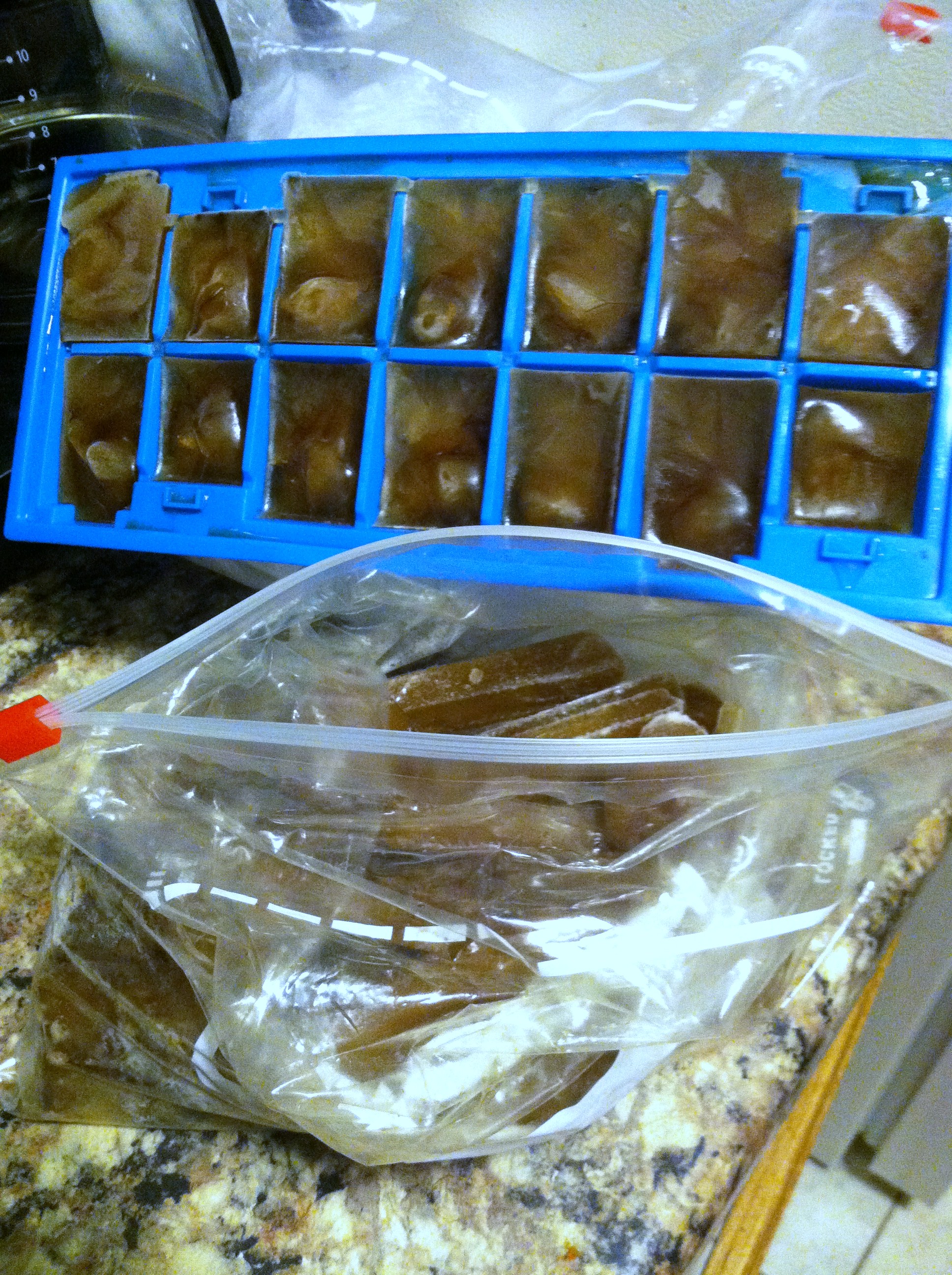
The problem is when it heats up outside, a steaming cup of coffee isn’t so desirable. When you pour hot coffee over frozen water, physics dictates that you end up with a watery, tasteless, lukewarm beverage. Then she came up with the most brilliant idea ever: freeze extra coffee into coffee cubes!
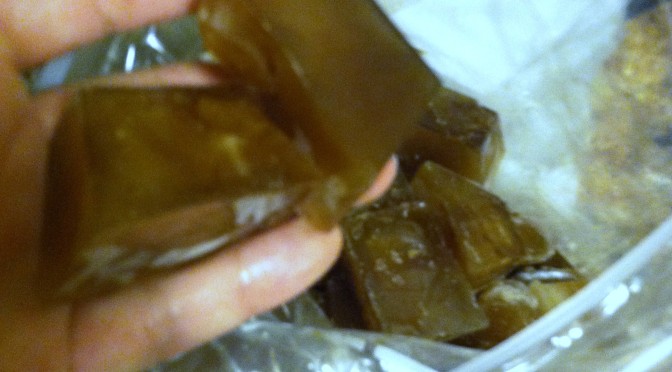
coffee cubes

We then pop these into a plastic bag in the freezer, and use them when the hankering for an iced coffee hits. They can also be blended into your own version of a frappuccino. Feel free to add in sugar, honey, creamer, cocoa powder, Hershey’s syrup…

IMG_2075

This saves money twice: extra coffee is not wasted, it is instead frozen for later. Also you can use that frozen coffee for two different types of frozen caffeinated beverages during the warm summer months.

IMG_2077

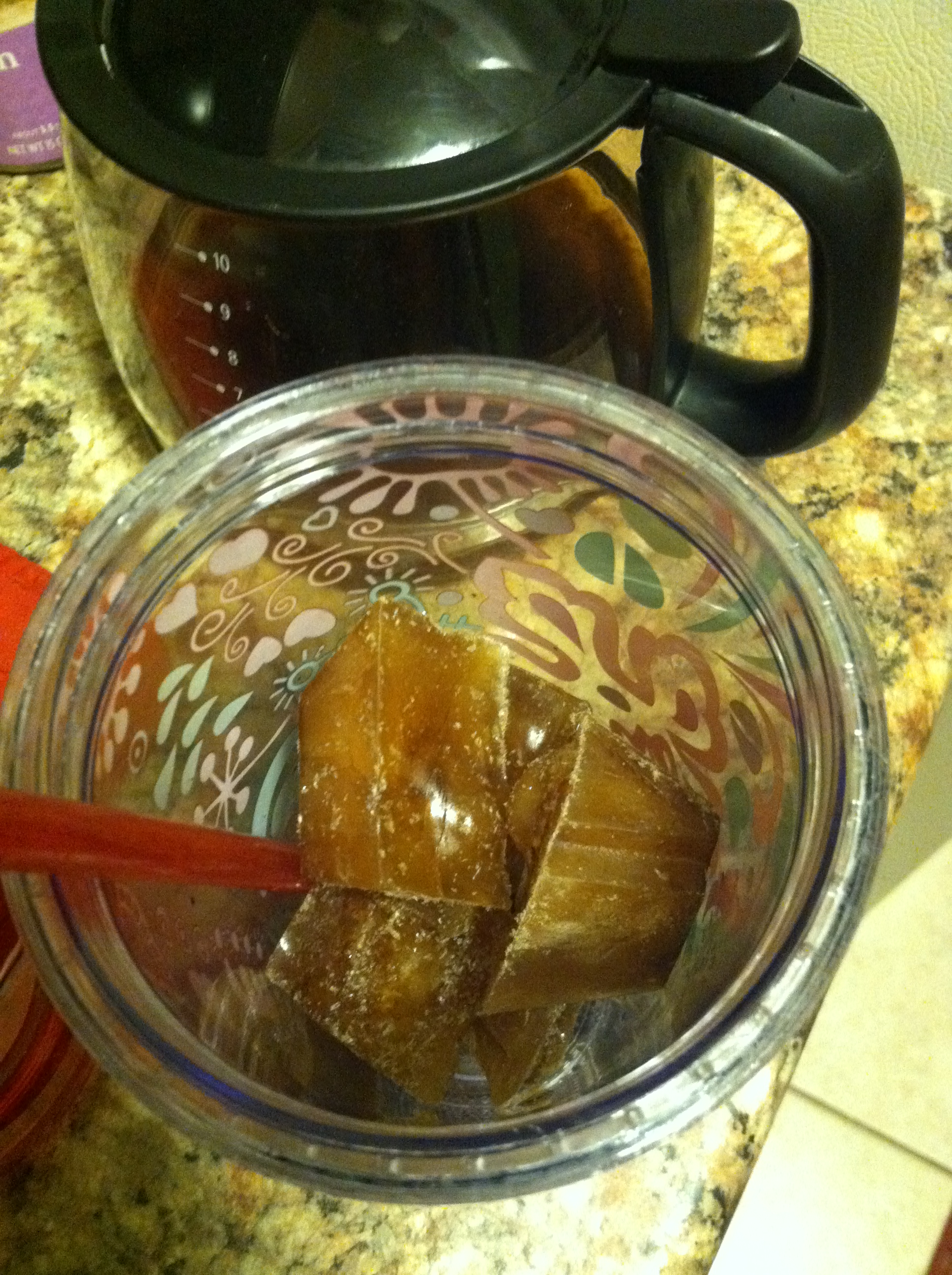
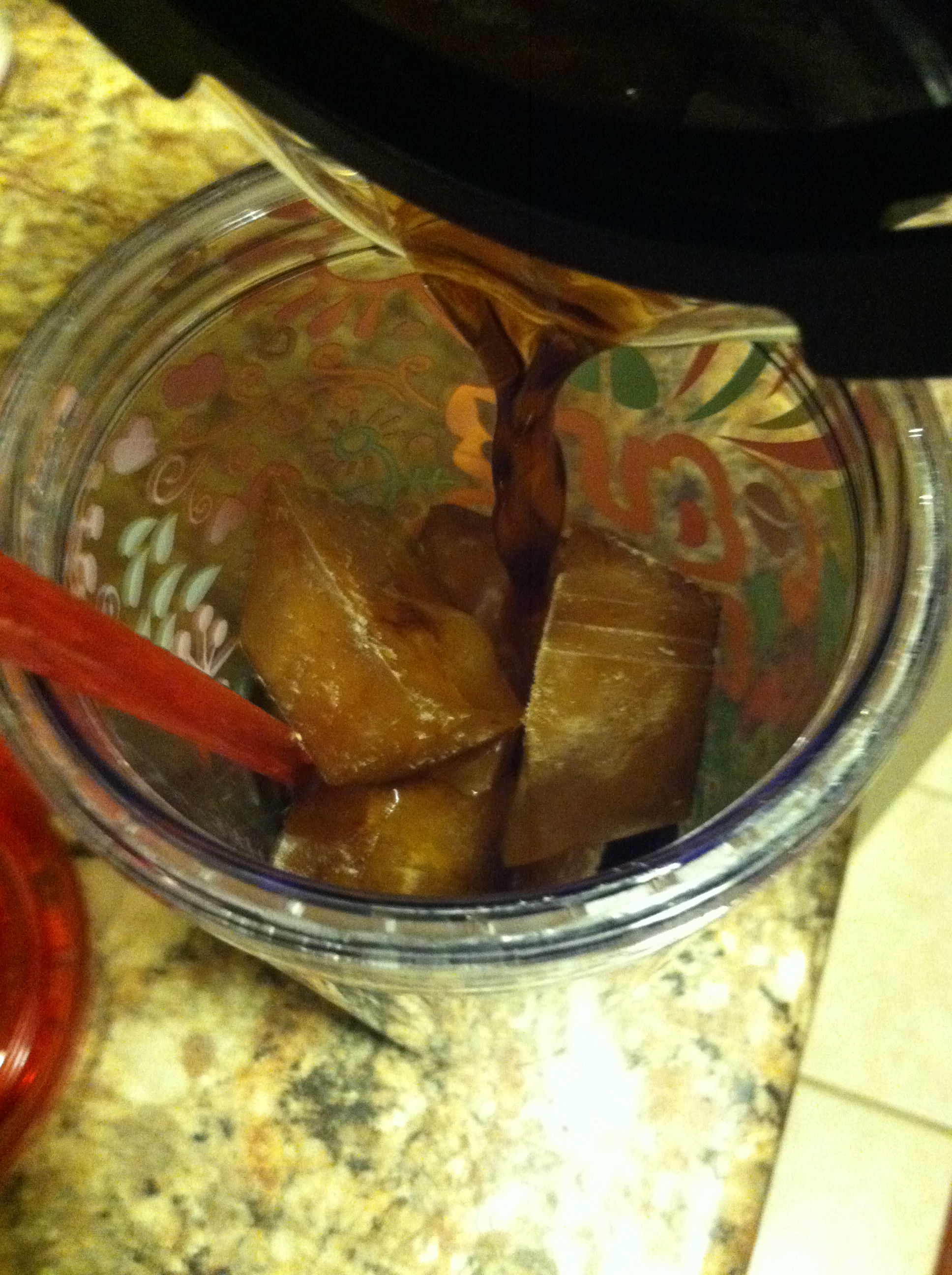
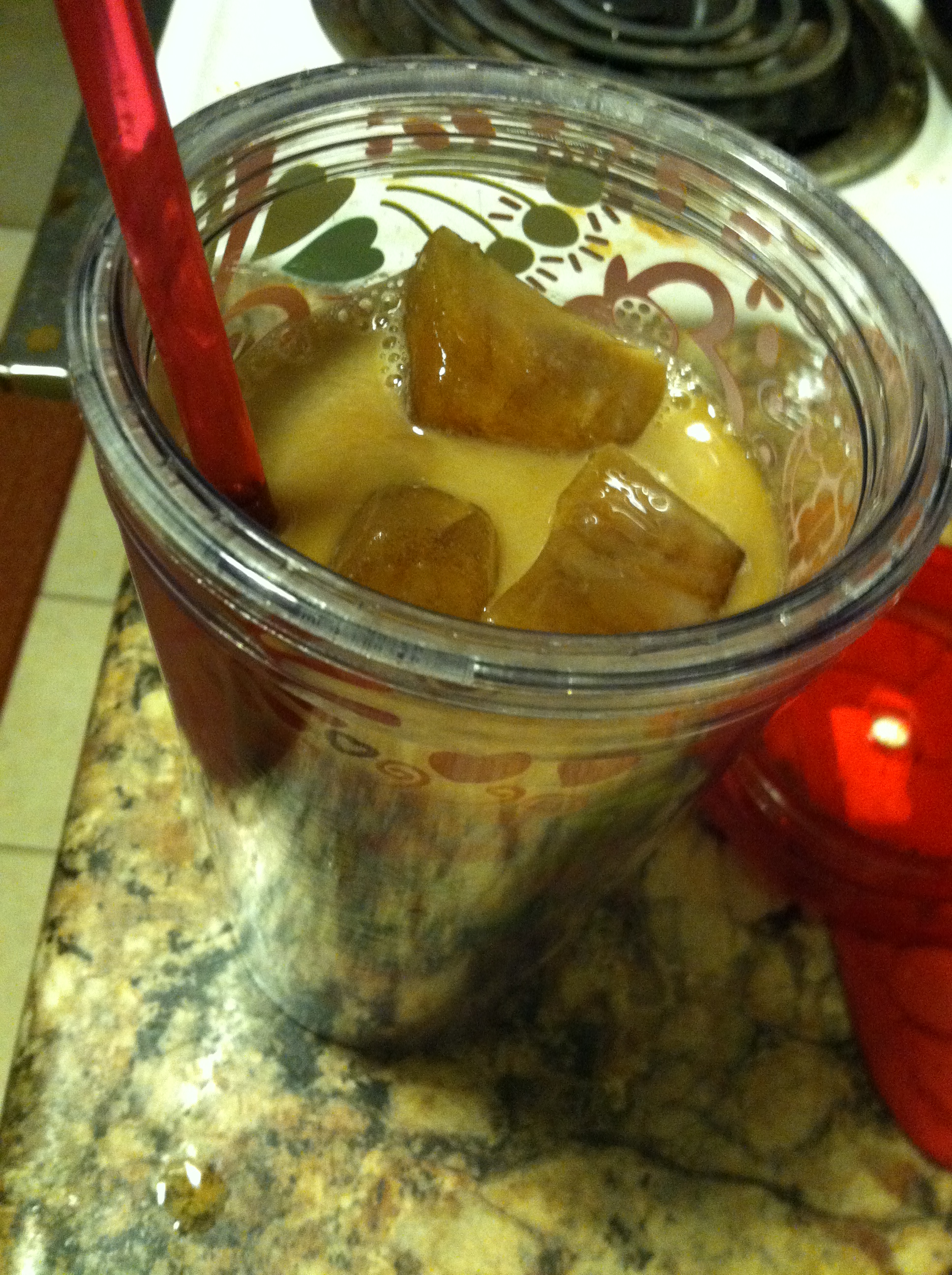
Step 1: Just fill your mug with coffee cubes, and pour more coffee over it. It is best to let the coffee cool down, or even put it in the refrigerator to chill before pouring. Physics still says hot liquid over frozen things will cause it to melt. =)

IMG_2078

Step 2: Add in your creamer and/or flavorings.

IMG_2079

Step 3: Give it a mix, and enjoy! Take your iced drink to work, school, the pool, a picnic, whatever. If you want a Frappuccino, simply fill a blender with coffee cubes, pour in a cup of cool coffee and flavorings, and blend until smooth. You can add whipped topping, cinnamon, Khalua… whatever your heart desires.

Iced coffee

Enjoy non-watery iced coffee every summer from now on!


Cinco de Mayo drink: Margarita Spritzer

Happy Cinco de Mayo!


 Most people will be celebrating early since the 5th of May is a Monday, so I figured I’d post this early as well. 

As with most holidays, I always wonder how they started and what they really mean. As I dug into the history of this one, I was surprised and learned quite a bit. 

Most people tend to think this holiday commemorates Mexico’s Independence Day, but that is not true. Mexico’s independence day is actually September 16th, not May 5th. The 5th of May is the day a Mexican city won a huge battle with the French. For a great 2-minute video, check out the History Channel. 

In 1861, Mexico was so far in debt to so many countries that the president Benito Juarez declared that they could not pay back any countries they owed. This made the French super mad, and they invaded. Good cheese isn’t cheap, you know.

So the French rampaged across Mexico, winning battle after battle. Then on May 5, 1862, in the state of Puebla, the Mexicans finally defeated the French, despite being less prepared, not well trained or equipped, and outnumbered 2:1 on the battlefield!

The French quickly regrouped and eventually took Mexico City, but that euphoria of an unlikely victory tasted sweet. Just like a cold margarita. The victory was so inspiring, American generals began using it as “inspiration for the Union struggle in the Civil War”. (*All quotes from the History Channel video mentioned above)

Mexican-Americans, and Americans of all kind, took to remembering that battle every May 5th with food, drinks, parades, dancing, game, and bullfights (from About.com “Cinco de Mayo – the Basics“). Over time, the holiday died down in most of Mexico, except in Puebla where the battle was originally won. However, north of the border we never got out of the habit, and Cinco de Mayo is still celebrated every year with margaritas, Meixcan food, and other festivities. And now you know the “surprisingly American history behind this Mexican holiday”.

So to celebrate these brave Mexican fighters who didn’t want their tacos replaced with baguettes, make yourself a big ol’ pitcher of these Margarita Spritzers! With less “extras” and sugar, this version of the lime classic is lower on calories but big on taste, and how hard it hits is up to how much tequila you pour!

This margarita requires NO triple sec, the source of most margarita’s zing and pucker, but it’s also a sugar bomb with calories galore. This is a super simple recipe, with endless customization choices.


Ingredients:

  • 1 oz gold tequila
  • 1 oz simple syrup*
  • 1 oz lime juice
  • 1 cup soda water (lemon-lime flavor is best)
  • Salt for rimming if you like
  • Fresh lime slices for garnish

Step 1: *Simple syrup – add 1 cup sugar, 1/2 cup brown sugar, and 2 cups water to a pot. Bring to a gentle boil, or at least heat until all sugar is dissolved. Chill for ~1 hour.

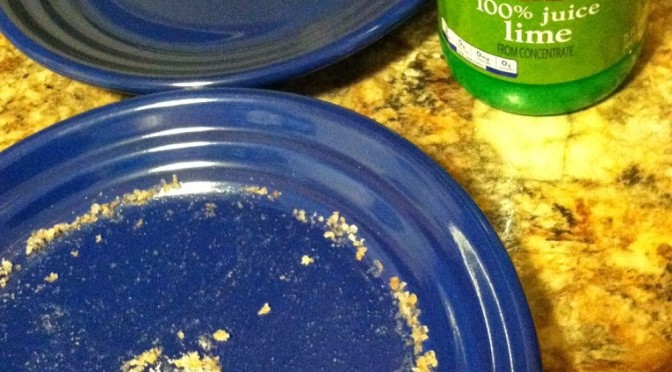
Step 2: On two flat plates, pour onto one a tbsp lime juice and on the other some sea salt. Take a glass, and rub the rim in the juice. Then swirl it around in the salt so it sticks.

Step 3: In a shaker, combine (per drink) 1 oz tequila, 1 oz simple syrup, and 1 oz lime juice. Shake with ice until cold.

 Step 4: Pour over ice in rimmed glass, and top with soda water. Stir and garnish as desired.

Try any juice you like in place of lime; cherry, pomegranate, strawberries. I’m a total purist and prefer simply lime over ice, but you can blend it if you must. Check out CookingChannel‘s list of top 20 Margarita Recipes for inspiration.

This 5th of May, raise a glass to those brave Mexicans who kept the French in France and enabled this long tradition of May festivity. ¡Que viva México!


What do you do on May 5th? Do you celebrate Cinco de Mayo? Do you have any special margarita recipes I need to know about?


Quick & Easy Blueberry-tini

This simple cocktail is super fast to whip up, for a house party or to relax in the evening after a long week. Sugary enough to mask the alcohol, be careful to count how many you make! Dangerously delicious.

Ingredients:
1 oz vodka (can use flavored if you prefer)
1 oz blueberry martini mixer (can use juice & club soda instead)
Handful frozen berries
Rimming sugar (cute if it’s colored but you can use plain)

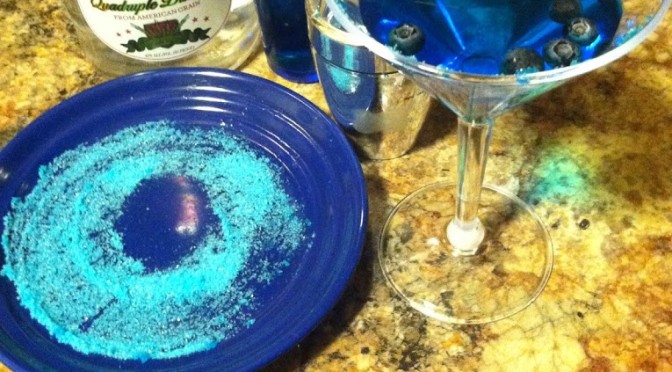
Step 1: On a flat plate, squeeze a lemon or lime. Or drizzle a tbsp of juice. Rub the rim of a martini glass in the juice to get the rim wet.

Step 2: On a separate flat plate, spread a circle of sugar. Take the wet-rimmed glass and rub it in the sugar so that it sticks.

Step 3: If you have a mixer, add ice, 1 oz vodka and 1 oz mixer and shake well. If not, just mix in a normal cup. Pour into the rimmed glass, and add a few frozen berries. You can get fancy and put more berries on toothpicks as a garnish. 

Step 4: Relax & enjoy!


What is your favorite drink?


Grapefruitcello

History of Limoncello

Limoncello is a traditional liquor of Italy, with competing areas laying claim to its origin, including Sorrentini, Amalfitani, and Capresi. Production began sometime in the 1900s, but the businessman Massimo Canale first trademarked the name “Limoncello” in 1988 (source: Taste of Sorrento).

There are many other competing stories, such as limoncello being used in coastal towns to fight the morning chill, or its use among monks in monasteries to keep them cheerful between prayers. 

Limoncello has been growing in popularity as people begin trying their hands at home-brewing all types of alcohols, from wine and beer to whiskey and kahlua. The beauty of this type is that there are only four ingredients: citrus peels, alcohol, sugar, and water.

It does not depend on a specific type of alcohol, rum will work just as well as vodka. It also can vary between which type of citrus peel you use. The steeping time is typically at minimum one month, but I’ve read up to a year. 

By soaking the peels in the alcohol, you are sucking out all the depth of flavor and aroma from the peel’s essential oils into the liquid. This infusion is what can then bring flavor to other beverages. It is claimed that limoncello as an aperitif before or after a meal is a great digestive aid, and it is also sometimes enjoyed when mixed with champagne.

Typical Recipes

Limoncello is made by soaking the peel only of citrus fruits, most often lemons, in liquor for an amount of time. It is then strained and to it is added sugar dissolved in water. The liquid is then cured a little longer. It is then ready to be drunk as an aperitif or added to cocktails.

According to Discover Italian Foods, the traditional recipe calls for: 13 Sorrento or Amalfi lemons, 2 L good quality alcohol (type not specified), 650 g sugar (2 & 3/4 cups), and 1 L pure water. Soak the peels in the alcohol in a cool, dark place for one month. Filter, then make the syrup by boiling the sugar and water. Mix and store in the freezer.

Keep in mind that all of these recipes calling for limoncello can also use any steeped liquor using citrus peels. You can make this with oranges, lemons, limes, tangelos, or grapefruit. As long as you make sure to only take the peel and not the pithy white inside, you’re good to go!

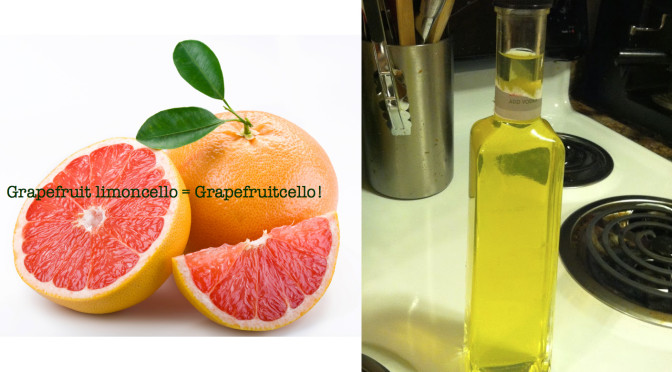
I decided to start small, and as I only had one gigantic grapefruit, that is what I started with. I scaled back the average recipe and made just one bottle of grapefruitcello.

Ingredients:

  • 1 large grapefruit
  • 1 cup plain vodka
  • 1 cup sugar
  • 1 cup water
  • ~time~

Step 1: Peel 1 large grapefruit and place peels in a glass jar. Pour the vodka over it and cover. Let sit in a cool, dark place. Mine only sat for 2 weeks rather than the traditional month or longer.

Step 2: Prepare the simple syrup by mixing the sugar and water and bring to a boil. Strain the liquor to remove the peels. Let syrup cool, then add to the filtered infusion.

Step 3: I’m storing this is the refrigerator for now. It probably won’t last too long!

This made about 150 mL of grapefruitcello. The taster shots were darn good, I can’t wait to mix up some tangy cocktails using this!

Limoncello cocktails

Limoncello can be drunk cold by itself between courses or after meals, you can use it in baking, or it can be added into cocktails for depth of flavor. This post from The Vintage Mixer is right up my alley in determining how to mix a cocktail.

Simply take 1 ounce limoncello, add 2-3 oz any complimentary liquid (juices, club soda, tea), add an additional liquor if you desire (1 oz gin, whiskey, rum), and garnish with something pretty! The website Limoncello Quest also has a massive list of creative drinks which use limoncello. 

I’m going to try a variation on a vodka cranberry and a lemon drop martini. Since I used grapefruit to make the grapefruitcello, I don’t need grapefruit juice. 

Ingredients:

  • 1 oz grapefruitcello
  • 1 oz vanilla vodka
  • 2 tbsp lime juice
  • 1/2 cup cran-cherry juice (or whatever kind you like & have)
  • Top off with sparkling water

Step 1: I had frozen lime juice cubes so I threw one of those in, as well as some re-freezable ice cubes so it didn’t get watered down. Add 1 shot (1 oz) of the grapefruitcello and 1 shot of vanilla vodka (bought pre-flavored or make your own by adding vanilla beans to plain vodka). Add in about 1/2 cup juice, and top it off with sparkling water.

I added a slice of lime wedge and a pretty stir stick, and my new signature cocktail is complete! Pretty and delicious. And with under 200 calories, about 15 g of sugar, and no fat, you can justify another one!
  

Have you made any homemade liquors? 

Super simple egg nog

History of eggnog: What’s in a name?

Egg Nog is one of the most popular beverages around Christmastime. But where did this dairy delight come from? There is plenty of debate but most sites agree that it is a descendant of the European beverage of “posset”, a popular beverage made with sweetened hot milk and wine. The original didn’t contain eggs, as dairy products were expensive and a rare commodity. In the Americas this wasn’t a problem, since most settlers kept their own cows and chickens, thus having plenty of access to both milk and eggs. Even today, the drink is far more popular in the US than the UK.
As for the “nog” part, CNN has an interesting article which puts forth three theories:
1. The word “noggin” describes the wooden mugs this beverage was often served in
2. The Norfolk slang word for strong ales served in these mugs was “nog”
3. In the early Americas, this drink was called “egg-and-grog”, which after having a few glasses morphed into “eggnnogg…”
 
Other countries have similar varieties, Time cites the Mexican “rompope” as well as the Puerto Rican version which adds coconut milk called “coquito”.
 
A perfectly valid excuse for consuming a carton by yourself is patriotism. Our forefather George Washington was quite fond of the drink, and the official White House recipe called for at least four types of liquor, a quart each cream and milk, one dozen tablespoons sugar and one dozen eggs. I can only imagine the holiday festivities after a few glasses of that…
 

Nutritional info

First of all, eggnog is traditionally made with whole, raw eggs. According to foodsafety.com, you can make a cooked egg base first then chill before mixing to be absolutely sure your nog is safe. According to popular belief, adding alcohol will kill any bacteria. But this is not true, so don’t count on copious amounts of rum or sherry to keep your eggnog sterile. If you have an immune deficiency or are paranoid about salmonella, you can use pasteurized eggs.
If you’re holding a frothy glass right now, you might want to skip over this part. But chances are even if you indulge, you do so with the awareness that eggnog is most certainly not a diet drink. Especially the sugar-stuffed, store-bought kind, which is only required to have 1% egg by the FDA to classify as eggnog. You can get up to 1/3 day’s worth of fat and cholesterol per glass depending on the brand. It is far better for you (and tastier, in my opinion) to whip up your own fresh. 
 
This recipe has only 250 calories, 2.5 g fat, 95 mg cholesterol, and a bonus 7.5 g protein per serving.
For an aged recipe that sounds wonderful (which I will try soon) see Alton Brown’s recipe on Mental Floss.
 
 
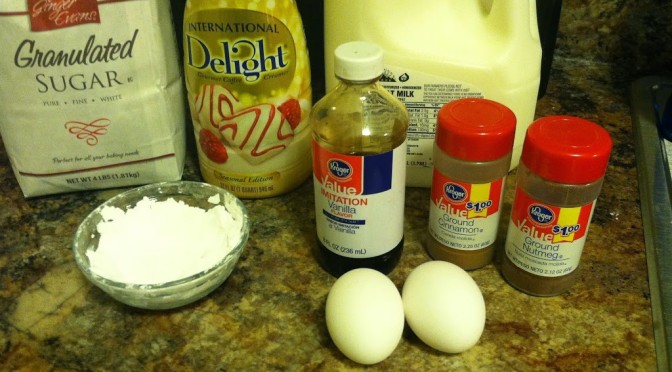
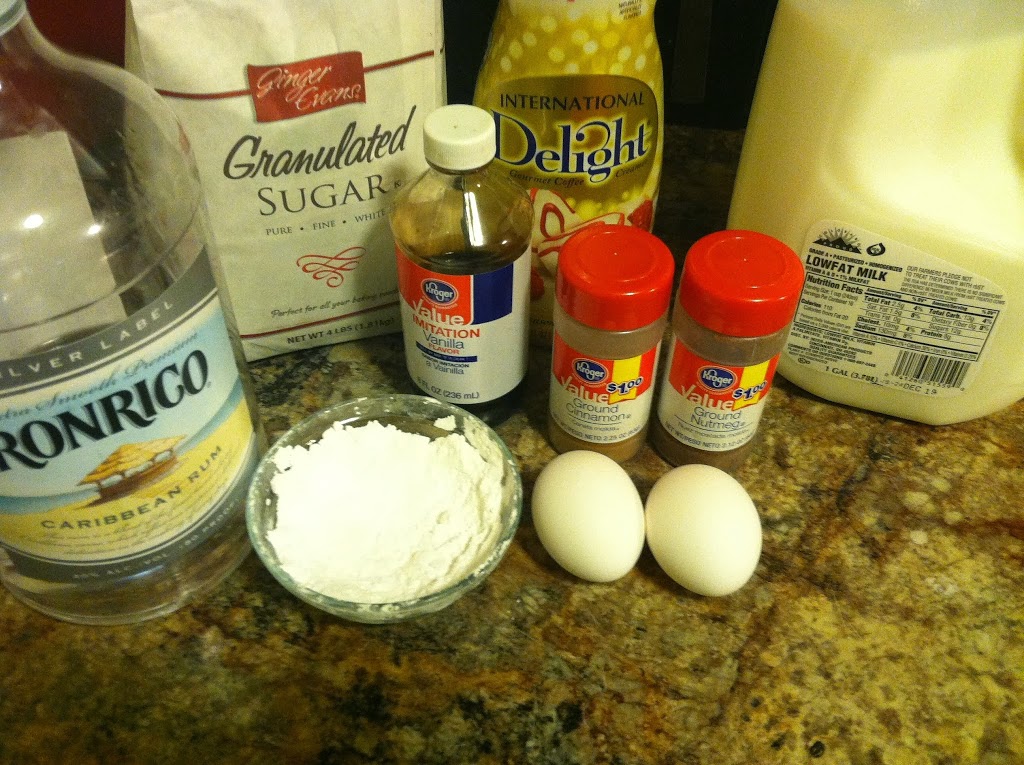
Ingredients:
2 cups milk
4 tbsp creamer (flavored kinds will add that extra something)
1 tbsp sugar
1 tbsp powdered sugar
2 whole large eggs
1 tbsp vanilla flavoring
Cinnamon & nutmeg to taste
*For an adult version, add 1 cup rum or liquor of choice

Step 1: Pour all the ingredients into a blender. Blend on high for a few seconds. Pour into a mug and dust with cinnamon. This makes enough for about 4 glasses.
Do you have any other favorite holiday drinks?

True Stories of Juicing

.

Raw Juice: what’s fact and what’s hype?
 
For several years now I’ve been dabbling in “healthy stuff” like juicing. As most things do, it began as just a curiosity, what’s it all about. I read articles and books and opinions of people who have tried juicing in various ways and for various amounts of time. There are some super-intense proponents of juicing, like this guy. His name is Joe Cross, and he claims juicing saved his life. He has a documentary on Netflix and free online called “Fat Sick and Nearly Dead” as well as a blog. Before you think “ok, crazy extremists who make these claims just want us to buy their juicer”, let me say that recognized sources like WebMD and even Dr. Oz tout the benefits of juicing while giving adequate attention to the possible drawbacks.

Fruit and vegetable juices retain most of the chemicals which make them so good for us in the first place, like chlorophyll, anthocyanins, antioxidants and flavonoids. It is important to note that although adding juice to a well rounded, healthy diet is an excellent idea, beware falling into thinking that juicing is the only or best way to be healthy, or that only juices are good for you and you should avoid whole foods. That is not at all what I’m saying. Juicing also takes out all the fiber from these wonder foods, fiber that your body needs for its normal digestive process. For a list of nearly 50 more fascinating raw food juice facts, check this out.

Now, before you rush out and buy a $300 juicer, consider your needs. Are you just beginning to dabble in this juicing craze? Do you just want a healthy beverage now and then, as well as pulp to put into soup and muffins? Are you already a hard-core health nut ready to begin adding daily juices to your diet? There are two types of juicers, a centrifugal juicer or a masticating juicer. Centrifugal machines work by chopping the food into tiny pieces and spinning it to separate the juices. They are typically smaller and less expensive. You won’t get as much of the nutrients, but they do the job. Masticating juicers work by mashing and grinding the food, producing a thicker, pulpier juice with the majority of the nutrients. They are typically larger and more expensive. You can check out a wide array on Amazon (not an affiliate link. I will get no benefit if you look or buy). 

Funny story, my juicer was actually free. I’m a member of an online community called SparkPeople which has nutrition and exercise trackers, recipes, articles, community boards and much more. I highly recommend it if you want a simple, informative website to keep track of your health stats. Anyways, there was a forum about juicing, and I posted in it that I was curious about juicing. It lead to several conversations about types of juicers, uses, etc. A fellow member sent me a personal message saying that she had just gotten a newer, larger juicer as a gift and had an old one she didn’t need anymore. Of course I was skeptical, but sure enough two weeks later a gorgeous little blue and white juicer showed up! 

My gorgeous gift, courtesy of a kind fellow Spark-er!


I was thrilled, and thanked her profusely. Since then I’ve dabbled on and off with various types of fruits and vegetables and recipes, and learned a little along the way. Following is a list of rules I’ve determined for myself. They may not all work for you, but enjoy learning from my experience.


Jen’s Five Juicing Rules: 

1. Take the time to cut off the peels. Seriously, juicing the peels too gives the final juice a bitter, sour taste that is not really pleasant, regardless of what other goodies are in there.Of course, mine is a centrifugal juicer, not meant for large pieces of whole fruit. If you have a masticating one, it might be ok.

2. Know the limits of your machine. If you have one of the huge, fancy juicers you can pretty much throw a whole watermelon into, good for you! Most likely you do not, so know how large of a piece of food your machine can handle at a time, and if you’re doing a large batch clean it a few times throughout to keep it from clogging up.

3. Wash your juicer immediately once finished. Dried on fruit and vegetable bits are gross, start to smell, and are much harder to scrape off the inside of a fruit chute than fresh.  I promise the chlorophyll and phytochemicals in your juice won’t fall apart in the time it takes to give it a quick rinse.

4. Always throw in a little something sweet. Even the most hard-core purist who drinks three glasses of green juice a day has to admit kale, spinach and carrots alone don’t taste super great. Especially if you’re just starting out with juicing, give yourself some slack and add some apple juice or berries to everything.  

5. Don’t be afraid to try new things. I juiced anything I could get my hands on for a while. Sure I made some mistakes (see the list at the end of things that are HORRIBLE juiced) but I also found a lot of new fruits and veggies I didn’t know I liked. 

Prepping for juicing: lots of fresh fruits and veggies
This will become many tasty beverages for the week.
Mmmm green juice, that’s the best way to start the day.

Things that are seriously gross when juiced:
Cabbage
Potatoes
Mushrooms
Garlic – maybe for cooking, but holy cow this stuff is strong! Gag-inducing, even in small amounts.


Things that will overwhelm the taste (use small amounts only):
Grapefruit
Ginger
Lemons
Limes

Best things for juicing:
Apples
Carrots
Celery
Cucumber
Spinach
Oranges
Pears
Berries (most of them)
Pineapple
Lemon/lime/grapefruit


Now that you know the facts, go ahead and find yourself a juicer (Amazon, Ebay, Walmart, Christmas present, Craigslist…) and get to creating! The Beginner’s Guide to Juicing is a great article full of helpful information, reviews of different types of juicers and blenders, and includes more recipe ideas.

Some recipes to get you started:

Citrus Refresher
~2 oranges, peels cut off
~2 apples
~2 large carrots
~1 lemon and/or lime

Green Machine
~1 large handful spinach or kale
~4 stalks celery
~1 large cucumber
~1 apple
~1 lime

Cold Crusher
~2 oranges
~1/2 a grapefruit
~1 apple
~1″ chunk ginger
~1 lemon

If you have any juicing stories, advice or recipes, please share!

Save