Category Archives: Finances

Articles concerning finances. This is the “budget” Epicurean after all.

Less than 5: Big-kid Ramen

Another in my “Less than 5” recipe series. All recipes beginning with that title will have less than 5 ingredients and/or cost less than $5. Bonus for ones that also take less than 5 minutes. =)
 
Ramen used to be the greatest after-school snack ever. Then in college, it was pretty much a daily staple. At 10-20 cents per pack, the good people of Ramen keep poor college kids worldwide from starving. When I started graduate school, and started taking this blog more seriously, I figured Ramen was no longer part of my life. I had graduated to frittatas, lasagna, and white bean chicken chili. Big kid food. 
But then in my masters study, my Taiwanese advisor had Ramen for lunch nearly every day. She just fancied it up by adding a handful of fresh spinach and an egg. Well of course I had to try it, as the chicken-salt smell of Ramen is hard to resist. Adding veggies ups the nutritional value (which previously was negative zero) and an egg or tuna will bump up the protein.

It turns out to make a decently healthy meal, for way less than a dollar per serving. Ever since then, when I have a random Ramen craving, I give in with the justification that at least it’s “big kid” Ramen. Now you can too!

 
Ingredients:
  • 1 package Ramen noodles
  • 1 cup frozen mixed vegetables or spinach
  • Optional: 1 egg, thinly sliced meats, shrimp, tuna
  • Spices (I used parsley, parmesan, and red chili pepper for kick)

Step 1: Heat the noodles and 2-3 cups water for 3 minutes in the microwave, or pour in boiling water. Let stand for 3 minutes.

Step 2: Add the vegetables and egg. Break the yolk so it doesn’t explode. Microwave another 3 minutes.

Step 3: Stir in seasoning packet and spices, enjoy!

The chili flakes gave it a nice bite of heat, and I like the frozen mixed veggies because of the corn and carrots’ sweetness. You can get creative with this. Use tofu, beans, tuna, chicken. Any cooked vegetable will work well. I’m partial to the chicken flavoring only, but there are beef and shrimp flavorings too.

For 0.10 (noodles) + 0.10 (egg) + 0.10 (frozen veg) = $0.30 

Not a bad meal!


What do you put in your Ramen?

Meal Planning: What it is, why you should, and how to do it


A very popular topic in food and cooking related blogs and forums is meal planning. What is it, how can you do it, is it worth the time? I’ll start by saying that this article is going to be just full of suggestions, tips and tools. Everyone’s situation is different, so I cannot write an article that will work for every single person who might read it. I don’t know if you’re single, vegetarian, diabetic, have three kids, on food stamps, or a combination of all those things. I will however try my best to give you general tips with more specific scnearios as we go along.

Feel free to email me at BudgetEpicurean (at) gmail (dot) com if you have a specific question, or any question really.

As featured on Stacking Benjamin’s podcast:
Meal Planning Made Easy

What is Meal Planning?


Meal planning is simply that: planning your meals in advance. The period of planning time may vary, for some you don’t plan dinner until it is 7pm and you’re starving. Some people plan per week, others plan per month. It is up to you how frequently you can and want to think about your upcoming meals.

The most common way to go about planning meals is to use a spreadsheet or pre-made printout. If you are an experienced cook or have adequate food in your home already, you could simply list the day and the meal(s) you intend to make. There are abundant options of formats available for free online, and there are also yearly or monthly services which will plan your meals for you. Most paid services will also create a grocery shopping list to go with the meal plan.

But why pay for a service you can do for yourself in 20 minutes on one weeknight? I am after all, the Budget Epicurean!

Why should I bother?


Well, if it really seems like too much trouble, you don’t need to read any further. Or pay for someone to do it for you. But meal planning can save you the loss of significant money in the form of food waste.

Americans waste billions of pounds of food per year, up to 40% of the food that households purchase!! This is due mostly to bad planning. You make too much and no one likes the leftovers. Or you cook, then go out, then cook again, and it goes bad before you can rotate the leftovers. Or you miss an expiration date and the goods expire. 

By planning your meals in advance, you are creating several opportunities to save money. You are also bettering your health. This is what planning meals and cooking at home does for you:

  • You can feature weekly sale items in your meals, saving you $$
  • You can buy in bulk for similar meals, saving you $$
  • You cut down on food waste, saving $$ and landfill space
  • You control portion sizes, helping your health
  • You control what ingredients go in it, meaning you can ‘have it your way’
  • You determine what meals to make, avoiding boredom
  • No preservatives or extra chemicals are added, boosting your health

How to make a meal plan

A typical week’s meal plan for me.

As stated above, there are plenty of free and paid templates online. But the simplest way to do it is make it on your own. If you are super new to cooking in general, take a gander at Real Simple’s “Cooking Basics” checklist. Then follow these steps:

Step 1: Make a list of meals you/your family likes to eat, and meals you know how to make.

Step 2: Draw out a grid for the week. Seven columns, and 3-5 rows for individual meals and snacks.

Step 3: Start filling in spaces you know. For example, if you have kids, you can fill in the “lunch” squares with “school” if they buy a lunch, or “PB&J + apple + string cheese + juice” if you make their lunches. Feel free to add in things like “Eat out” or “Leftovers buffet” for nights you know will be busy.

Step 4: Check your local grocery ads. Figure out what is on sale that could go into meals you would like to make. For example, if romaine, tomatoes, chicken, and salad dressings are on sale, you should schedule in a grilled chicken salad for dinner and/or lunch a few days this week.

Step 5: Once you have figured out what meals you are making, do a quick check of your cupboards and refrigerator. Write down any items you need to buy at the store. This is your week’s grocery list.

Step 6: Take your list to the store, and buy only what is on the list. Don’t let yourself be lured by that juicy looking steak or the whole rotisserie chicken, unless it was on your list. This will take willpower and practice, but will be a huge money-saver.

Step 7: Post your week’s (or month’s) meal plan where you will see it, maybe on the refrigerator door. Then simply follow it each day. 

Grocery cart

The planning process should take you only 20-30 minutes on a weekend or weeknight, and a 30 minute trip to the store. Once you get the hang of a basic meal plan, you can get much more detailed. For example, you can plan to make large amounts of a basic ingredient, like beans or rice, on the weekend. Then throughout the week take the portion you need for that day’s dinner out. Or have notes to yourself to defrost the pork chops you will cook Wednesday on Tuesday night.

Don’t forget to add in little things like snacks, desserts, and occasional days out so you don’t get ‘frugal fatigue’. 

For more information & ideas:
The CDC has a great article on cutting costs and calories by planning meals at home as well as one the go.
EatThisMuch has an awesome calorie calculator/meal planner that allows you to input a calorie amount, and it automatically gives you three meals (or more depending on what you choose) with that amount. You can change out meals you don’t like, or add more.
Cooking Light also has a weekly meal planner which allows you to choose recipes from their archives and drag & drop to create your week.


Do you plan meals in advance?


Breaking Out of a Rut Without Going Broke: Financial Tips for Career Transitioning


I’ve recently come to realize I’ve lost something I’ve had my whole life. Something that some, if not all, people never have. Direction. I didn’t really appreciate it until it was no longer there, like most important things in life. For me, it is science.

Science has been an inevitable, magnetic pull as far back as I can remember. I never even hesitated when people asked “What do you want to be?” or “What will you major in?”

Biology of course.

There are other things you can study and do? Who knew.

Biology in action.

Therefore, my whole life thus far has been laser-beam-focused on science. And I’ve certainly achieved my objective. From four different lab internships throughout undergrad, to a published masters thesis, to a PhD candidate position on a top medical campus, I’d say in terms of ‘doing science’ I have succeeded so far. 

Problem is, one day I realized that magnet was getting weaker.

And I fought it. I tried to re-focus, to think about it differently. But it faded away like a sunset, leaving the darkness of confusion in its wake. That thing which defined me, drove me, inspired me; now there is no pull. There is no sense of purpose, no goal to strive for.

Now what? 

I’m very fortunate that my parents taught me how to manage money from a young age. I started my first savings account at 13 with my meager allowance. I had many a lemonade stand and bake sale, babysat as soon as any parent would allow me, and had a part time job at a roller rink by 15.

My dad made me a deal to pay for half of my first car, and by the time I had my license in hand, I’d paid cash for a cute little green Saturn. Throughout college and my masters degree, I worked two jobs to cover rent, food, gas, and books. My high test scores had rewarded me with a full tuition scholarship. Because of this life-long money awareness, I made it out of six years of school with less than 1/3 the average college debt. 

I will be forever grateful to my parents for those lessons in frugality and saving.

Those lessons are ones I continue to apply every day in my life. My savings account is by no means impressive, but it would be enough at this point to allow me to be unemployed for about 5 months without changing my lifestyle one bit. If I cut back dramatically I could probably stretch that to 8 or 9 months. That is such a peace of mind when looking at a possible huge life change, like a major career transition.

As if the thought of not having a job weren’t stressful enough, I just think how much worse it would be if I literally needed that paycheck to pay my necessary bills. And I know a lot of people are currently in, will soon be, or have been in that exact situation, and my heart goes out to you.

If you are, or think you may soon be in a career transition situation, I have a few pieces of advice you should consider now to make it easier when that day comes.

1. Pay yourself first.

This is the most important rule of money. You pay your landlord rent, you pay the dealer for your car, you pay the grocery store for your food, you pay Uncle Sam his taxes. Why would you not pay yourself? After all, you are the one doing the hard work at whatever your job is to bring that paycheck home.

Statistics from December 2013 reveal that 40% of Americans are not saving for retirement, while 25% have no savings at all. That is a very scary thing. And when you pay all the required bills, there is not much left over for silly things like, say, food and gas. I understand. But that’s why it’s imperative you save 10% first. 

Use automatic transfers to make it easier. On the first of the month, just take 10% of your paycheck, whether that is $10 or $1000, and transfer it into a savings account.

It may be slow, but over time it will build. And you will find that you can still make it to the end of the month. Maybe you will have to cut out a trip to the store, or a movie night. But think how much better you will sleep at night when there is a cushion of cash you can call your own.

2. Scale back on non-necessities.

If you know for a fact that a period of transition is coming up, scaling back on your lifestyle can make a huge difference between being comfortable and feeling squeezed. If you know you will be transitioning to a different field, might be unemployed for a few months, or will have to take a lower paid position, try to estimate how your income will change and start living off that lower amount now. Save the difference. 

Maybe cut back on eating out, going to happy hours, or buy fewer groceries, and stop smoking now. Find ways to minimize the cost of things you like to do. Go to a matinee on Saturday instead of a Friday night if you like theaters. Have a potluck game night with friends rather than going out to a dinner. Host your own wine tasting; $30 goes a lot farther at home than in a club.

3. Make a budget and stick to it.

The first step here is to figure out how much you are currently spending. For one month, track every cent that leaves your accounts. You can do this by hand, or try using an online tracking tool like You Need a Budget or Mint.com. Here’s a handy article I wrote on using Mint if you’re new.

The next step is to figure out how much you want to or should be spending in these categories. Things like rent/mortgage, car or loan payments, and utilities are rather concrete. Focus on categories you have control over, such as entertainment, hobbies, gas, and groceries.

Find more great tips in How to Make & Stick to a Budget.

4. Learn to cook, and cook at home the majority of the time.

Eating out can cost $5-$15 for lunch and $10-$20 or more per person for dinner. If you have lunch with co-workers every day, and dinner at a restaurant 2-4 times per week, that is a significant expense. It will save you hundreds per year if you cook your own meals at home. Obviously I am a huge proponent of learning to cook! 

In the archives here you should find plenty of simple, cheap meals as inspiration, and the internet has seriously infinite ideas. Even just picking up a loaf of bread, peanut butter, and jelly will give you two week’s worth of lunches for less than you probably spend in one day eating out.

If you don’t think you have time to cook, check out my 10 Minute Chili Mac, Fancy Ramen Soup, or Easy Steak Stir-fry. Search “less than 5” here for meals that cost less than $5, take less than 5 minutes, and require less than 5 ingredients.

For even more tips on getting your grocery bill as low as it can go, check out How to Save Money on Your Grocery Bill.

5. Find frugal entertainment & frugal friends.


If your social circle is based on events where you are pressured into spending money, then you need to start branching out. Big trips, buying ‘toys’ like boats and golf clubs, and going out drinking cost you big bucks. Try new hobbies that don’t require money, like taking up jogging or walking, join a book club, hike, start a garden, or find a local sport club.

You could entertain yourself with a visit to the park, your local museums, or volunteering. Help Habitat for Humanity, your local church or soup kitchen, or go to Volunteer Match to find something that fits your interests in your area. You can get involved in your community, help people, and meet new friends along the way.

More ideas on cheap/free hobbies:
23 Fulfilling Hobbies You Can Start Right Now from Thought Catalog
The Only Thing You’ll Need to Spend is Time from The Simple Dollar
100 Cheap Hobbies – Spend Time Not Money from Free in 10 Years 
The 35 Best Ways to Spend Your Free Time (Frugally) from WiseBread 

Job transitioning articles:
When Your Dream Job Disappoints, How to Find Plan B from The Wall Street Journal
Don’t Burn Bridges: 10 Ways to Maximize a Job Transition from Monster Working
Transitioning From One Job to Another from Business Insider
Advice for People who Want to Quit Their Jobs from Thought Catalog

This post began with the intent of giving tips for making a career transition easier, but these tips are applicable to any stage of life. If you start incorporating these ideas into your daily life, you will notice your bank balances going up, maybe your debts going down, and your worries starting to ease. You may even find a whole new world of things you didn’t know existed, and make new life-long friends.

Though a career transition is scary, being prepared can help make it easier. The more you have saved, and the fewer your bills and expenses, the more comfortable you will feel financially. Then you can focus on perfecting that resume, building your network, and polishing your interview skills instead.

I have no idea where I will go from here, but I know that having some money in the bank and minimal expenses makes it a lot less scary to not know.


Have you ever transitioned between careers? What advice do you have?

The Most Important Rule of Money: Pay Yourself First


Let me begin by saying I am not a financial expert, nor do I have financial training. I am not a CPA, an investment banker, or a tax expert. I am just a normal American, still in school, with a job (sorta), who has read a lot of finance blogs, books, and articles. I apply this one rule to my life every day. And I am in a fairly stable position. I can manage my monthly expenses, and have a small amount set aside for retirement and savings. I’d like to share with you the most important rule of money I ever learned.

My main financial training came from my parents. My father set each of us kids up with a savings account at age 13. We were taught how to balance a checkbook, and how interest works for or against you. I was given a book that remains the cornerstone of my financial outlook on life. That book was “The Richest Man in Babylon” by George Clayson (free audio version on YouTube). It is a simple fictional story of life in ancient Babylon, and how the richest man tried to teach the people how to also become rich.

The number one rule of how to begin growing wealthy, is this: Pay Yourself First. All other things will build upon that rule.

But what does that mean? An article from About.com says: “Money, like water, expands to fill the container in which it is placed”. This means that if you set a goal for your money, and take steps to get it to that “container”, it will eventually expand to reach that amount. But if you don’t have goals and a plan to reach those goals, you are likely to reach the end of the month with no more money than you began with. Many Americans are living paycheck to paycheck, 75% by some estimates! But it doesn’t have to be that way.

The Road to Financial Freedom

It will not be easy. If it were, there would be no debt and everyone would be wealthy. It will require discipline. It will require sacrifices. But it is more than possible. If you are determined to get out of debt and/or become financially stable and eventually wealthy, start taking these steps right now.

Step 1: At the beginning of the month, before paying anything else, pay yourself. Try for 10% of your take-home paycheck. If you feel that is too high, begin with 5% and work your way up. But DO IT. Take that 10%, whether it be $10 or $1000, and put it into a savings or investment account. Even if you can’t ‘afford it’. If after that, you pay your other bills and come up short, write down by how much.

Step 2: Find a way to make up the difference; increase your income and/or decrease your expenses. You may need to work a few extra hours, pick up a side job, sell some things, or give up a few perks. But ask yourself, are immediate gratification items worth lifelong financial bondage? Is it worth going out for dinner or drinks to always have debt hanging over your head? Pay yourself, then do what it takes to make up the difference this month. Then do the same next month.
Step 3: Reduce your ‘extra’ expenses. Anything you do not require to live is extra. Rent/mortgage, utilities, and basic food. Besides that, do what you can to cut back. Maybe take the bus or carpool instead of driving, eat in all week, stop going out for movies. Make it a game and see how low you can get your spending to go. This is where budgeting comes in. Create a budget of how much you want to/can afford to spend in certain categories each week/month, and follow it.

Step 4: Build up a solid emergency fund. For a typical single individual, you probably need about 3 month’s expenses. If you have children, plan for an extra month per child as well. This would help cover things like doctor visits, sickness, car troubles, job loss. It will give you a huge comfort knowing you have some money saved and so small life problems won’t totally derail your financial life. This emergency savings is the beginning seed of financial freedom.

Step 5: Once you’ve built up an emergency fund, invest your personal paychecks. Keep that 1-3 month fund in something liquid like a savings account, then start using that 10% per month to invest. Open a 401K or money market account, and start investing in your future. Pay down debts, or buy stocks/mutual funds/bonds/real estate. Educate yourself on investing options, and play it safe until you learn the ropes. Don’t believe ‘get-rich-quick’ schemes or you’re likely to lose your carefully guarded nest egg. This money is the seed you hope to grow into a tree of wealth, a bad investment will rip it up by the roots and you will have to start all over. Continue to ‘water’ it with monthly investments, and over time you will see it grow.

Though this can be so very difficult at first, over time paying yourself first will become natural. You will start to feel a great sense of pride and accomplishment as you watch your balances grow and your debts disappear. You will start to enjoy living more frugally, because it means you have more left over to add to your savings and investment. Best of all, you will rest easier knowing that if an emergency arises, you can easily take care of it, and your future retirement will be more comfortable. Don’t wait another day, set up that direct deposit and take the first step down the road to financial freedom today!


More articles on Paying Yourself First:
Pay Yourself First: What It Means and How to Do It from Wisebread
Pay Yourself First from Get Rich Slowly
What Does Pay Yourself First Mean from AboutBudgeting


Do you pay yourself? Any advice to get started?

Twice the wine for half the calories!

Just in time for Thirsty Thursday, a smart trick to let yourself enjoy two glasses of wine for the caloric price of one!

Whether at home with your girls or sweetie, or out on the prowl at happy hour, this is a sneaky trick to help manage your weight without putting a damper on your social life. 

Disclaimer

Now, before I tell you the trick, let me say this is in no way an endorsement for drinking. I am not giving anyone permission to over-indulge or anything like that.

There is much mixed information in the news about how red wine contains antioxidants and resveretrol, so it has to be healthy; or alcohol causes lowered inhibition, weight gain, and loose morals, so it’s the devil.

There is some truth to both sides, and my life motto is all things in moderation.  Women are recommended to drink no more than one beverage per day, and men two.

An alcoholic beverage means:

  • 5 ounces of wine
  • 12 ounces of beer
  • 1.5 ounces of 80-proof distilled spirits, such as vodka (a shot)

While it is true that some studies show various mental and physical health benefits of moderate amounts of alcohol (specifically wine), alcohol also contains “empty” calories.

This means that you are getting calories from the drink, but no health benefits from vitamins or nutrients. So you need to take into account the calories that you will be adding on top of all your food calories for the day, or you will gain weight over time.

This also goes for other “empty” beverages like soda pop or sugary coffee drinks. 

Calories in Wine

Depending on the type of wine, one 5 ounce glass can contain between 100 and 300 calories. That is the typical size of a midday snack or breakfast. The range is large because it depends upon the type of wine and the sugar content.

Sweeter wines tend to have more sugar, and thus more calories, than dry wines. Which is unfortunate, because I can kill a whole bottle of moscato in one sitting, but take two hours to force down a dry red. I guess that’s the idea…

The website GetDrunkNotFat is aptly named, and specializes in exactly the type of information you would think. They have a great chart here that summarizes many types of beverages (including things other than wine) broken down by calories per serving, serving size, even grams of carbohydrates per serving.

You should also check out this amazing infographic on “Wine for Beginners” by Madeline Puckette from WineFolly.com: 

The part you’ve been waiting for!

Anyways, there is a way you can have you wine and drink it too. (Nonsensical metaphor, check). Simply ask the bartender or yourself to mix half wine with half soda water.

Carbonated water or seltzer water have as many calories as regular water: Zero.

Therefore, you can have 2.5 oz of wine plus 2.5 oz of sparkling water, twice! That’s nicer than having one glass of wine, and one glass of water, don’t you think? 

Carbonated water gets its fizzy property from dissolved carbon dioxide. Many names are basically synonymous, including: soda water, seltzer, carbonated water, club soda, sparkling water, and mineral water, with small distinctions.

The exception, which is not synonymous, is tonic water.

This is definitely not water-flavored; if ever you have tried it you are aware of its bitter taste. This bitter property comes from the organic compound quinine.  

What quinine looks like. In case you ever need to
organic chemistry your way out of a situation at a bar.

While bitter compounds are typically rejected by your taste buds (from an evolutionary mechanism which protected early people from ingesting poisons, see the comic below), quinine has been used in medicine for centuries.

In fact, quinine has been and is still used occasionally to treat malaria. Interestingly, it is also naturally fluorescent.

So if you’re at a club with black lights, you could always order a gin & tonic and amaze your friends with your glowing beverage. 

The same logic applies to foods and drinks. If it was bitter, it might be poison. At least nowadays we know better.

So now that you know, choose your fizzy calorie-free mixer, and your wine of choice. May I recommend not diluting a very expensive fine wine, but going for something like (now) three-buck-chuck?

Simply because, if you can afford a $200-bottle of wine, I assume you want to enjoy the wine itself. In that case, please proceed, and maybe email me so we can be friends?

You can even use flavored soda water so that you don’t notice a taste difference, or improve the taste of a wine you aren’t terribly fond of, but are tired of that 1/3 full bottle in the fridge.

It makes a bubbly beverage that feels special. And good news, there is no scientific evidence that carbonated water harms bone health, in case that was a concern.

Enjoy responsibly!


For more health effects of alcohol, check out:

 
Do you have any healthy or frugal drinking tips?


How to: Set up an online bank account

Most people by now are in the online banking game. Technology has enabled deposits, transfers, and account balance checks at our fingertips for a long time. However, for those who have never done so, setting up an online bank account can be quite intimidating. It is scary to think that with a few clicks and some personal info that you can send money zooming about the inter-webs. But it is true. Setting up online banking is quick and relatively painless, and can be such a financial lifesaver. Especially when combined with mobile banking, you will never have to worry about a bounced check, declined card, mystery charge, late fees, or too-late-to-deposit check again. Well, maybe you can worry about those things, but you will have less of an excuse.

How to choose a bank

Your first step will be to choose a bank to work with. This depends on many factors, including what you will be using the account for, what banks are near you or if you don’t care about brick-and-mortar locations, if you will need a checkbook or card attached to the account, how much of a balance you intend to carry, etc. If all you want is somewhere to put a smallish chunk of change where you can’t spend it and watch it grow, an online provider is a safe bet. They don’t have physical locations, saving them money and allowing them to offer a slightly higher than average rate of return. CapitalOne360 (which acquired ING) is a great way to go, and they are always offering deals and promos. You can choose to have a checkbook or credit/debit card linked to the account as well. Ally is another top “branch-free” bank offering savings, checkings, loans and CDs. While no bank is perfect or 100% guarateed ‘safe’, both these providers are FDIC insured.

Online banking requirements

To sign up with an online only bank will require:

–You choose which type of account you wish to open (savings, checking, IRA, CD, money market, etc. Read the details on the bank’s website for % APR, etc or call the help number on the website to be sure you understand all terms and conditions.)
–Your social security number (and any others if you will not be only person on the account)
–A current mailing address, NOT a PO box
–A valid e-mail address
–Various personal verification data such as date of birth, mother’s maiden name, etc.
–Usually requires an opening deposit (bank rules vary as to whether or not there is a minimum) which can be linked from another account or a check you deposit


Of course, if you already belong to a traditional bank, setting up online banking is a great next step. Not only will you save trees and stamps by switching to electronic statements, you may also get some sort of reward from the bank for doing it, like a lower credit interest rate or no checking account fees. Check with your local branch to see if they have any promotions for going sans paper. Most banks you can simply go to their website and somewhere will be a button to set up online banking for your current account(s). If you have problems stop in a branch or call their help line. It is the same basic process for online only banks, but you will need your account number to link current open accounts.


Should I get a rewards card?

Once you have online banking set up, you can view account balances, set up automatic transfers or payments, link a line of credit for overdraft protection, and so much more. It may seem overwhelming to consider all the various banks and rewards policies out there, but if you don’t already, you should consider getting a card with some sort of reward system. If you feel lost, just starting with something is better than nothing. You can switch cards or banks or reward systems at any time, but you can never get back the 20,000 miles or $500 bonus cash you would have earned with last year’s regular purchases.

What about mobile banking?

If you have a smartphone, you could definitely benefit from enrolling in mobile banking as well. Most larger banks already offer apps to take care of banking needs on the go. You can deposit checks with a click of the camera, check balances, make payments, and transfer money, all while rushing to catch the 5:15 bus, dropping off the kids, heading to happy hour or picking up a rotisserie chicken on the way home. And with no fees associated (yet) there is no reason to not have mobile banking.
Photo from MindFieldLive


So whether you just want a quiet place for a nest egg to grow, to stash your vacation fund until cruise tickets go on sale, to hide some ‘fun money’ from a spouse, or to have a free checkbook delivered to your door, online accounts are the way to go. Just be sure to pick a password you can remember! {Look for my upcoming post on internet safety and creating creative passwords!}
Do you bank online?

How to: Save money on your grocery bill

.
Groceries are a fact of life. Unless you are one of a VERY small minority, you do not raise and/or grow all the food you eat. Also I’m sure there are people out there who never cook their own food, but rely on take-out and fast food for daily nutrition. That blows my mind of course, because I find such joy in cooking, creating, and enjoying homemade meals.
There aren’t many things more exciting to me than to bring home a big load of groceries for less than I intended to spend. Every time I go grocery shopping, I have a certain number in my head that I am allowing myself to spend. If I get everything I need for the week for less than that number, I am excited. If I go over that number, I just know I need to plan better, or have better impulse control, next time. 
 
My plan of attack when it comes to grocery shopping is always the same. It comes down to:
1. Knowing what you use most often
2. Paying attention to sales & in-season produce
3. Price comparing between a few stores
4. Buying generic or store brands
5. Making a budget and sticking to it

Know what you use most often

To know what you use most often, simply pay attention to what you run out of the most. What types of foods do you and/or your family want to eat often? Do you make a lot of pasta? Maybe cereal disappears within a day. Is there a tradition in the family like Taco Tuesdays? Noticing what you use often will help you plan around sales and stock up on staples. What I use most hasn’t changed much over the past few years: rice, canned diced tomatoes, canned beans, frozen mixed vegetables. These things make up the bulk of my weekly diet. I don’t know that I’ve ever gone a week without eating each of those things somehow.

Pay attention to sales & in-season produce

Sprouts Farmers Market is a place I go often because of their amazingly cheap produce. I get weekly salad greens, fresh fruits and vegetables there. Most staple items like bread, tortillas, canned goods, etc, comes from King Sooper or somewhere else. Which reminds me, if there is something or certain kinds of food you need a specialty store for, keep them in your rotation of ads to watch.

All this produce was under $30! And most of that is just their everyday low prices, not bargain sales. However, most grocery stores will greatly discount whatever produce is in season, because they have a lot of it and it needs to sell before it goes bad. Pay attention to what is in season, and maybe try a new fruit or vegetable you’ve never had that’s on sale. You may have found a cheap new favorite!

Price compare between stores

Every week I get ads from at least seven different stores. I have a few favorites that I pick out, the others I discard because they are too far from me or for some other reason I don’t shop there. Typically Sprouts Farmers Market, King Soopers, and Albertson’s ads get saved and looked through.

I will sit down and look through each ad quickly, circling items which I know are a good deal, or which I use often and are on sale. Then I compare amongst the three which has more deals that week. Sometimes I will go to all three if the deals are worth it, usually I end up going to only one or two with the most things I want to buy. 

When there is a really good sale, I mean one that you only see once or twice a year, I will stock up. For example Albertson’s sometimes has “buy one get two free” sales on meats, or King Soopers often has 10 for $10 sales. I know how quickly I go through my pantry items, so if kidney beans are 50 cents, I will be bringing at least a dozen home. Because they usually are 69 cents, which saves me 19 cents per can. That may not sound like much, but it’s little things like that, added up over years, that makes a big difference in bank account balances. 

Buy generic or store brands

If you are a loyal brand-centric consumer and you don’t trust generics, start small. Try the store brand of flour, or salt, and cook with it. When you can’t tell the difference, try some granola bars or oatmeal. Pretty soon you will see what items you can’t tell the brand name from generic and which items are really different in quality. By this point, the things I refuse to buy generic I could probably count on one hand, because there just isn’t enough of a difference in quality for me to justify the price difference. And that saves me hundreds every year!

Make a budget & stick to it

As mentioned earlier, I look at a budget as a game. It is a number I set in my head, based on how much I think I’ll buy, that I try to beat. If I find some deal or coupon that brings down my total, I have a better chance of winning. If I plan and price compare, I have a better chance of winning. The lower the total at the register, the higher the total in my checking account!

You can read more in my earlier article on making a budget & sticking to it, which includes how to add in all the things you spend money on monthly, not just food.


I have read tons of articles that advocate for making a weekly or monthly meal plan, stressing those items on sale that week, and then buying only those things you need to complete the plan. I am not quite that organized to pull that off yet. Instead, I have a rotation of meals that I know I love and can make quickly, which all use the same basic ingredients. Then I add in a few meals I’ve found recently that I want to try making, or if there is an event coming up, I’ll add any items I need for those things to the list. 

If I’m feeling extra over-achieving, I will even split the list into types, like “dairy”, “carbs”, “produce”, etc.  to make navigating the store easier. But if I don’t get around to it, I don’t beat myself up. And almost every week for several months, I get more than enough groceries for under $100. I’m sure I could pare that down to half or less, but I also enjoy cooking new and more expensive foods now and then, and experimenting with things for this blog. 

Anyhow, if you normally only grocery shop when there’s nothing left in the house but a can of spaghetti-os and some green sour cream, try these simple steps. Check around and price compare, make a list before you go, then pick up only those things on the list. Short, sweet, and you can be sure you’re saving yourself some cash. You can look over those grocery receipts and smile.


How often do you shop for food?

Perfect refried beans – low-fat, high protein!

Refried beans, known as frijoles refritos, are a staple in Mexican and Mex-inspired cuisine. It translates into “well-fried beans”, which is an accurate description. Most often pinto beans are used, though sometimes pink or red kidney beans can be used as well.

The beans are fully cooked, and any water or broth is drained from them. Then they are mashed well, and put into a frying pan to be cooked again over low heat. Refried beans tend to be made with bacon grease and/or lard and/or bacon added, which sure boosts the flavor, but also may boost your hip size.

It’s super simple to make your own at home with only three ingredients, and no added fat.

Ingredients:

  • 1 can pinto beans, drained (use no added sodium kinds if you can find it. you can also make your own from dried)
  • 2-3 bay leaves
  • 1 tbsp cumin

Step 1: Drain the beans. Rinse them as well if not low-sodium to remove some excess sodium. 

*Side note: bean cooking water is apparently awesome for watering gardens
or house plants. So if you cook beans from raw, keep that in mind!

 Step 2: Pour the beans into a frying pan. Add about 1/4 cup water, and cook on low until the water bubbles and beans are heated through. Mash with a fork or potato mashed until mostly soft and creamy. 

Step 3: Add bay leaves and cumin. You can also add salt and pepper if you like. Mix well, continue to cook on low heat for 10 minutes to an hour. Add more water periodically if they seem to dry out too much. Enjoy as a side dish, on tacos or burritos, or with eggs at breakfast.


Think Geek has more in-depth info on how they are prepared and when to eat them, Food Timeline has a neat comparison of various historical accounts of what refried beans are and when they originated, and Wikipedia covers why the mistranslation into “refried” is wrong on two counts.

What is your favorite way to cook beans?

How to make & stick to a budget

How to make a budget


Part of any healthy financial plan, a budget is a critical tool to help you find out and control where your money is coming from and more importantly where it is going. Many people cringe as soon as they hear the word “budget” because they think that means never having fun ever again, which is simply untrue. The beauty of a budget is that YOU are in charge of it. You call all the shots, from what categories there are to the amounts allocated to each. And they can be amended as your life situation changes to allow for schooling, a raise, a job loss, a move, a marriage, a baby, a divorce, etc. 

So how does one go about creating a budget? 

Your first step should be sitting down with a pen and piece of paper, or a Word or Excel document, and writing down every single thing on which you spend money on a daily, weekly, monthly, or yearly basis. Include housing (rent/mortgage/taxes), transportation (bus pass/gas/parking), food (groceries/dining out/coffee shops), and entertainment (movies/books/games/hobbies/vacations), as well as any other special categories you might need (children’s activities/debt repayment/investments). 

Your next step is to either: a. keep track for a month to see what level of spending is in each category, b. use an online tracker such as Mint.com to track spending, or c. estimate the amount spent each month. This is your total spending. Now estimate or calculate your income each month. This can include paychecks, investment dividends, interest on savings, gifts from relatives, inheritance, side jobs, etc. This is your total income.

Your goal: Make the difference between your income and your spending as large & positive as possible

This is the “spending gap”, as covered in several great articles (Minding The Gap & The Gap Matters More Than Anything) by Trent from The Simple Dollar. You can increase your gap by either spending less or earning more, or ideally doing both. The larger your gap, the more room you have to pay down debt, invest, and sock away savings, and the less stressed you will be. 

Let’s look at an example:

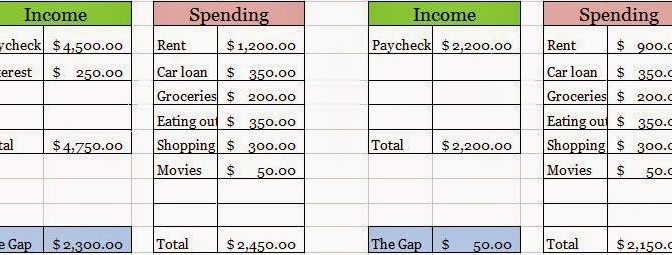
In the scenario on the left, the person in question makes about $54,000 a year (take-home of $4,500 a month) plus some extra from interest (assuming there are investments). The smart thing to do would be to re-invest that interest each month, thus adding to the principal amount invested and increasing the amount of interest. 

Anywho, that adds up to $4,750 coming in each month. This person also appears to have a rather nice home and car, as well as a lively social life, causing spending to total $2,450 per month. Even at this spending level, this person’s “gap” is a healthy $2,300 per month. They could use this to pay off debt like cards or loans, save for retirement, pad an emergency fund, or take a nice vacation.

On the other hand, the person on the right makes about $26,400 per year, and has no income other than their paycheck, which is $2,200 per month. While they have a lower housing payment, they have the same social and entertainment level as the person with a higher income, leading to a tiny “gap” of only $50 per month. 

The best way to approach this, with the intention of increasing the gap, is to consciously choose a number smaller than the current spending level. If you then hold yourself to those smaller numbers, you will naturally see your spending gap widen in your favor. 

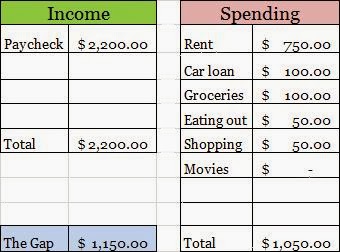
If, for example, the person on the right were to move to a smaller housing situation or obtain a roommate, drive a smaller or older car, save money on groceries and eating out, decrease shopping and eliminate unnecessary spending like going out to the movies, the gap can widen to as much as $1,150 per month! That can become a nice savings account to eventually full-out buy a nicer car, a house of their own, make a job transition, or whatever dreams are yet to be fulfilled.

How to stick to a budget


Once you decide on the amount you want to spend per month on a certain category, now all you have to do is hold yourself to it. Easy right? Not so much when you’re new to budgeting. Or really at any point in your life. You see, we all have a tendency to get used to whatever lifestyle we currently lead. Our “wants” will always greatly outnumber our “needs”, and that leads to lifestyle inflation. That means when your income increases, you can fulfill more wants, so you expect a nicer lifestyle. Investopedia explains how this keeps us in the “rat race”, working just to pay the bills. 

This more expensive lifestyle then becomes the new normal. Inexpensive or free activities aren’t as appealing because it seems “beneath” you since you have such a nice way of living. Unfortunately things happen which may decrease your income, but will not decrease your expectations. It is also more difficult to save and get ahead financially. The Simple Dollar also has a great article about Avoiding Lifestyle Inflation.

There are several ways you can avoid the temptation of lifestyle inflation. 

  1. If you get a raise, pretend you didn’t by putting that money straight into a savings or retirement account. If you don’t know it’s there, you can’t spend it.
  2. Do NOT take on unnecessary debt. Just because you make enough doesn’t justify a huge loan for the newest car out there or a bigger house or more credit cards or whatever.
  3. Forget about the Joneses. What other people have doesn’t matter, there will always be people with more money and things than you. Focus on your life, your relationships, and the things that bring you joy.
  4. Continue finding free and inexpensive activities that fulfill you. Teach, tutor, volunteer, read, or go for walks. Enjoy the simple things in life.

For more ideas see YahooFinance, GetRichSlowly, or FabandFru. 

The single best tip I can give you on sticking to a budget is to automate as much as possible. If 10% of your paycheck goes straight to a savings account minutes after it is deposited, you don’t have a chance to spend it at the mall. If you have accounts set up for grocery spending or entertainment and put only the amount you want to spend, then you can only spend as much as is in the account. This takes a lot of the work out of budgeting, and makes you accountable. Just be sure to keep an eye on amounts and balances every month.

How to save money


Another problem people have with budgeting is not being able to “find” any extra money to cover the bills, savings, investments, as well as social fun. A lot of people view being frugal as the same thing as being cheap or miserly. This is not necessarily the case. You can still have a vibrant social life and enjoy leisure activities without spending large amounts of money every month. And many easy tips that save you money over the long haul don’t even make a noticeable impact on your daily life. 

You don’t have to go to the extremes of making your own laundry soap, living with a 55 degree home in the winter and 85 in the summer, or eating wild flowers to supplement your diet if you don’t want to. There are boatloads of frugal money-saving tips, and of course each one will not work for every person. You need to evaluate each tip according to your needs and lifestyle, try a few out, and keep only the ones that work for you. 

My favorite way to save money is on food of course. I combine many different techniques to keep my grocery bill as low as possible. For starters, I very rarely eat out. Nearly every breakfast, lunch, dinner, and snack is made by me in my home. This saves me a TON of money yearly. Say I got lunch at work each day, for an average of $8 per day. $8 x 5 days per week x 48 weeks per year = $1,920! Nearly $2,000. That’s 2 1/2 months of rent for me, or 7 1/2 months of car payment, or 10 months of groceries. By making my own meals, I save that amount and put it towards savings, retirement, and other goals. 

I shop what’s on sale at the store, I stock on up frequently used items if there’s a good deal, I buy in bulk when I can, I pay attention to “per unit” prices, etc. I also take the bus to work in warmer months (I’m a student and we get a free bus pass, saving me $50/month in parking fees and gas), I insulated my apartment windows so the heating bill is lower, I buy clothes at Goodwill and consignment stores, and so on. 

For more great tips on daily money saving strategies:

America Saves – 54 Ways to Save Money
Daily Finance – 5 Tips for Frugal Living That Won’t Leave You Feeling Miserable
How Stuff Works – 5 No-Brainer Money-Saving Tips Everyone Forgets
Learnvest – 9 Frugal-Living Tips from the Great Depression
Little House Living – Frugal Tips
Living Frugal Tips website and Savings category
The Simple Dollar – Little Steps: 100 Great Tips for Saving Money for Those Just Getting Started
US News – 8 Painless Ways to Save Money
zenhabits – The Cheapskate Guide: 50 Tips for Frugal Living

What’s your favorite frugal tip?

How to: Make a “Door Snake” or “Draft Stopper”

Want to know a great way to help your budget in the colder months? Winter-proofing your house or apartment.

If you live somewhere that experiences temperatures below 60 degrees (which is much of the world) your skin and wallet will thank you for taking some simple steps. Winter-proofing is beneficial because it can help your heater work less hard (due to plugging up drafts and beefing up insulation), keep your living areas warmer, decrease your energy needs, and decrease your energy bills. All good things.

Some tips will not apply to you depending on what type of structure you live in and how much space you have to heat. A quick Google search brings up Yahoo’s list of 12 Ways to Winter-Proof Your Home, Women’s Day’s Guide to Winter-Proofing Your House,  and UK Money’s How to Winter-Proof Your Home and Beat the Big Freeze. 

A common thing among all winter-proofing lists is insulation.

Regardless of whether you have a 5-bedroom home in the suburbs or a one-bedroom apartment in the city, insulating your doors and windows will keep drafts at bay and heating bills manageable.

One way to insulate windows is to use plastic window cling or bubble wrap. I mashed several layers of bubble wrap over the bedroom window and duct taped it in place. There is definitely a noticeable difference in how much cold gets through the window now.

This guide is to show you another simple way to avoid under-door drafts: by making a door snake!

It may seem intimidating, but my friend B and I made two gorgeous draft stoppers in under 20 minutes.


You will need:

  • 1 sewing machine (or needle, thread, time, and patience)
  • Material approximately 1 yard by 1 foot (use thicker cloths to stand up to more wear)
  • Approximately 6-10 cups filler (rice, beans, sand, salt, kitty litter, etc)

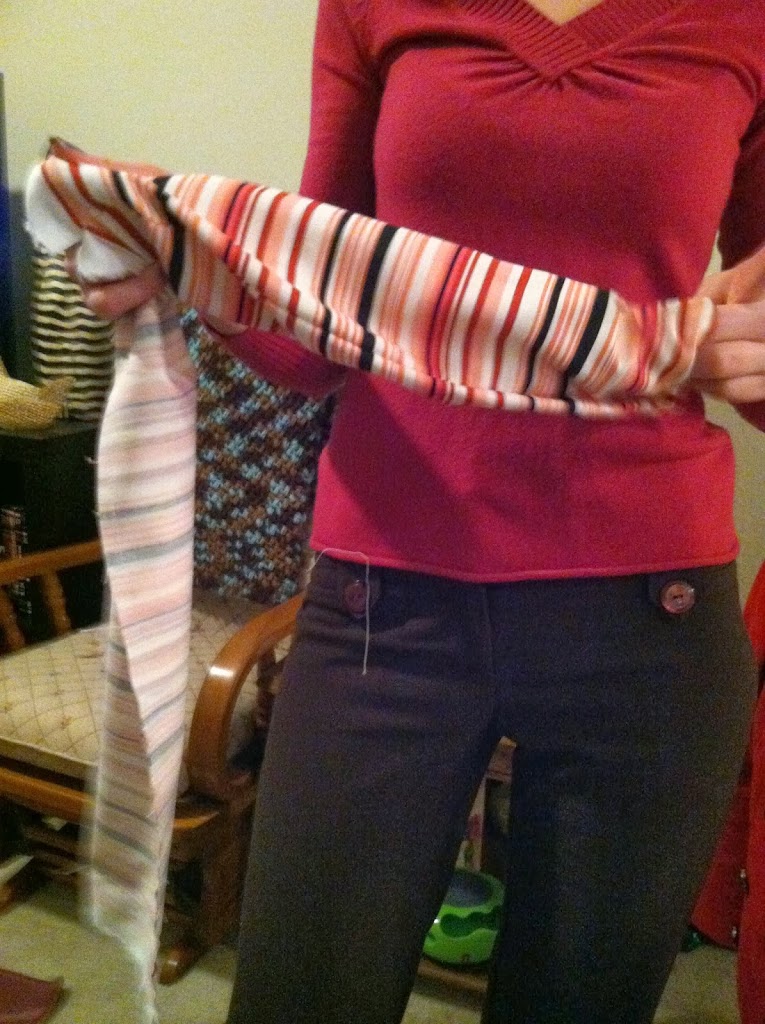
Step 1: Lay your fabric pattern-side up, and flip it over onto itself so the ‘inside’ faces out. Pin along a straight line.

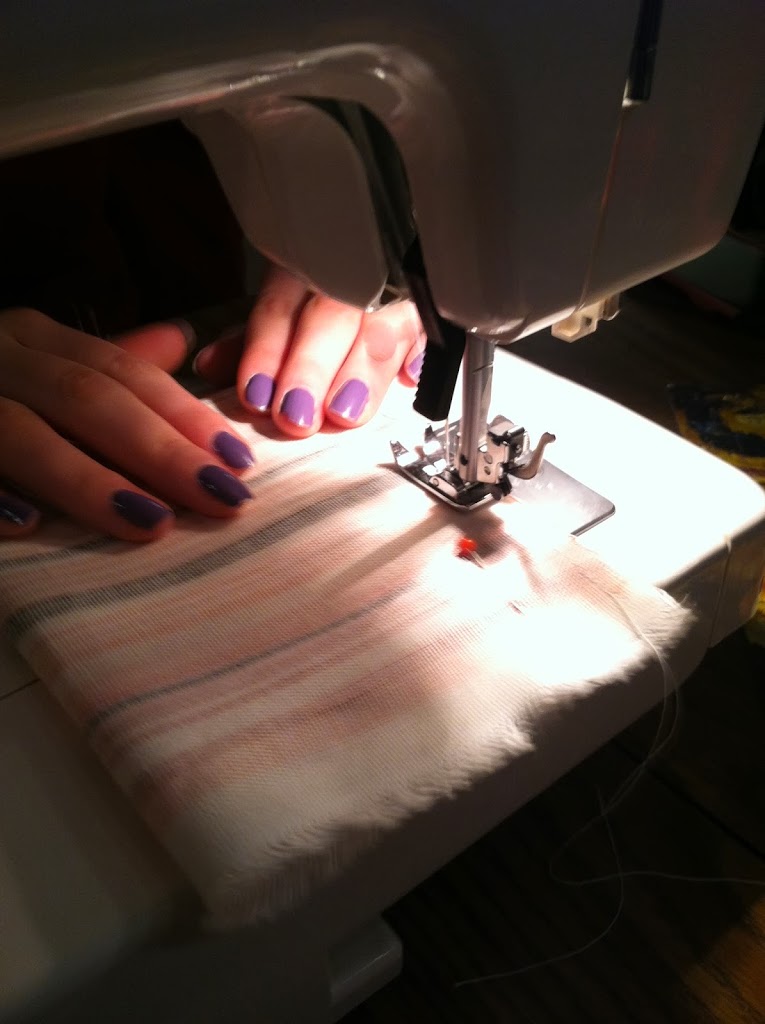
Step 2: Use a basic stitch to sew along the pins from end to end. You can measure the length of your doorway, leave an extra 2 inches per end. This doesn’t have to be super exact.

Sew all the way along the length. This will create a tube with open ends on both sides.

Step 3: Sew up one end of the tube. Make sure the two sets of stitches overlap to fully close that end.

Step 4: Now flip the tube inside-out so that the stitches are on the inside and the pattern is on the outside.

This is one of B’s 2 cats, she was very interested in what we were doing. Mostly the parts involving string.

Step 5: Measure against your door frame to make sure you fill the tube to the right length. Cut off the extra, leaving a few inches on the un-sewn end.

Step 6: Take the filler material, and hold open one end. Fill the tube up until the length of your door frame.

B proudly holding our first filled door snake. =) This is before cutting off the extra end material and sewing up the open end. Also of note, kitty litter is cheap but very dusty. Maybe try rice in yours.

Step 7: Fold the ends in by about 1/4 inch so that you have 4 layers of material. This puts the frayed, cut ends on the inside and creates a cleaner look & hemline.


Step 8: Sew along the double fold at the end. Make sure it is nice and tight, and goes all the way to both sides of material. You don’t want filler bits leaking out on your floor.

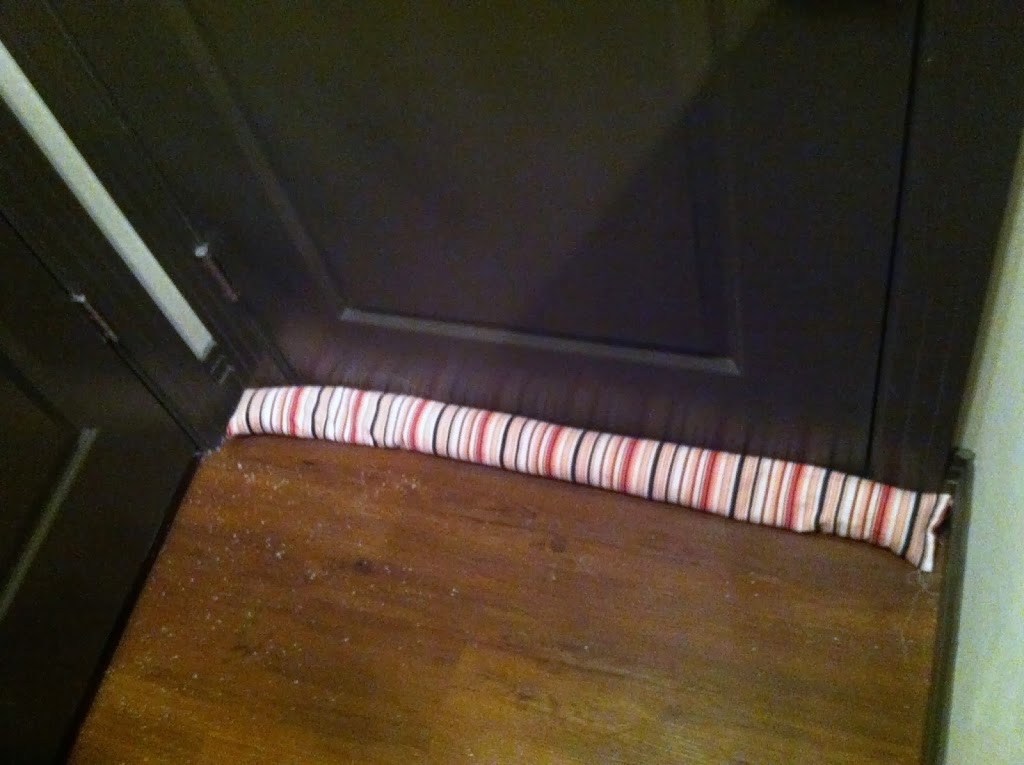
Step 9: Make sure your door snake is the right size for your door frame, and admire your hard work.


There you have it. A simple solution to cold wintry drafts that saves you from needing to double-sock and saves you some cash. You can re-use these for years, depending on the type of material and your level of sewing prowess. I’ve even heard of people sewing extra washable covers for these so they can wash the cover when it gets dusty/muddy/gross.

What’s your favorite money-saving craft idea?