Category Archives: Holidays

Recipes specifically for or about any American holiday

Cinco de Mayo drink: Margarita Spritzer

Happy Cinco de Mayo!


 Most people will be celebrating early since the 5th of May is a Monday, so I figured I’d post this early as well. 

As with most holidays, I always wonder how they started and what they really mean. As I dug into the history of this one, I was surprised and learned quite a bit. 

Most people tend to think this holiday commemorates Mexico’s Independence Day, but that is not true. Mexico’s independence day is actually September 16th, not May 5th. The 5th of May is the day a Mexican city won a huge battle with the French. For a great 2-minute video, check out the History Channel. 

In 1861, Mexico was so far in debt to so many countries that the president Benito Juarez declared that they could not pay back any countries they owed. This made the French super mad, and they invaded. Good cheese isn’t cheap, you know.

So the French rampaged across Mexico, winning battle after battle. Then on May 5, 1862, in the state of Puebla, the Mexicans finally defeated the French, despite being less prepared, not well trained or equipped, and outnumbered 2:1 on the battlefield!

The French quickly regrouped and eventually took Mexico City, but that euphoria of an unlikely victory tasted sweet. Just like a cold margarita. The victory was so inspiring, American generals began using it as “inspiration for the Union struggle in the Civil War”. (*All quotes from the History Channel video mentioned above)

Mexican-Americans, and Americans of all kind, took to remembering that battle every May 5th with food, drinks, parades, dancing, game, and bullfights (from About.com “Cinco de Mayo – the Basics“). Over time, the holiday died down in most of Mexico, except in Puebla where the battle was originally won. However, north of the border we never got out of the habit, and Cinco de Mayo is still celebrated every year with margaritas, Meixcan food, and other festivities. And now you know the “surprisingly American history behind this Mexican holiday”.

So to celebrate these brave Mexican fighters who didn’t want their tacos replaced with baguettes, make yourself a big ol’ pitcher of these Margarita Spritzers! With less “extras” and sugar, this version of the lime classic is lower on calories but big on taste, and how hard it hits is up to how much tequila you pour!

This margarita requires NO triple sec, the source of most margarita’s zing and pucker, but it’s also a sugar bomb with calories galore. This is a super simple recipe, with endless customization choices.


Ingredients:

  • 1 oz gold tequila
  • 1 oz simple syrup*
  • 1 oz lime juice
  • 1 cup soda water (lemon-lime flavor is best)
  • Salt for rimming if you like
  • Fresh lime slices for garnish

Step 1: *Simple syrup – add 1 cup sugar, 1/2 cup brown sugar, and 2 cups water to a pot. Bring to a gentle boil, or at least heat until all sugar is dissolved. Chill for ~1 hour.

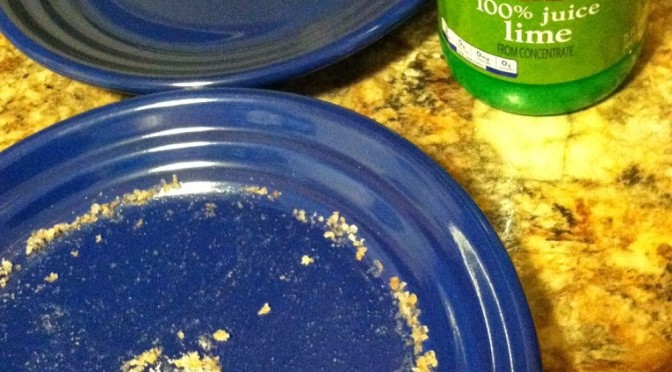
Step 2: On two flat plates, pour onto one a tbsp lime juice and on the other some sea salt. Take a glass, and rub the rim in the juice. Then swirl it around in the salt so it sticks.

Step 3: In a shaker, combine (per drink) 1 oz tequila, 1 oz simple syrup, and 1 oz lime juice. Shake with ice until cold.

 Step 4: Pour over ice in rimmed glass, and top with soda water. Stir and garnish as desired.

Try any juice you like in place of lime; cherry, pomegranate, strawberries. I’m a total purist and prefer simply lime over ice, but you can blend it if you must. Check out CookingChannel‘s list of top 20 Margarita Recipes for inspiration.

This 5th of May, raise a glass to those brave Mexicans who kept the French in France and enabled this long tradition of May festivity. ¡Que viva México!


What do you do on May 5th? Do you celebrate Cinco de Mayo? Do you have any special margarita recipes I need to know about?


How to Perfectly Hard-Boil an Egg; & 6 Ways to Dye Hard Boiled Eggs

Happy Easter!!!

I’m guessing not many people will be reading this blog the day of, since Easter is kinda a major holiday. That’s why this is published a little early. There are many great things about Easter.

Egg hunts, baskets of presents and candy, Cadbury eggs, chocolate bunnies, Easter Sunday brunch. If you’re religious, that church part. Since a major part of Easter is coloring hard boiled eggs (or at least it always has been for me), it’s important to know how to properly hard boil an egg. It’s gross when you peel an egg to eat it only to find a grimy green ring around the yolk, or the yolk is still runny.

There are many theories on how to perfectly boil eggs.

First rule though: DO NOT TRY TO MICROWAVE IT.

Seriously. Even thought BuzzFeed claims there are 12 ways to do it right. (Most of those ways don’t involve in-the-shell eggs, so that’s cheating). If you just put a raw egg into water and stick it in the microwave, the steam will build up quickly.

You will spend the next 2 minutes oblivious to the imminent explosion, then the next 10 minutes after that cleaning dripping raw egg and shell shards from your entire microwave.

Not that I know from experience or anything…

How to perfectly boil eggs

1. Place 6-12 eggs in a pan which has a lid. Cover the eggs with cold water, add a little salt, and maybe a tsp of vinegar.
2. Bring the eggs to a boil on the stove. As soon as they start a rolling boil, remove them from the heat and cover.
3. Let them sit in the hot water for 10-15 minutes. Then drain and rinse with cold water to stop the cooking process.
4. To peel, bang the egg on a hard surface, or roll it in your hands to break the shell. Start at the larger end and pull off shell pieces, running under cold water if you need extra help to get the shell off.

This version from MarthaStewart is actually closest to how we do it at my house. (Should I be upset about that?). This article from SimplyRecipes is also a good detailed explanation. The green ring is caused by boiling water, so the best way is to have the eggs at a rolling boil as short a time as possible.

Fresh eggs are usually harder to peel, so if you have eggs you bought last week rather than this morning, use those. Adding a teaspoon of vinegar to the cooking water may make peeling easier too. This is also a good idea to add if you’re boiling the eggs to dye them. 

Ways to Dye Easter Eggs

First of all, you will want to cover the surface where you are dying eggs with newspaper or cloth to prevent staining your family heirloom table. This can get messy. Then make sure you have plenty of eggs for each person dying, because this is fun and it’s easy to get carried away! Just one more pretty egg, please….
 
1. Food coloring or Kool-Aid
You can use plain food coloring to dye cooked, cooled eggs, no need for expensive store-bought kits. Just add 20 drops or so to 1/2 cup water and 1 tbsp vinegar, then leave them in the water until they are the color you want. Or add one whole packet of KoolAid (NO SUGAR) to 1 tbsp vinegar and 1/2 cup water. Adding more vinegar or leaving it in the color longer will give more and more vibrant colors.
2. Decorations
There are a lot of ways to decorate your egg, just be sure you do so before you put them in the dye. You can add stickers, draw on them with a crayon (anywhere the wax is, there will be no color and it will stay white) or wrap with rubber bands to create stripes. Then place in bought dye kits or food coloring.
3. Layering
Starting with the lightest color, dye the egg. For example, yellow. Then, use wire, a spoon, or string to dip the egg into the next color only part of the way, leaving part of the egg unsubmerged. For example, blue. This will make the overlapping areas green. If you don’t dip it all the way in the yellow, you can have a yellow-green-blue egg. You can do this multiple times to create many layers of color.
4. Sponge painting
If you intend to eat these eggs, make sure you are using food grade dye and paint. If these are just for show, go crazy with whatever. Using a small piece of sponge (kitchen or makeup kind) dip into paint, and dab across the dyed or non-dyed egg surface. You can use multiple colors to create works of art.
5. Swirled/Marbelized
Once you are SURE you don’t need a dye color alone, add a tbsp vegetable oil. Where the oil sticks to the egg will dye lighter or not dye at all as compared to the color you add it to. But be sure, because once you add the oil you cannot remove it! This creates beautiful swirled eggs.
6. Cracked Dye
After you cool cooked eggs, break the shells just a bit on purpose by banging them on a hard surface once or twice. Then dye as usual. When peeled, the egg will have spidery dye patterns of color! Use food grade dye if you intend to eat them.


Once you’re finished with the fun of dying eggs, put on a baking rack or back into the carton to dry and set.

Have fun decorating, hiding, and/or eating your eggs this Easter!

What’s your favorite part of Easter?


Pi Day: Blackberry Pie

Happy Pi Day!

Since it is March 14 (or 3.14) it is international Pi Day, the day to celebrate the number pi. The Roman symbol above is how we write pi in math class. It is defined as the circumference of a perfect circle divided by its diameter, or the distance around the outside divided by the distance perfectly halfway across.

Conveniently, Albert Einstein was also born on March 14th. But as for the number, possibly it’s biggest (and only) claim to fame is that it is infinite. There is quite literally no end to the digits if you calculate it out exactly. 

The digits of pi have inspired people to memorize strings of thousands of numbers, competitions, “the million digits of pi”, create poetry and music with these numbers. There is even a PiDay organization with a website that has all kinds of fun facts and stories about Pi.

There is a video of a Pi Rap by Amy McConnell. Several businesses jump on any excuse for a holiday with special Pi Day Deals. There’s even a trainer to help you memorize more digits of Pi!

If you want to know more about how Pi Day began, and how Americans celebrate, check out CNN’s article “How America celebrates Pi Day“.

A clever t-shirt showing how “PIE” in a mirror is 3.14 Pi!

In honor of this unique number I’m posting a special recipe, for pie of course!

Because blackberries were on sale this week, that is the fruit I chose. However, you can use any berry or fruit you like, including frozen.

Ingredients:

  • 2 pie crusts (I cheated and store-bought. If you’re baking-savvy or brave, you can try making your own pie crust, like this one from Pioneer Woman)
  • 4 cups blackberries
  • 1 cup sugar
  • 1/2 cup flour
  • 1 tsp salt
  • 2 tbsp milk
  • 3 tbsp butter (or Country Crock)

Step 1: Let the dough thaw for 10-20 minutes on the counter top, if it broke at all smush it back together with your fingers.

Step 2: Combine all ingredients but butter and milk in a large bowl to coat the berries with flour and sugar. Pour into your bottom crust. Place little chunks of butter around on the top.

Step  3: Place the other crust on top, and make sure to cut some hole to vent. I of course had to go full-nerd and cut “3.14” into the pie.

Step 4: Brush the top with milk (or egg) to make sure it gets nice a golden. Bake on a baking sheet in the middle of the oven at 400 for 12-15 minutes, until nice and bubbly and golden.

 Cut yourself a nice slice along the radius and enjoy!


This is so amazing warm out of the oven, topped with vanilla ice cream or cool whip. It’s warm and sweet and melty… MMMM! It is also amazing as breakfast with a cup of hot coffee. =)

And because you desperately need to know the millionth digit of Pi:

3.14159265358979323846264338327950288419716939937510582097494459230781640628620899862803482534211706798214808651328230664709384460955058223172535940812848111745028410270193852110555964462294895493038196442881097566593344612847564823378678316527120190914564856692346034861045432664821339360726024914127372458700660631558817488152092096282925409171536436789259036001133053054882046652138414695194151160943305727036575959195309218611738193261179310511854807446237996274956735188575272489122793818301194912983367336244065664308602139494639522473719070217986094370277053921717629317675238467481846766940513200056812714526356082778577134275778960917363717872146844090122495343014654958537105079227968925892354201995611212902196086403441815981362977477130996051870721134999999837297804995105973173281609631859502445945534690830264252230825334468503526193118817101000313783875288658753320838142061717766914730359825349042875546873115956286388235378759375195778185778053217122680661300192

Just kidding. But if you really do want to know all one million go here. 


Are you doing anything to celebrate Pi Day?

I CHOOSE YOU! Red Velvet PokeBall Cupcakes


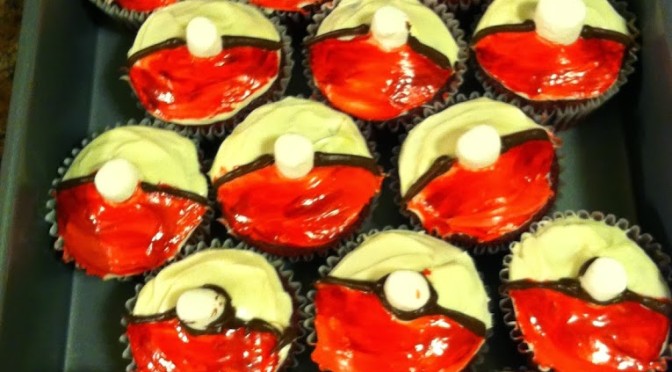
When I saw these online somewhere, I knew they HAD to happen! I wish I’d kept the original website I saw these on. Anyway, anyone who grew up roughly in the 1990s-now knows all about Pokemon, and these aDORable poke ball cupcakes will bring back fond memories and warm fuzzies.

These would be perfect for a Valentine’s Day party or gift, or any kid’s birthday party who is obsessed with Pokemon, or Pokemon GO. Complete with “I choose YOU” accents, these would steal the heart of any geek! #GeekLove 

Ingredients:

  • 1 box red velvet cupcake mix (or whatever kind you like)
  • 1 egg
  • 1/4 cup oil
  • White frosting
  • Red food coloring
  • Marshmallows (mini)
  • Chocolate icing or black icing

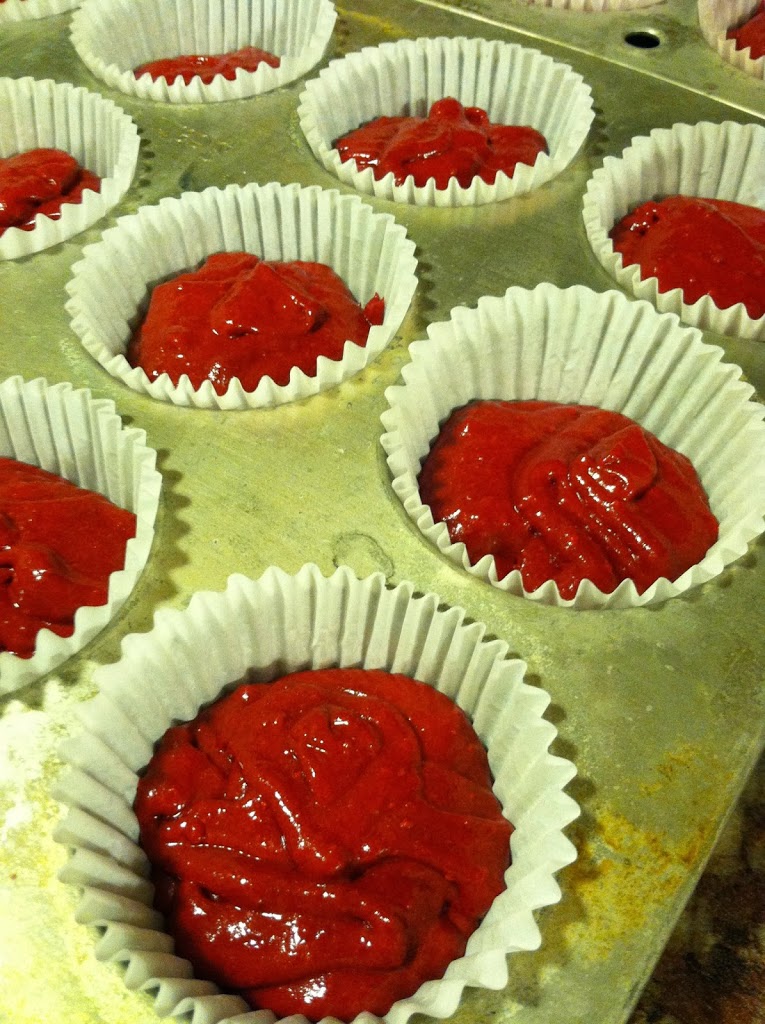
Step 1: I cheated and used a box mix. Sorry, but a girl’s gotta pass classes. Make the cake mix, and pour into a greased muffin tin or use cupcake liners.

Step 2: Bake at 350 for 14-18 minutes, until cooked through and springy to the touch. Cool fully.
Step 3: Spread white icing all over the cupcakes. Then put a dot of red food coloring on one side, and smear it carefully over half of the icing to make the two-toned look. (This makes the red vibrant, if you mix it into the icing it will turn out more pink).

 Step 4: Put a mini marshmallow in the center, then pipe chocolate or black icing down each side to separate the white and red halves. There you have it, an edible, adorable PokeBall.


 You could also pipe the words “I choose you” onto a few to make sure the not-quite-as-geeky get it. Just put some icing in a ziplock bag, and cut a tiny corner off. No need for expensive pastry bags.

Seriously. Dying with the cuteness level of this.

These are competition-winning cupcakes too!

Happy Valentine’s Day!

Dark Chocolate Cherry Truffles


This is a recipe I tried in preparation for a Valentine’s Day baking contest. Everybody loves truffles, I know I do. And my boyfriend loves anything cherry. Therefore I decided to try making some chocolate cherry truffles to share. They were very simple to make, and I’m sure could be customize to whatever dried fruit or flavor you desire. Have fun, and make sure to make enough to share and to keep for yourself!

Ingredients:
1/2 cup dried cherries
1/2 cup vanilla vodka
12 oz dark chocolate (mixed kinds)
Powdered sugar
Cinnamon sugar

Step 1: Soak the cherries in the vodka for at least 30 minutes. They will absorb the flavor and the alcohol.

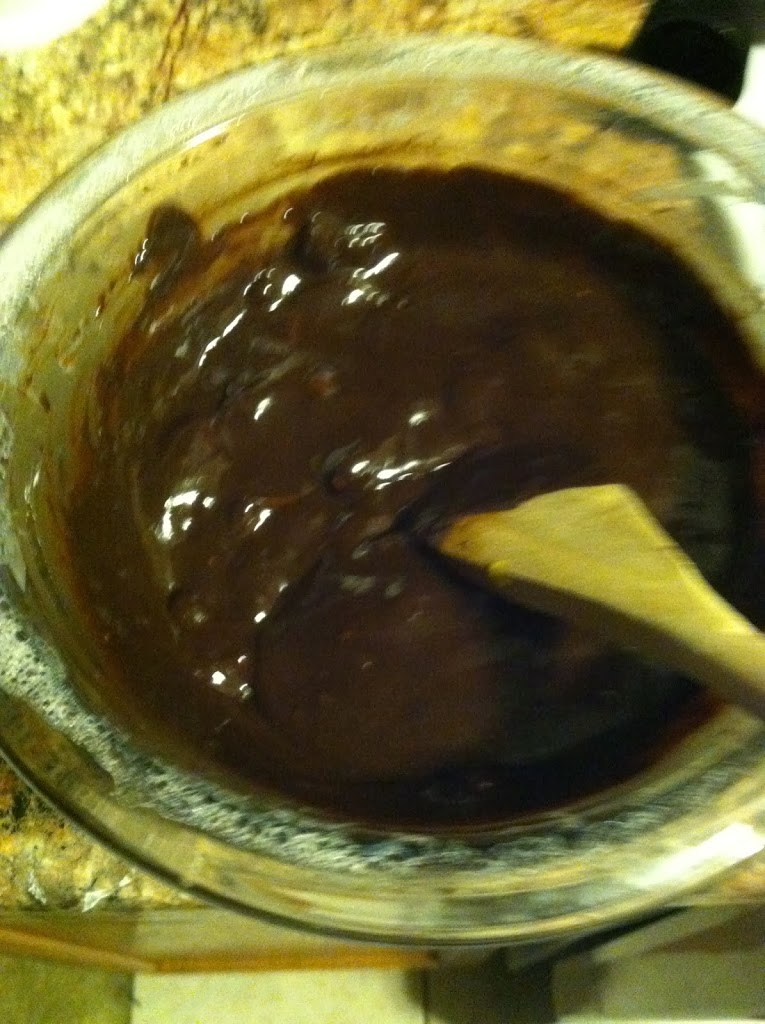
Step 2: In 30-second bursts, slowly melt the chocolate until smooth. Mix in the soaked cherries.

 Step 3: Form into 1 inch balls and refrigerate until solid. Roll in topping of your choice.

These would also be delicious and adorable if covered in milk chocolate or drizzled with colored white chocolate. In fact, truffles are great anytime, not just for a holiday. Share the love.

What is your favorite chocolate treat?


Valentine’s Day: History, love and misery


As I’m sure you’re aware from the deluge of pink and red and hearts, that happy love-struck day known as Valentine’s Day is near. For some this means a romantic getaway for two, for some this is just another dinner and a movie with nicer clothes, for some this means getting a sitter for the kids for the first time all year, for some this means a night of eating ice cream and crying, and for some this means absolutely nothing other than the fact that it’s a Friday. None of these reactions are right or wrong, and don’t let anybody tell you differently. So why is it called “Valentine’s Day” and not something simple like “Love Day”?

Saint Valentine

Saint Valentine is the man for whom this sappy holiday has been named, but ironically he both did and did not lead a very romantic life. He lived in a time when society was very lax on relationship rules, polygamy was kind of the norm, but of course the Catholic church didn’t like that one bit. They were pretty convinced that to have any ‘relations’ it should be within the bounds of a marriage, and a marriage was between one man and one woman, period. Unfortunately there was this emperor guy, Claudius, who persecuted the Church at the time, and did not allow people to marry within the church. Well, mister Valentine was like a secret cupid, and for those couples who wanted to be married within the rules of Catholicism, he would marry them. 

As these things often go, Valentine was caught and throw in prison, where he was tortured for contradicting the Emperor. But being such a nice guy, he kept helping people even in prison. There are stories of him praying for a man’s blind daughter and healing her, the father was so astonished he converted to Catholicism. Then, in 269 AD, Valentine was sentenced to a three part execution: a beating, stoning, and finally beheading. All because he wanted to unite young couples in love. Under the doctrine of the currently not-in-fashion church beliefs. However, he left his legacy by reportedly writing a letter to that man’s no longer blind daughter before his death, and signed it “from your Valentine” (Source: CBN). It should be noted that some sources argue whether this legend of St. Valentine is based on one or two separate people (Source: Catholic.org). His official feast day is of course, February 14.

For more on the history of Valentine’s Day, see this Huffington Post article, and History.com.

How to survive VDay financially

Now, this year, Valentine’s Day happens to fall on a Friday. It also just happens to be President’s Day weekend, meaning the following Monday is a holiday. This is a total jackpot if you want to plan a long weekend with your sweetie. However, it also means that there will be more people traveling, and places which cater to Hallmark holidays such as this are jacking up prices like mad. Hotels, gas stations, restaurants, you name it. Not to mention cards and candy for your kids’ classroom, flowers for the wife, dinner, wine, chocolates, and lingerie, and so much pressure. All this spending just as taxes are around the corner and starting to weigh on your mind. How do you survive this without burning a hole in your wallet?

1. Celebrate on your own terms

Just because some Catholic guy got beheaded in Rome a long time ago doesn’t mean you need to recognize his sainthood with an over-priced steak. Besides, calendars have undergone a few make-overs since then, so our February 14th isn’t even the same. The Wall Street Journal has an article by Brett Arands wherein he calls for a VDay revolution. He makes the splendid point that even by a simple comparison of hotels one week later versus on the big weekend, you can save 25% or more if you simply choose a different day to celebrate. Pick any day you want and shower your sweetie with love. It will probably be even more special, because then you will be the only couple with excessive PDA instead of everyone in the building.

2. Have an at-home date night

Much like a stay-cation, home date nights are a fantastic way to still break your routine and spend quality time together without breaking the bank. The possibilities are limited only by your imagination. Get cooking or baking, have a movie/Netflix marathon, or play some games together. You could have a nice dinner ready when your special someone gets home from work, like my Male & Female Style Pizza or make my homemade pizza dough from my Vegetarian Pepper Pizza (and top as you wish). Bonus points for making it into a heart shape.

Here are the Top 10 Stay-Home Date Ideas from AskMen, and the Top 50 Date-Night Ideas from Redbook.

3. Get away for cheap

If you are really feeling the cabin fever and want to get out of the house, or take advantage of the extra time off, try getting away but not to your typical hotel. Camping is always a great budget option, and you could look into traveling further south for warmer climates if you’ve been stuck inside during recent snowstorms. House sitting/swapping is also an option if you’re feeling adventurous. Here’s a good article on 10 things you need to know about home swapping from USA Today.


Now that you have tons of ideas, get to planning, or even better plan nothing at all. This totally applies if you’re single too. Take yourself on a date, go see a movie, make something fancy for dinner, have your own personal wine tasting. If you don’t have a “partner” or “significant other”, spend the time to shower yourself with love. After all, if you don’t love yourself then you can’t rightfully love someone else. In fact even if you DO have a partner you should show yourself a little love. No matter what you decide to do, enjoy yourself and anyone else you’re with, make happy memories, and be safe.


What’s your favorite romantic date idea?


How to: Make a “Door Snake” or “Draft Stopper”

Want to know a great way to help your budget in the colder months? Winter-proofing your house or apartment.

If you live somewhere that experiences temperatures below 60 degrees (which is much of the world) your skin and wallet will thank you for taking some simple steps. Winter-proofing is beneficial because it can help your heater work less hard (due to plugging up drafts and beefing up insulation), keep your living areas warmer, decrease your energy needs, and decrease your energy bills. All good things.

Some tips will not apply to you depending on what type of structure you live in and how much space you have to heat. A quick Google search brings up Yahoo’s list of 12 Ways to Winter-Proof Your Home, Women’s Day’s Guide to Winter-Proofing Your House,  and UK Money’s How to Winter-Proof Your Home and Beat the Big Freeze. 

A common thing among all winter-proofing lists is insulation.

Regardless of whether you have a 5-bedroom home in the suburbs or a one-bedroom apartment in the city, insulating your doors and windows will keep drafts at bay and heating bills manageable.

One way to insulate windows is to use plastic window cling or bubble wrap. I mashed several layers of bubble wrap over the bedroom window and duct taped it in place. There is definitely a noticeable difference in how much cold gets through the window now.

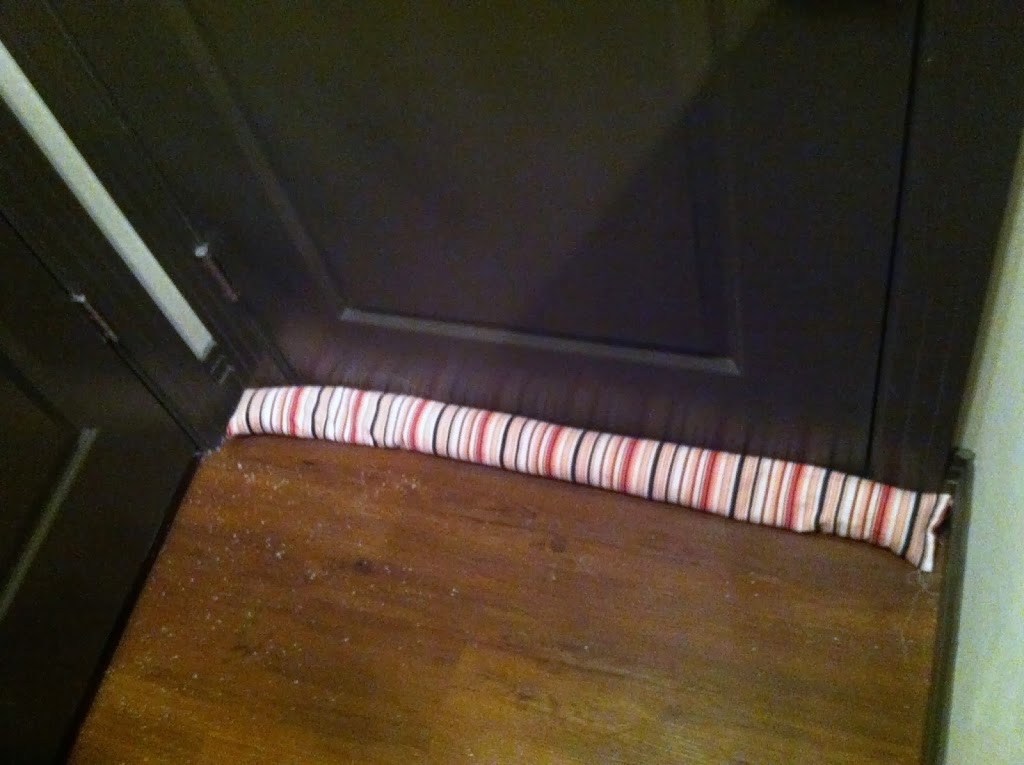
This guide is to show you another simple way to avoid under-door drafts: by making a door snake!

It may seem intimidating, but my friend B and I made two gorgeous draft stoppers in under 20 minutes.


You will need:

  • 1 sewing machine (or needle, thread, time, and patience)
  • Material approximately 1 yard by 1 foot (use thicker cloths to stand up to more wear)
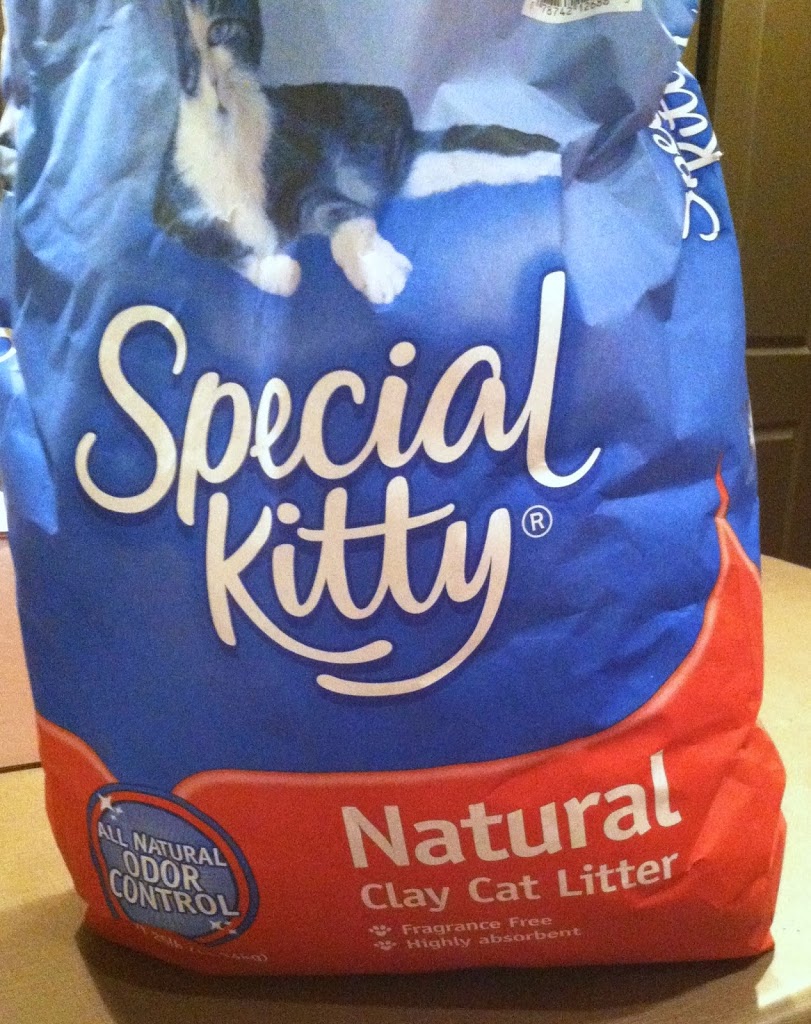
  • Approximately 6-10 cups filler (rice, beans, sand, salt, kitty litter, etc)

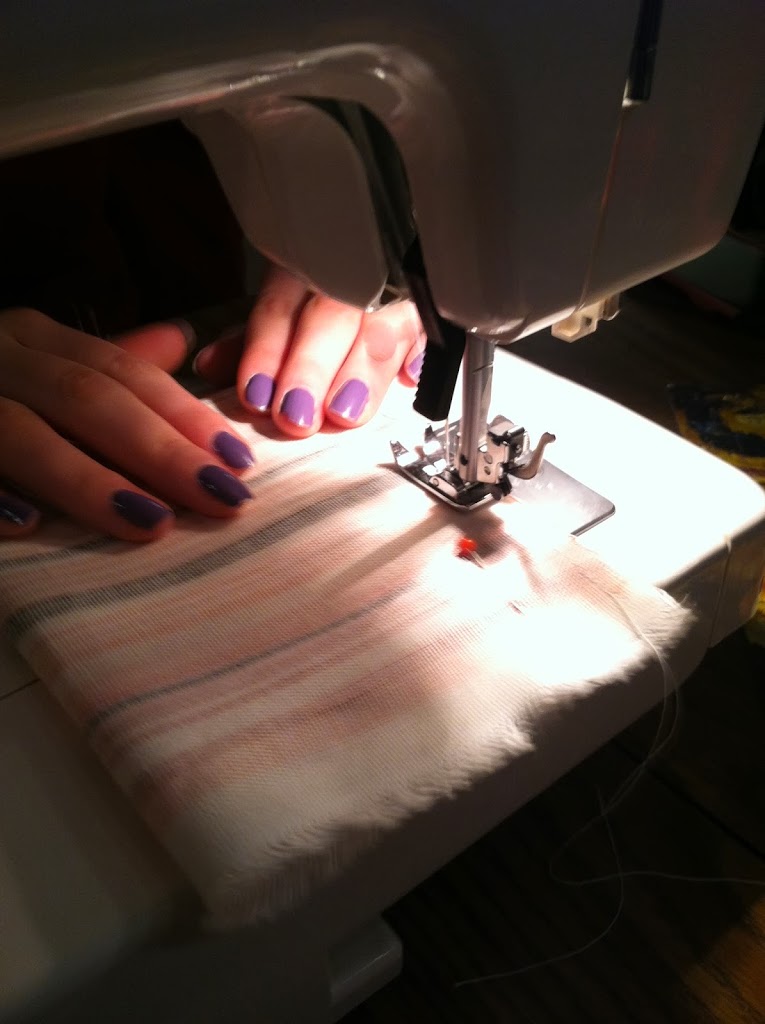
Step 1: Lay your fabric pattern-side up, and flip it over onto itself so the ‘inside’ faces out. Pin along a straight line.

Step 2: Use a basic stitch to sew along the pins from end to end. You can measure the length of your doorway, leave an extra 2 inches per end. This doesn’t have to be super exact.

Sew all the way along the length. This will create a tube with open ends on both sides.

Step 3: Sew up one end of the tube. Make sure the two sets of stitches overlap to fully close that end.

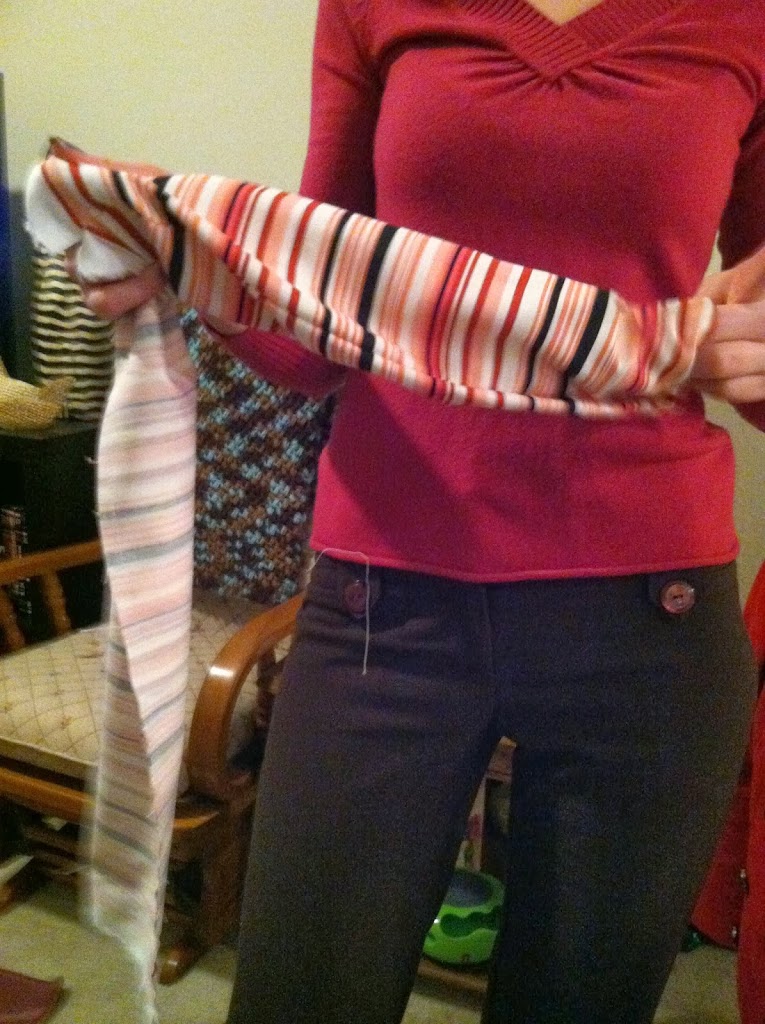
Step 4: Now flip the tube inside-out so that the stitches are on the inside and the pattern is on the outside.

This is one of B’s 2 cats, she was very interested in what we were doing. Mostly the parts involving string.

Step 5: Measure against your door frame to make sure you fill the tube to the right length. Cut off the extra, leaving a few inches on the un-sewn end.

Step 6: Take the filler material, and hold open one end. Fill the tube up until the length of your door frame.

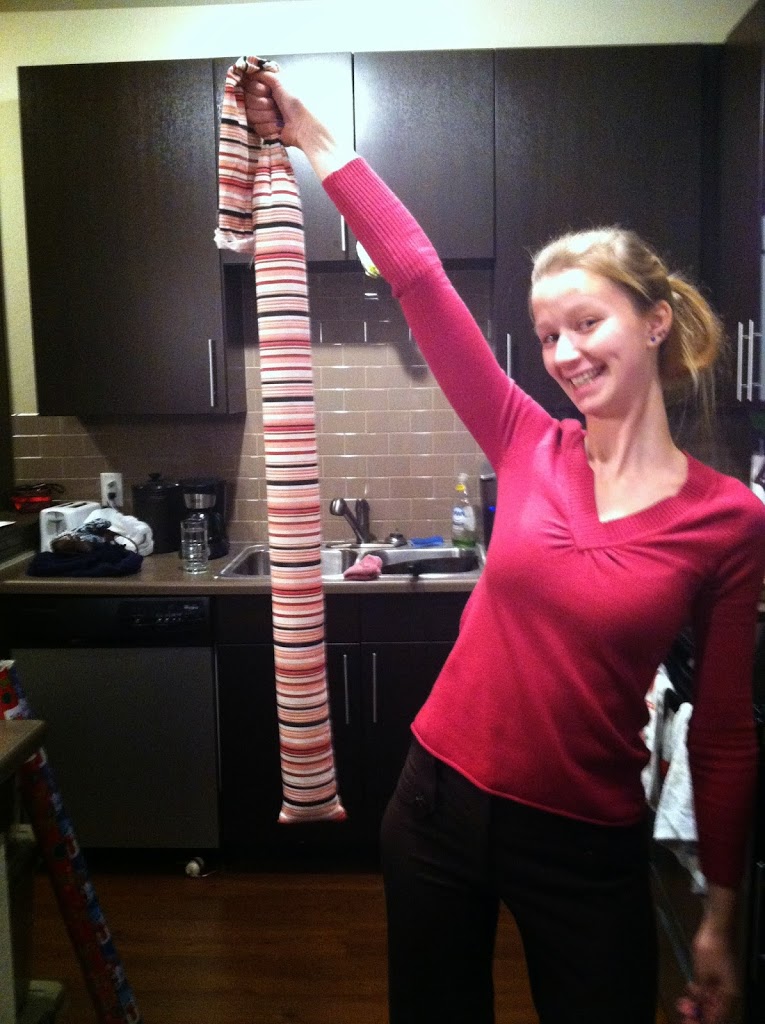
B proudly holding our first filled door snake. =) This is before cutting off the extra end material and sewing up the open end. Also of note, kitty litter is cheap but very dusty. Maybe try rice in yours.

Step 7: Fold the ends in by about 1/4 inch so that you have 4 layers of material. This puts the frayed, cut ends on the inside and creates a cleaner look & hemline.


Step 8: Sew along the double fold at the end. Make sure it is nice and tight, and goes all the way to both sides of material. You don’t want filler bits leaking out on your floor.

Step 9: Make sure your door snake is the right size for your door frame, and admire your hard work.


There you have it. A simple solution to cold wintry drafts that saves you from needing to double-sock and saves you some cash. You can re-use these for years, depending on the type of material and your level of sewing prowess. I’ve even heard of people sewing extra washable covers for these so they can wash the cover when it gets dusty/muddy/gross.

What’s your favorite money-saving craft idea?


New Years’ Day Lucky Tradition: Kielbasa and Sauerkraut

It’s almost 2014! 

I must admit I am a huge fan of almost all edible things pig. Bacon of course is in a league of its own. But ribs, chops and roasts are also all delicious and versatile to prepare. For New Year’s Day, my family has always had kielbasa and sauerkraut for good luck. You could also make a pork roast and sauerkraut.

According to a Nosh blog, the reason for this good luck is because pork from a “fat” pig represents an abundant year to come, and the sauerkraut from ‘green’ cabbage represents wealth. Thinking about this tradition made me wonder what was in sauerkraut and where it comes from. This lead to hours of research into the various parts and cuts of pork.

Stay tuned after the recipe if you want to know more! =)

Kielbasa & Sauerkraut Recipe

  • Ingredients:
  • 1 small pork roast (2-4 lb) or 2-4 pounds kielbasa
  • 1 bag of sauerkraut (or jar, or if you’re ambitious you can ferment your own)
  • 1 can/bottle of beer, 12 oz
  • 1 cup brown sugar

Step 1: Place roast or kielbasa in a slow cooker. Mix the beer and brown sugar. Pour over the pork, then cover with kraut. Cook on high for ~4 hours or low 6-8 hours.

Enjoy on NYD! May your 2014 be full of success and joy.

Photo from Pressure Cooking With Lorna Sass
Pork roast & sauerkraut on NYE


So what about the rest of the pig?

Generally speaking, pork tends to be less expensive than beef. For reasons I won’t discuss in this post, it is always a good idea to look for humanely raised pork, or best case scenario to be part of a CSA (which stands for Community Supported Agriculture) and get part of a farm-raised pig. Find one near you here.

They usually raise a set number of pigs based on how many shares are purchased, then will slaughter them and divide up the meat for you. However, I understand most people don’t have the time, space, money, or energy to commit to a half or whole pig, wait half a year, then bring home a hundred pounds of meat in various cuts and store it. Therefore, this is more of a guide to what you’ll find at a typical grocery store and what you can do with it.

This photo is from CloveGardens website and shows the various cuts of pig.

The CloveGardens site also has photos of every cut of meat, including less well-known cuts and parts you wouldn’t normally think of using like the feet, snout, and organs. If you’re feeling adventurous you can ask your butcher, or try an ethnic market. The most typical cuts you find at a North American grocery store are chops and roasts. 

Ham

This is the upper part of the thigh, and is what we think of when we think of a holiday ham. Often oven roasted and marinated or glazed. Holds up to slow cooking methods, and tastes great paired with sweet glazes like brown sugar, maple, honey and/or pineapple.

Pork Chops (aka pork loin end chops, center loin chops, rib chops, end cut chops, top loin chops, pork blade chops)

Many different cuts of meat can be called pork chops. They can be bone-in or boneless, in various sizes and thicknesses. Typically, thicker-cut chops with the bone still in tend to be the juiciest and most flavorful. These are great for pan-frying and grilling. Boneless chops are also great for frying or grilling, but can fall apart easier in longer methods like slow cookers or braising. Pork blade chops are from the blade roast, and tend to be fattier and tougher than chops from other cuts. They can be tenderized by marinating beforehand, and can be cooked with longer methods.

Pork Roast (aka pork tenderloins, rib roasts, pork legs, top loin roast, sirloin roast, hipbone roast, end roast, butt and shoulder-see below)

Like chops, there are many cuts that get sold as a roast. They are defined as cuts which stand up well to oven or slow cooker roasting. 

Pork Rib Roast(aka pork center loin roast, pork roast)

The ribs can still be inside or the ribs may have been removed. These cuts are extremely flavorful and juicy, but still pretty lean. If you want to cook it with the slab of attached fat for flavor, simply carve it off before serving. 

Pork Blade Roast (aka pork rib end roast, rib end pork loin, 7-rib or 5-rib roast)

The blade roast comes from the back/shoulder areas, and is fattier than most other cuts. This makes it less expensive but very flavorful. If the bone is still in, you can ask the butcher to crack it between the ribs to carve it easier.

Pork Loin (aka tenderloin, loin chop)

Cuts from the loin come from along the back and sides of the spine and are the leanest, most tender cuts. This makes them easy to overcook, so try to avoid long cooking times. There are three sections, the Blade end, Center portion and Sirloin end. The Blade end is closest to the shoulders and like the Blade Roast tends to be fatty. The Center portion is in the middle, it is the leanest and most tender, which makes it usually the most expensive. The Sirloin end is nearest the rump, and is typically bony and lean. All can be pan-fried, braised, or slow cooked.

Hocks and Shanks

This is the shin area of the pig’s legs. A hock with skin removed is called a shank. They are often smoked, and make good additions to soups to add flavor. 

Pork Ribs 

The ribs are generally cut into three seperate sections, all of which are great for smoking, braising, oven roasting, or grilling. And all are great slathered in BBQ sauce. Country-style ribs or pork blade end ribs are the meatiest and fattiest of cuts, but they aren’t as easy to eat with your fingers. They can be bone-in or boneless. Pork back, or baby back ribs are the middle ground of meatiness and easier to pick up. Pork spareribes are the least meaty, but have the most popular texture for finger foods. They are tender-chewy, and are the least fatty cut.

Pork Shoulders & Butts

Though named differently, both cuts are from the shoulder of the pig. Technically they are different cuts. The “butt” (aka Boston butt or shoulder) comes from a thicker section with more marbling. This makes it ideal for pulled pork or other barbecue styles. The “shoulder” is usually the triangular piece of meat attached to the butt. Both are great braised, slow roasted, BBQ-ed, slow cooker style, or in stew. They can essentially be used interchangeably.  

Bacon and Sausage

Ahhh the longtime favorite, bacon is unique in taste and is revered worldwide for it meaty, smoky deliciousness. Used to flavor all types of dishes and soups, as a centerpiece of breakfasts, and wrapped around just about anything, bacon is a versatile meat. It does not come off the hog looking like bacon. First the ribs and belly are removed from the loin. The belly here does not refer to the actual stomach but rather the fatty underside of the pig. The spare ribs are cut away, then the pork belly is sent through the long process of curing, smoking and eventual slicing up into bacon. Sausage on the other hand, can be made from just about any part of the pig that is not used elsewhere. Anything that was left from de-boning other cuts, high quality meat that can’t be turned into a roast or chop, or pieces that didn’t end up elsewhere all get mixed together. They are seasoned in various ways and ground, sometimes multiple times. This is then sold as bulk sausage, patties, or put into casing for links, most often the pig’s own intestines. (Seriously).

For a great, thorough article on the various parts of the pig and how to use lesser known cuts see this website for Sugar Mountain Farm in Vermont, which has its own USDA approved butcher site on the farm. They use as much of the whole pig, nose-to-tail, as they can, which I totally approve of!

For an article which sub-divides these types of cuts even further and includes photos, see here. They also have pages for cuts from beef, lamb, and veal if you’re curious and I don’t cover them soon enough. 

If you have a solid stomach and want to see photos and a description of each step in the pork processing process (redundancy, check), check out this blog post from Chico Locker & Sausage Co.


Nutrition information such as calories, protein and fat content will vary greatly depending on the type of cut and how it was prepared. According to Nutritioninfo.com the average nutrition data from one pound of raw meat cooked is:

Pork contains plenty of protein, iron and selenium and no gluten. However it is high in cholesterol, so you should try to control portion sizes to 3-6 oz per serving, and as in all things use moderation. Pork is safe to eat when cooked to an internal temperature of 160 F, so use a meat thermometer if you have one. Generally speaking, when oven roasting you should cook it at least a half hour per pound of meat. 

Do you have any New Year’s Eve or Day traditions?
The meaning of Christmas


So here we are, on the eve of the year’s biggest holiday, Christmas. For some people that means frantic last minute shopping, cooking, wrapping, and baking. For some it means attending mass of some sort. And for most, it means spending time with family and friends. ‘Tis the season. Regardless of your religious beliefs, everyone can agree that Christmas tends to bring out the best in the world. From the many children’s-toy-related charities to swelling food bank donations to a spike in blood donors, the holiday spirit causes an outpouring of generosity, joy, love, and peace.

Tonight and tomorrow, we gather around the living room and tables, to eat, drink, share, and enjoy family and friends. My family has many traditions, one of which is a meatless Christmas Even dinner. There are shrimp and cookies while we await the completion of dinner. We make mushroom soup, the recipe for which has been handed down from my grandmother’s father from Slovakia, when he used to go out to the cow pastures and actually collect wild mushrooms. We have boatloads of pierogi, the potato-, onion-, or lekvar- filled doughy pillows of goodness.

After a leisurely dinner, which includes holiday ‘poppers’ with fun jokes, toys, and crowns to wear, we have an heirloom angel candle which gets passed around. Starting with the oldest person present, it is lit, and that person blows the candle out. If the smoke goes straight up, you will return next year. It’s always fun to try to make someone’s smoke go sideways, and we debate over the meaning when there is no smoke at all. Then we adjourn to the living room, where gifts are passed out, opened, exclaimed over, and photographed. Some years we open one at a time, some years everyone at once. But it is always boisterous and filled with love.
.
If you’re worried about gifts, don’t be. Once the shiny newness wears off, most are discarded or forgotten soon after. The things that stick are the memories, the times and the laughs we share. A heartfelt, handwritten card is more meaningful than a $3 Hallmark card. A homemade batch of cookies or fudge is like a hug for your tastebuds. The hours of care that go into knitting a handmade scarf or afghan are appreciated more than thirty minutes at the mall. This Christmas, focus on the people and the experiences, and creating memories that will last.

Family time ideas for Christmas day


Start a new tradition

  • Try something like the Right/Left gift game to make gift exchanges more fun.
  • Go around the table and say what you’re most thankful for this year, or what next year’s resolution will be.
  • Go caroling around your neighborhood.
  • Make up your own words to carols and perform for your family and friends.
  • Drive around looking at Christmas lights.

Create a decoration

Make a large batch of popcorn and make it into a garland for the tree, collect pine branches and cones to create a homemade wreath, or paint a blank ornament for a yearly memento.

Bake-able ornaments:
4 cups flour
1 cup salt
1 1/2 cup water
2 tbsp cinnamon
2 tbsp vanilla

Mix all the ingredients, shape, and bake at 300 for 30 min. If you poke holes you can create hang-able ornaments for this year or next, or even gifts.

Volunteer

Nothing makes you feel more thankful for what you have than to serve those less fortunate. Volunteer at a local food bank, homeless shelter, battered women’s shelter, children’s school, animal shelter, bring cards/gifts/cookies to the elderly, police, or hospital, or whatever cause is near and dear to your heart. You will help make someone else’s Christmas brighter, and likely increase your own sense of joy and gratitude.

Sign up for a fun run/5K

These are great fun, and great for your health! Get out there with family members or friends and race with all the Santas and Rudolphs in the snow. You can dress up or just bundle up, and just have fun. It will help offset the huge dinner and several dozen cookies later too.

Super simple egg nog

History of eggnog: What’s in a name?

Egg Nog is one of the most popular beverages around Christmastime. But where did this dairy delight come from? There is plenty of debate but most sites agree that it is a descendant of the European beverage of “posset”, a popular beverage made with sweetened hot milk and wine. The original didn’t contain eggs, as dairy products were expensive and a rare commodity. In the Americas this wasn’t a problem, since most settlers kept their own cows and chickens, thus having plenty of access to both milk and eggs. Even today, the drink is far more popular in the US than the UK.
As for the “nog” part, CNN has an interesting article which puts forth three theories:
1. The word “noggin” describes the wooden mugs this beverage was often served in
2. The Norfolk slang word for strong ales served in these mugs was “nog”
3. In the early Americas, this drink was called “egg-and-grog”, which after having a few glasses morphed into “eggnnogg…”
 
Other countries have similar varieties, Time cites the Mexican “rompope” as well as the Puerto Rican version which adds coconut milk called “coquito”.
 
A perfectly valid excuse for consuming a carton by yourself is patriotism. Our forefather George Washington was quite fond of the drink, and the official White House recipe called for at least four types of liquor, a quart each cream and milk, one dozen tablespoons sugar and one dozen eggs. I can only imagine the holiday festivities after a few glasses of that…
 

Nutritional info

First of all, eggnog is traditionally made with whole, raw eggs. According to foodsafety.com, you can make a cooked egg base first then chill before mixing to be absolutely sure your nog is safe. According to popular belief, adding alcohol will kill any bacteria. But this is not true, so don’t count on copious amounts of rum or sherry to keep your eggnog sterile. If you have an immune deficiency or are paranoid about salmonella, you can use pasteurized eggs.
If you’re holding a frothy glass right now, you might want to skip over this part. But chances are even if you indulge, you do so with the awareness that eggnog is most certainly not a diet drink. Especially the sugar-stuffed, store-bought kind, which is only required to have 1% egg by the FDA to classify as eggnog. You can get up to 1/3 day’s worth of fat and cholesterol per glass depending on the brand. It is far better for you (and tastier, in my opinion) to whip up your own fresh. 
 
This recipe has only 250 calories, 2.5 g fat, 95 mg cholesterol, and a bonus 7.5 g protein per serving.
For an aged recipe that sounds wonderful (which I will try soon) see Alton Brown’s recipe on Mental Floss.
 
 
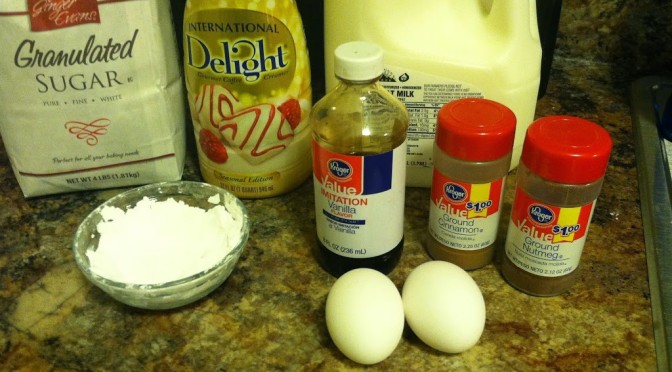
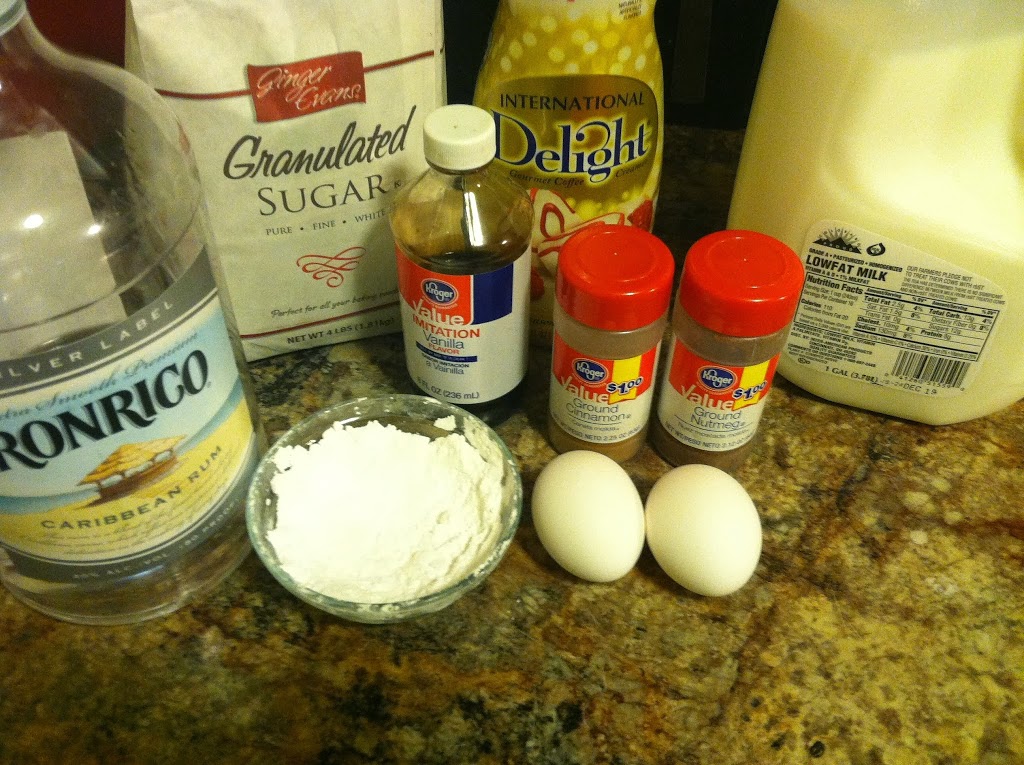
Ingredients:
2 cups milk
4 tbsp creamer (flavored kinds will add that extra something)
1 tbsp sugar
1 tbsp powdered sugar
2 whole large eggs
1 tbsp vanilla flavoring
Cinnamon & nutmeg to taste
*For an adult version, add 1 cup rum or liquor of choice

Step 1: Pour all the ingredients into a blender. Blend on high for a few seconds. Pour into a mug and dust with cinnamon. This makes enough for about 4 glasses.
Do you have any other favorite holiday drinks?