Grapefruitcello

History of Limoncello

Limoncello is a traditional liquor of Italy, with competing areas laying claim to its origin, including Sorrentini, Amalfitani, and Capresi. Production began sometime in the 1900s, but the businessman Massimo Canale first trademarked the name “Limoncello” in 1988 (source: Taste of Sorrento).

There are many other competing stories, such as limoncello being used in coastal towns to fight the morning chill, or its use among monks in monasteries to keep them cheerful between prayers. 

Limoncello has been growing in popularity as people begin trying their hands at home-brewing all types of alcohols, from wine and beer to whiskey and kahlua. The beauty of this type is that there are only four ingredients: citrus peels, alcohol, sugar, and water.

It does not depend on a specific type of alcohol, rum will work just as well as vodka. It also can vary between which type of citrus peel you use. The steeping time is typically at minimum one month, but I’ve read up to a year. 

By soaking the peels in the alcohol, you are sucking out all the depth of flavor and aroma from the peel’s essential oils into the liquid. This infusion is what can then bring flavor to other beverages. It is claimed that limoncello as an aperitif before or after a meal is a great digestive aid, and it is also sometimes enjoyed when mixed with champagne.

Typical Recipes

Limoncello is made by soaking the peel only of citrus fruits, most often lemons, in liquor for an amount of time. It is then strained and to it is added sugar dissolved in water. The liquid is then cured a little longer. It is then ready to be drunk as an aperitif or added to cocktails.

According to Discover Italian Foods, the traditional recipe calls for: 13 Sorrento or Amalfi lemons, 2 L good quality alcohol (type not specified), 650 g sugar (2 & 3/4 cups), and 1 L pure water. Soak the peels in the alcohol in a cool, dark place for one month. Filter, then make the syrup by boiling the sugar and water. Mix and store in the freezer.

Keep in mind that all of these recipes calling for limoncello can also use any steeped liquor using citrus peels. You can make this with oranges, lemons, limes, tangelos, or grapefruit. As long as you make sure to only take the peel and not the pithy white inside, you’re good to go!

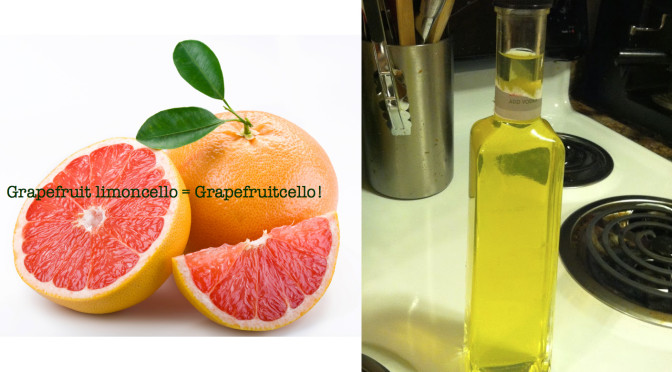
I decided to start small, and as I only had one gigantic grapefruit, that is what I started with. I scaled back the average recipe and made just one bottle of grapefruitcello.

Ingredients:

  • 1 large grapefruit
  • 1 cup plain vodka
  • 1 cup sugar
  • 1 cup water
  • ~time~

Step 1: Peel 1 large grapefruit and place peels in a glass jar. Pour the vodka over it and cover. Let sit in a cool, dark place. Mine only sat for 2 weeks rather than the traditional month or longer.

Step 2: Prepare the simple syrup by mixing the sugar and water and bring to a boil. Strain the liquor to remove the peels. Let syrup cool, then add to the filtered infusion.

Step 3: I’m storing this is the refrigerator for now. It probably won’t last too long!

This made about 150 mL of grapefruitcello. The taster shots were darn good, I can’t wait to mix up some tangy cocktails using this!

Limoncello cocktails

Limoncello can be drunk cold by itself between courses or after meals, you can use it in baking, or it can be added into cocktails for depth of flavor. This post from The Vintage Mixer is right up my alley in determining how to mix a cocktail.

Simply take 1 ounce limoncello, add 2-3 oz any complimentary liquid (juices, club soda, tea), add an additional liquor if you desire (1 oz gin, whiskey, rum), and garnish with something pretty! The website Limoncello Quest also has a massive list of creative drinks which use limoncello. 

I’m going to try a variation on a vodka cranberry and a lemon drop martini. Since I used grapefruit to make the grapefruitcello, I don’t need grapefruit juice. 

Ingredients:

  • 1 oz grapefruitcello
  • 1 oz vanilla vodka
  • 2 tbsp lime juice
  • 1/2 cup cran-cherry juice (or whatever kind you like & have)
  • Top off with sparkling water

Step 1: I had frozen lime juice cubes so I threw one of those in, as well as some re-freezable ice cubes so it didn’t get watered down. Add 1 shot (1 oz) of the grapefruitcello and 1 shot of vanilla vodka (bought pre-flavored or make your own by adding vanilla beans to plain vodka). Add in about 1/2 cup juice, and top it off with sparkling water.

I added a slice of lime wedge and a pretty stir stick, and my new signature cocktail is complete! Pretty and delicious. And with under 200 calories, about 15 g of sugar, and no fat, you can justify another one!
  

Have you made any homemade liquors? 

Chicken Liver Pasta


Now I may have lost many of you on the title alone. But trust me. Have I ever steered you wrong? If you hate liver & onions, that’s ok. If you’ve never had liver, then you can’t say you don’t like it!

Liver is an extremely inexpensive meat per pound, because most people don’t know what to do with it, or don’t like it. Their loss is my gain. And yours.

IMG_6428

Beef liver is what liver & onions is typically made from, because it is much larger. Chicken livers are a lot smaller, and are perfect for this recipe which requires blending them into a sauce. They cook up quickly, and easily fit in the blender. It is up to you, I imagine beef liver would taste similar.

Organ meats (offal) were traditionally a large part of many cultures. However it seems they are not thought of much and even spurned in today’s society; where we can all basically afford whatever cut we want. But every animal killed for a steak, wing, or ham contains edible parts like the liver, kidney, and even heart.

Some avoid liver because they are concerned that it stores toxins, since the liver’s main job is to detoxify chemicals and drugs in the body. Chris Kesser sets the record straight: “While it is true that one of the liver’s role is to neutralize toxins (such as drugs, chemical agents and poisons), it does not store these toxins. Toxins the body cannot eliminate are likely to accumulate in the body’s fatty tissues and nervous systems.”

So eating liver will not cause you to ingest a bunch of toxins. It will cause you to ingest large amounts of all kinds of vitamins and micronutrients though. Gram for gram, liver has more copper, iron, vitamins A, C, D, and E, B vitamins, and P, K, Mg than apples, carrots, or lean red meat in most cases combined.  Of course, where the liver comes from is important. A grass-fed, naturally raised cow’s liver is much healthier than a CAFO animal fed antibiotics, growth hormones, corn, and packed in too tight to lie down.

If you are lucky enough to already like liver, rock on! Keep eating that superfood. And hopefully you will love this recipe, as a new and exciting way beyond the typical onions or pate to enjoy liver. If you don’t like liver, give this a try anyways and see what you think. Blended up with other veggies and pasta, you may not even notice. Look for it in the frozen section if you can’t find it in the meat aisle.

Ingredients:

  • 1 pound pasta (I used bowtie)
  • 1 pound chicken livers
  • 1/4 cup cream or milk
  • 1 can diced tomatoes
  • Handful chopped kale or spinach
  • Garlic salt
  • Grated Parmesan cheese

IMG_6427

Step 1: Boil the pasta for 7-9 minutes. While that’s boiling, cook the livers over medium heat until only slightly pink, then turn heat off. Drain pasta and put in a large fry pan.

IMG_6431

Step 2: In a blender, combine cooked livers, milk, and garlic salt to taste. Blend well and coat pasta. Add in can of diced tomatoes and greens. Cook another 10-15 minutes, until greens are wilted and everything is heated through.

IMG_6429

Serve with a sprinkle of Parmesan cheese on top. That last tiny hit of saltiness really makes this sing. It is a bit gamey, but I absolutely loved it! Which is good, because it made about four meals’ worth for me.


Do you ever eat liver? If so how do you cook it?

World’s Easiest Peanut Butter Fudge

History

The exact origins and first creator of the confection known today as fudge is widely debated, though by most accounts it was invented in the U.S. over 100 years ago. The most popular theory is that it resulted from a batch of caramels gone wrong, or “fudged”, hence the name and the grandmotherly curse “Oh, fudge!”. For two possible stories of how this came about check out the BBGees “History of Fudge Explained“. 


Ingredients

For most candies and caramel, you do not cause crystallization. However, for fudge crystallization is required. The crystals are small enough that there is no grainy texture. Original recipes call for boiling mixtures of milk, cream, and sugar. They were also famously touchy; one had to use precise measuring, accurate temperatures, and constant stirring to achieve that perfect soft texture. Since not everyone has a candy thermometer, the recipes were adapted for home cooking to make the results easier and more reliable. Corn syrup, marshmallows, marshmallow cream, peanut butter, nuts, and sweetened condensed milk, among other ingredients, are included in various fudge recipes. The Nibble has a great article on the history and original fudge recipes.

Process

Almost all fudge recipes call for sugar, cream, and butter to be heated to the “soft ball” stage. This term, according to Exploratorium: The Science of Cooking, refers to how the mixture reacts when dropped into cold water, it will form a soft ball. This happens at 235-240F (110-116C) degrees. Other stages, determined by the highest heat the liquid reaches before cooling, include the Thread, Firm Ball, Hard Ball, Soft Crack, and Hard Crack stages.

In case you haven’t had enough sweets during December, I discovered the world’s easiest fudge recipe while at home. Now when you have that irresistible craving for the creamy sweet stuff, you don’t have to run out to a store. Just pull two simple ingredients from the pantry and within minutes you have a gooey batch of the sweet stuff.

Recipe

Ready?
Ingredients:

1 jar peanut butter
1 jar icing (vanilla is best, but what the heck, go wild and try chocolate, or cream cheese)

Mix well. Microwave 2 minutes. Refrigerate until solid and cut into squares. 

Bacon-wrapped pork roast

Does that title say what I think it says? Firstly, BACON. So that’s a magic word in its own right. Then, pork roast. Those are fantastic. Combined? *Cue fireworks*

This happened because bacon was on sale, and that’s the kind of thing you just don’t pass up, regardless if there’s a plan for it yet, because there soon will be. So I had a pound of bacon in the refrigerator. After thinking a long time about the endless possibilities, I decided that bacon-wrapped other meats is always delicious. (I apologize, any vegetarian or vegan readers. I’ll have a vegetarian lasagna post or something for you soon, I promise). If you’re interested in knowing more about what you can do with a part of a pig, see my New Year’s Eve post.

Ingredients:
1 2-3 pound roast
1 head garlic
1 pound bacon

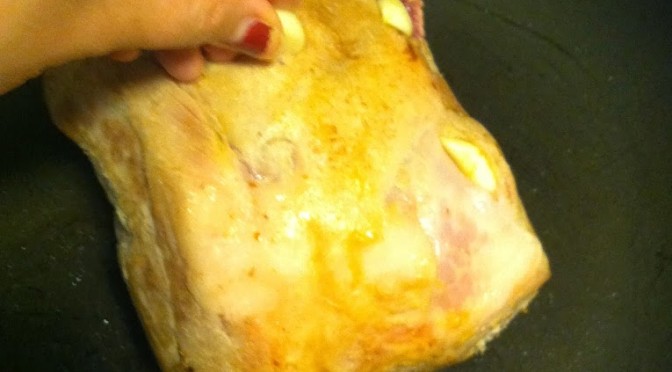
 Step 1: Brown the roast on all sides, just to char it. Slice slits in it and insert garlic cloves randomly. This will infuse the meat with garlic flavor, yum!

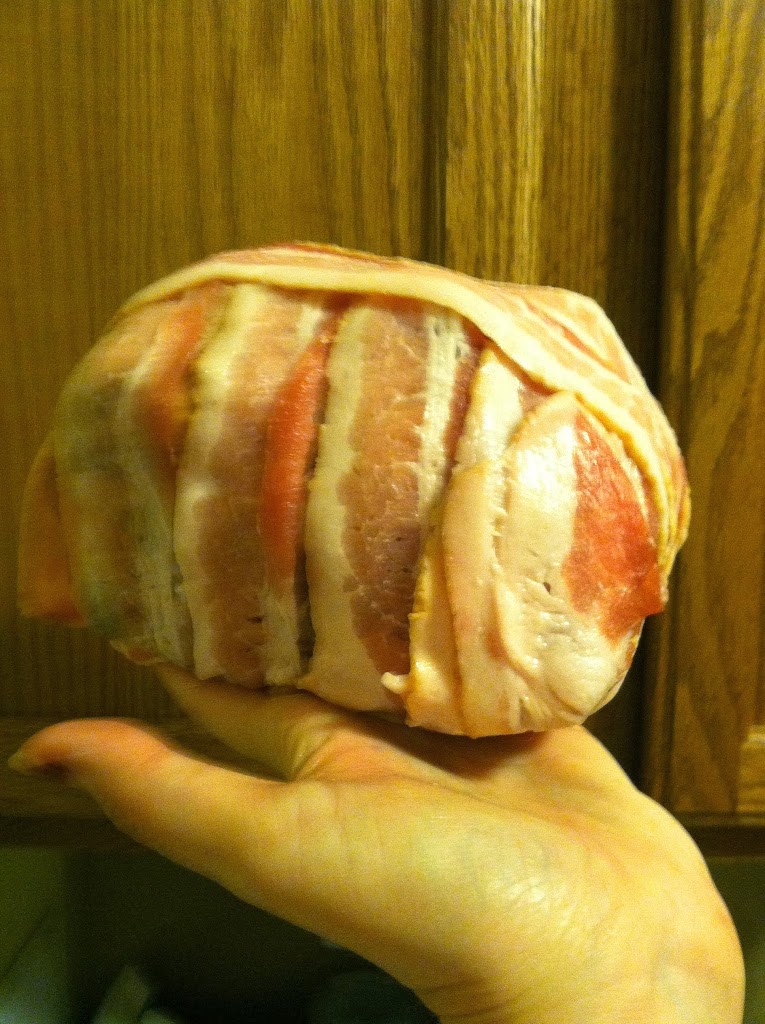
Step 2: Wrap the roast in bacon. I used four pieces width-wise then three pieces length-wise overtop. Oh yes. I took a piece of a pig, and wrapped it in another piece of pig. The rest of the pound of bacon became part of breakfast.

 It’s like a little bacon-wrapped-pork football.

 Men of the world, behold its splendor.

Step 3: Place in a crock pot on low ~6 hours or high 4-5. Mine was still partly frozen so I left it in there on high for about 7 hours to make sure everything cooked fully.


Serve with whatever carb you like or just eat it alone with your hands, whatever suits you. No judgment.


What’s your favorite way to use bacon?


New Years’ Day Lucky Tradition: Kielbasa and Sauerkraut

It’s almost 2014! 

I must admit I am a huge fan of almost all edible things pig. Bacon of course is in a league of its own. But ribs, chops and roasts are also all delicious and versatile to prepare. For New Year’s Day, my family has always had kielbasa and sauerkraut for good luck. You could also make a pork roast and sauerkraut.

According to a Nosh blog, the reason for this good luck is because pork from a “fat” pig represents an abundant year to come, and the sauerkraut from ‘green’ cabbage represents wealth. Thinking about this tradition made me wonder what was in sauerkraut and where it comes from. This lead to hours of research into the various parts and cuts of pork.

Stay tuned after the recipe if you want to know more! =)
Kielbasa & Sauerkraut Recipe

  • Ingredients:
  • 1 small pork roast (2-4 lb) or 2-4 pounds kielbasa
  • 1 bag of sauerkraut (or jar, or if you’re ambitious you can ferment your own)
  • 1 can/bottle of beer, 12 oz
  • 1 cup brown sugar

Step 1: Place roast or kielbasa in a slow cooker. Mix the beer and brown sugar. Pour over the pork, then cover with kraut. Cook on high for ~4 hours or low 6-8 hours.

Enjoy on NYD! May your 2014 be full of success and joy.

Photo from Pressure Cooking With Lorna Sass
Pork roast & sauerkraut on NYE


So what about the rest of the pig?

Generally speaking, pork tends to be less expensive than beef. For reasons I won’t discuss in this post, it is always a good idea to look for humanely raised pork, or best case scenario to be part of a CSA (which stands for Community Supported Agriculture) and get part of a farm-raised pig. Find one near you here.

They usually raise a set number of pigs based on how many shares are purchased, then will slaughter them and divide up the meat for you. However, I understand most people don’t have the time, space, money, or energy to commit to a half or whole pig, wait half a year, then bring home a hundred pounds of meat in various cuts and store it. Therefore, this is more of a guide to what you’ll find at a typical grocery store and what you can do with it.

This photo is from CloveGardens website and shows the various cuts of pig.

The CloveGardens site also has photos of every cut of meat, including less well-known cuts and parts you wouldn’t normally think of using like the feet, snout, and organs. If you’re feeling adventurous you can ask your butcher, or try an ethnic market. The most typical cuts you find at a North American grocery store are chops and roasts. 

Ham

This is the upper part of the thigh, and is what we think of when we think of a holiday ham. Often oven roasted and marinated or glazed. Holds up to slow cooking methods, and tastes great paired with sweet glazes like brown sugar, maple, honey and/or pineapple.

Pork Chops (aka pork loin end chops, center loin chops, rib chops, end cut chops, top loin chops, pork blade chops)

Many different cuts of meat can be called pork chops. They can be bone-in or boneless, in various sizes and thicknesses. Typically, thicker-cut chops with the bone still in tend to be the juiciest and most flavorful. These are great for pan-frying and grilling. Boneless chops are also great for frying or grilling, but can fall apart easier in longer methods like slow cookers or braising. Pork blade chops are from the blade roast, and tend to be fattier and tougher than chops from other cuts. They can be tenderized by marinating beforehand, and can be cooked with longer methods.

Pork Roast (aka pork tenderloins, rib roasts, pork legs, top loin roast, sirloin roast, hipbone roast, end roast, butt and shoulder-see below)

Like chops, there are many cuts that get sold as a roast. They are defined as cuts which stand up well to oven or slow cooker roasting. 

Pork Rib Roast(aka pork center loin roast, pork roast)

The ribs can still be inside or the ribs may have been removed. These cuts are extremely flavorful and juicy, but still pretty lean. If you want to cook it with the slab of attached fat for flavor, simply carve it off before serving. 

Pork Blade Roast (aka pork rib end roast, rib end pork loin, 7-rib or 5-rib roast)

The blade roast comes from the back/shoulder areas, and is fattier than most other cuts. This makes it less expensive but very flavorful. If the bone is still in, you can ask the butcher to crack it between the ribs to carve it easier.

Pork Loin (aka tenderloin, loin chop)

Cuts from the loin come from along the back and sides of the spine and are the leanest, most tender cuts. This makes them easy to overcook, so try to avoid long cooking times. There are three sections, the Blade end, Center portion and Sirloin end. The Blade end is closest to the shoulders and like the Blade Roast tends to be fatty. The Center portion is in the middle, it is the leanest and most tender, which makes it usually the most expensive. The Sirloin end is nearest the rump, and is typically bony and lean. All can be pan-fried, braised, or slow cooked.

Hocks and Shanks

This is the shin area of the pig’s legs. A hock with skin removed is called a shank. They are often smoked, and make good additions to soups to add flavor. 

Pork Ribs 

The ribs are generally cut into three seperate sections, all of which are great for smoking, braising, oven roasting, or grilling. And all are great slathered in BBQ sauce. Country-style ribs or pork blade end ribs are the meatiest and fattiest of cuts, but they aren’t as easy to eat with your fingers. They can be bone-in or boneless. Pork back, or baby back ribs are the middle ground of meatiness and easier to pick up. Pork spareribes are the least meaty, but have the most popular texture for finger foods. They are tender-chewy, and are the least fatty cut.

Pork Shoulders & Butts

Though named differently, both cuts are from the shoulder of the pig. Technically they are different cuts. The “butt” (aka Boston butt or shoulder) comes from a thicker section with more marbling. This makes it ideal for pulled pork or other barbecue styles. The “shoulder” is usually the triangular piece of meat attached to the butt. Both are great braised, slow roasted, BBQ-ed, slow cooker style, or in stew. They can essentially be used interchangeably.  

Bacon and Sausage

Ahhh the longtime favorite, bacon is unique in taste and is revered worldwide for it meaty, smoky deliciousness. Used to flavor all types of dishes and soups, as a centerpiece of breakfasts, and wrapped around just about anything, bacon is a versatile meat. It does not come off the hog looking like bacon. First the ribs and belly are removed from the loin. The belly here does not refer to the actual stomach but rather the fatty underside of the pig. The spare ribs are cut away, then the pork belly is sent through the long process of curing, smoking and eventual slicing up into bacon. Sausage on the other hand, can be made from just about any part of the pig that is not used elsewhere. Anything that was left from de-boning other cuts, high quality meat that can’t be turned into a roast or chop, or pieces that didn’t end up elsewhere all get mixed together. They are seasoned in various ways and ground, sometimes multiple times. This is then sold as bulk sausage, patties, or put into casing for links, most often the pig’s own intestines. (Seriously).

For a great, thorough article on the various parts of the pig and how to use lesser known cuts see this website for Sugar Mountain Farm in Vermont, which has its own USDA approved butcher site on the farm. They use as much of the whole pig, nose-to-tail, as they can, which I totally approve of!

For an article which sub-divides these types of cuts even further and includes photos, see here. They also have pages for cuts from beef, lamb, and veal if you’re curious and I don’t cover them soon enough. 

If you have a solid stomach and want to see photos and a description of each step in the pork processing process (redundancy, check), check out this blog post from Chico Locker & Sausage Co.


Nutrition information such as calories, protein and fat content will vary greatly depending on the type of cut and how it was prepared. According to Nutritioninfo.com the average nutrition data from one pound of raw meat cooked is:

Pork contains plenty of protein, iron and selenium and no gluten. However it is high in cholesterol, so you should try to control portion sizes to 3-6 oz per serving, and as in all things use moderation. Pork is safe to eat when cooked to an internal temperature of 160 F, so use a meat thermometer if you have one. Generally speaking, when oven roasting you should cook it at least a half hour per pound of meat. 

Do you have any New Year’s Eve or Day traditions?

Sneaky healthy lasagna

Lasagna, come delizioso!

Lasagna is a classic favorite recipe. It is also a recipe that is super simple to double or triple and freeze extras for later. Meat, cheese, and pasta, what’s not to love. It takes a little bit of work, but is very worth it. I’m also always looking for ways to sneak a little extra nutrition into recipes in ways that aren’t too noticeable. Lasagna presents a perfect triple opportunity.
1. When you make the sauce, combine a jar of traditional sauce and a jar of chickpeas (or other bean) in a blender and blend until smooth. This adds extra protein and fiber with nearly no change in taste.
2. Add a layer of spinach under the noodles. When baked it doesn’t have a strong flavor of its own, and is barely noticeable.
3. Use cottage cheese instead of ricotta. It is lower in calories (100 vs. 175) as well as fat (4.3 vs 13 g), though it does have 3x the sodium.


Ingredients:
1 package lasagna noodles
1 large package cottage cheese
1 bunch spinach
1 pound ground beef
1 jar pasta sauce
1 can chickpease
1 can diced tomatoes
1 small can tomato paste
1 cup shredded cheese (use mozzarella if you have it)

 Step 1: Make the sauce by blending beans and sauce. Add the diced tomatoes and mix well. 

 Step 2: Brown the ground beef and drain. Mix into the sauce mixture. Boil the noodles for about 7-9 minutes and drain.

 Step 3: In a large bowl, mix the cottage cheese and shredded cheese. I had mixed cheddar/mozz so that’s what I used.

 Step 4: Spray an oven-safe pan. Layer the noodles, spinach, beef/sauce, and cheese. Follow with more noodles and so on. Make one with four layers or two separate with two layers.

 Step 5: Bake, covered with foil, at 350 for 1 hour.

The result is a perfect taste meld of cheesy, tomato-y, beef, and noodles. You can see the spinach but really can’t taste it. And if you want a vegetarian version, just don’t add the beef to the sauce mixture. The only change I’d make is double the amount of sauce and it would be tres magnifique!

Do you have a special family lasagna recipe?

The meaning of Christmas


So here we are, on the eve of the year’s biggest holiday, Christmas. For some people that means frantic last minute shopping, cooking, wrapping, and baking. For some it means attending mass of some sort. And for most, it means spending time with family and friends. ‘Tis the season. Regardless of your religious beliefs, everyone can agree that Christmas tends to bring out the best in the world. From the many children’s-toy-related charities to swelling food bank donations to a spike in blood donors, the holiday spirit causes an outpouring of generosity, joy, love, and peace.

Tonight and tomorrow, we gather around the living room and tables, to eat, drink, share, and enjoy family and friends. My family has many traditions, one of which is a meatless Christmas Even dinner. There are shrimp and cookies while we await the completion of dinner. We make mushroom soup, the recipe for which has been handed down from my grandmother’s father from Slovakia, when he used to go out to the cow pastures and actually collect wild mushrooms. We have boatloads of pierogi, the potato-, onion-, or lekvar- filled doughy pillows of goodness.

After a leisurely dinner, which includes holiday ‘poppers’ with fun jokes, toys, and crowns to wear, we have an heirloom angel candle which gets passed around. Starting with the oldest person present, it is lit, and that person blows the candle out. If the smoke goes straight up, you will return next year. It’s always fun to try to make someone’s smoke go sideways, and we debate over the meaning when there is no smoke at all. Then we adjourn to the living room, where gifts are passed out, opened, exclaimed over, and photographed. Some years we open one at a time, some years everyone at once. But it is always boisterous and filled with love.
.
If you’re worried about gifts, don’t be. Once the shiny newness wears off, most are discarded or forgotten soon after. The things that stick are the memories, the times and the laughs we share. A heartfelt, handwritten card is more meaningful than a $3 Hallmark card. A homemade batch of cookies or fudge is like a hug for your tastebuds. The hours of care that go into knitting a handmade scarf or afghan are appreciated more than thirty minutes at the mall. This Christmas, focus on the people and the experiences, and creating memories that will last.

Family time ideas for Christmas day


Start a new tradition

  • Try something like the Right/Left gift game to make gift exchanges more fun.
  • Go around the table and say what you’re most thankful for this year, or what next year’s resolution will be.
  • Go caroling around your neighborhood.
  • Make up your own words to carols and perform for your family and friends.
  • Drive around looking at Christmas lights.

Create a decoration

Make a large batch of popcorn and make it into a garland for the tree, collect pine branches and cones to create a homemade wreath, or paint a blank ornament for a yearly memento.

Bake-able ornaments:
4 cups flour
1 cup salt
1 1/2 cup water
2 tbsp cinnamon
2 tbsp vanilla

Mix all the ingredients, shape, and bake at 300 for 30 min. If you poke holes you can create hang-able ornaments for this year or next, or even gifts.

Volunteer

Nothing makes you feel more thankful for what you have than to serve those less fortunate. Volunteer at a local food bank, homeless shelter, battered women’s shelter, children’s school, animal shelter, bring cards/gifts/cookies to the elderly, police, or hospital, or whatever cause is near and dear to your heart. You will help make someone else’s Christmas brighter, and likely increase your own sense of joy and gratitude.

Sign up for a fun run/5K

These are great fun, and great for your health! Get out there with family members or friends and race with all the Santas and Rudolphs in the snow. You can dress up or just bundle up, and just have fun. It will help offset the huge dinner and several dozen cookies later too.

Perfect pancakes

There is nothing quite as wonderful on a lazy Sunday as fresh, homemade pancakes. And they are actually quite easy to make. Just four dry ingredients plus four wet, and maybe some chocolate chips, fruit, or nuts. This would also be a great Christmas morning breakfast or brunch.  Total time required is roughly 20 minutes. This recipe makes about 10 hotcakes. 

Ingredients:
1 1/2 cups flour
3 tsp baking powder
1 1/2 tbsp sugar
1 tsp salt
1 1/4 cups milk
1 whole egg
3 tbsp melted butter
1 tbsp vanilla 
Optional: 1/2 cup chocolate chips, fruit, nuts, oats, etc.

Step 1: Mix the first four dry ingredients in a large bowl. (Add whatever extras you like).

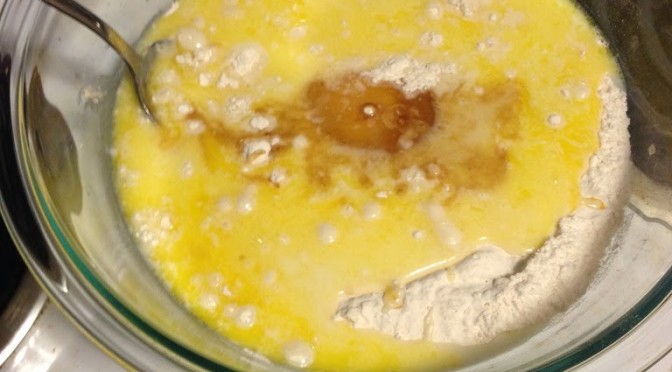
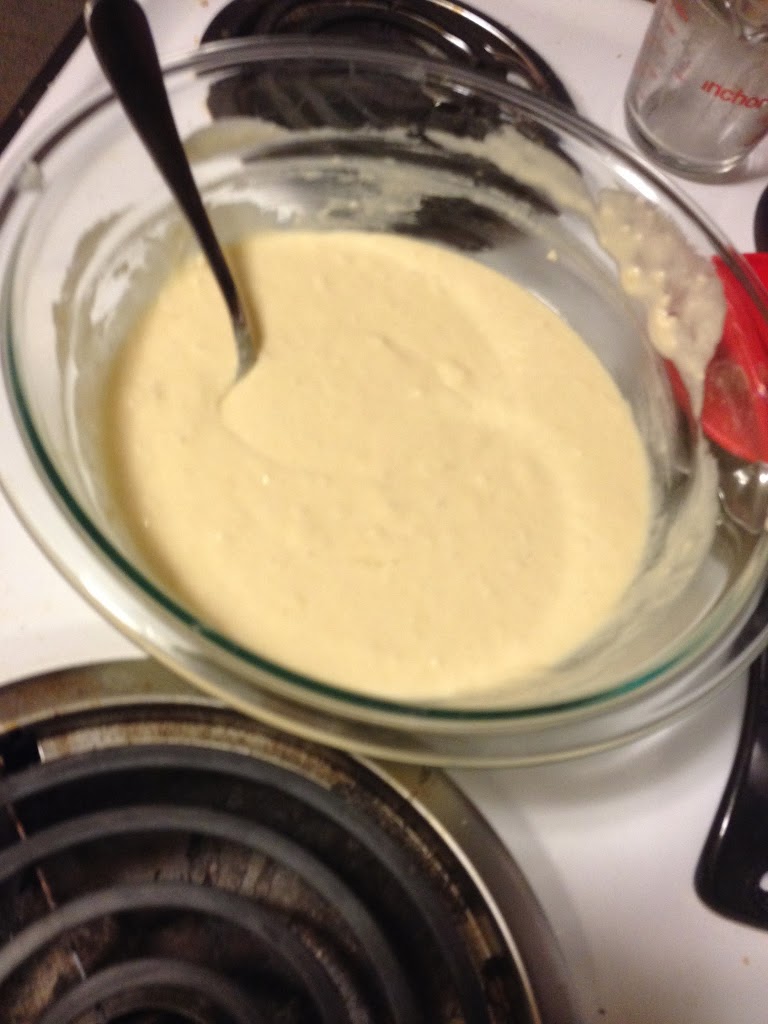
Step 2: Mix the next four wet ingredients into the dry. If you want to, you can set this aside for 10-20 minutes to shower or watch the news or brew some coffee.

Step 3: Heat a frying pan over medium heat and spray with cooking oil. Pour in about 1/3 cup batter per cake. Cook until batter shows bubbles, about 4 minutes.

Step 4: Flip the cakes when golden brown and cook another 1-2 minutes.

Serve with syrup, preserves, whipped cream, honey, or whatever you like on your pancakes.


This recipe produced light and fluffy cakes with the perfect amount of sweetness. I’m pretty proud of this batch I must say. Try making your own Pineapple Pancake Syrup to go with them.


What is your favorite type of pancake?


Super simple egg nog

History of eggnog: What’s in a name?

Egg Nog is one of the most popular beverages around Christmastime. But where did this dairy delight come from? There is plenty of debate but most sites agree that it is a descendant of the European beverage of “posset”, a popular beverage made with sweetened hot milk and wine. The original didn’t contain eggs, as dairy products were expensive and a rare commodity. In the Americas this wasn’t a problem, since most settlers kept their own cows and chickens, thus having plenty of access to both milk and eggs. Even today, the drink is far more popular in the US than the UK.
As for the “nog” part, CNN has an interesting article which puts forth three theories:
1. The word “noggin” describes the wooden mugs this beverage was often served in
2. The Norfolk slang word for strong ales served in these mugs was “nog”
3. In the early Americas, this drink was called “egg-and-grog”, which after having a few glasses morphed into “eggnnogg…”
 
Other countries have similar varieties, Time cites the Mexican “rompope” as well as the Puerto Rican version which adds coconut milk called “coquito”.
 
A perfectly valid excuse for consuming a carton by yourself is patriotism. Our forefather George Washington was quite fond of the drink, and the official White House recipe called for at least four types of liquor, a quart each cream and milk, one dozen tablespoons sugar and one dozen eggs. I can only imagine the holiday festivities after a few glasses of that…
 

Nutritional info

First of all, eggnog is traditionally made with whole, raw eggs. According to foodsafety.com, you can make a cooked egg base first then chill before mixing to be absolutely sure your nog is safe. According to popular belief, adding alcohol will kill any bacteria. But this is not true, so don’t count on copious amounts of rum or sherry to keep your eggnog sterile. If you have an immune deficiency or are paranoid about salmonella, you can use pasteurized eggs.
If you’re holding a frothy glass right now, you might want to skip over this part. But chances are even if you indulge, you do so with the awareness that eggnog is most certainly not a diet drink. Especially the sugar-stuffed, store-bought kind, which is only required to have 1% egg by the FDA to classify as eggnog. You can get up to 1/3 day’s worth of fat and cholesterol per glass depending on the brand. It is far better for you (and tastier, in my opinion) to whip up your own fresh. 
 
This recipe has only 250 calories, 2.5 g fat, 95 mg cholesterol, and a bonus 7.5 g protein per serving.
For an aged recipe that sounds wonderful (which I will try soon) see Alton Brown’s recipe on Mental Floss.
 
 
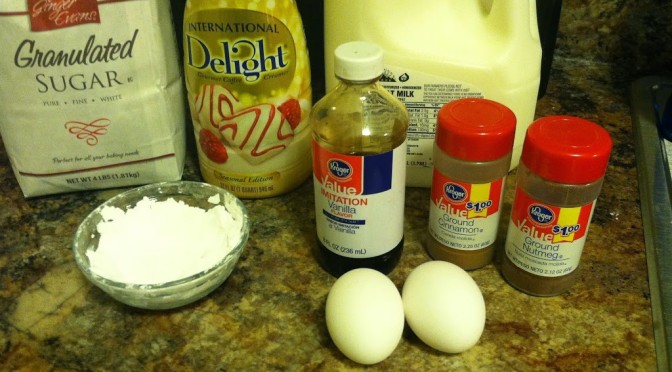
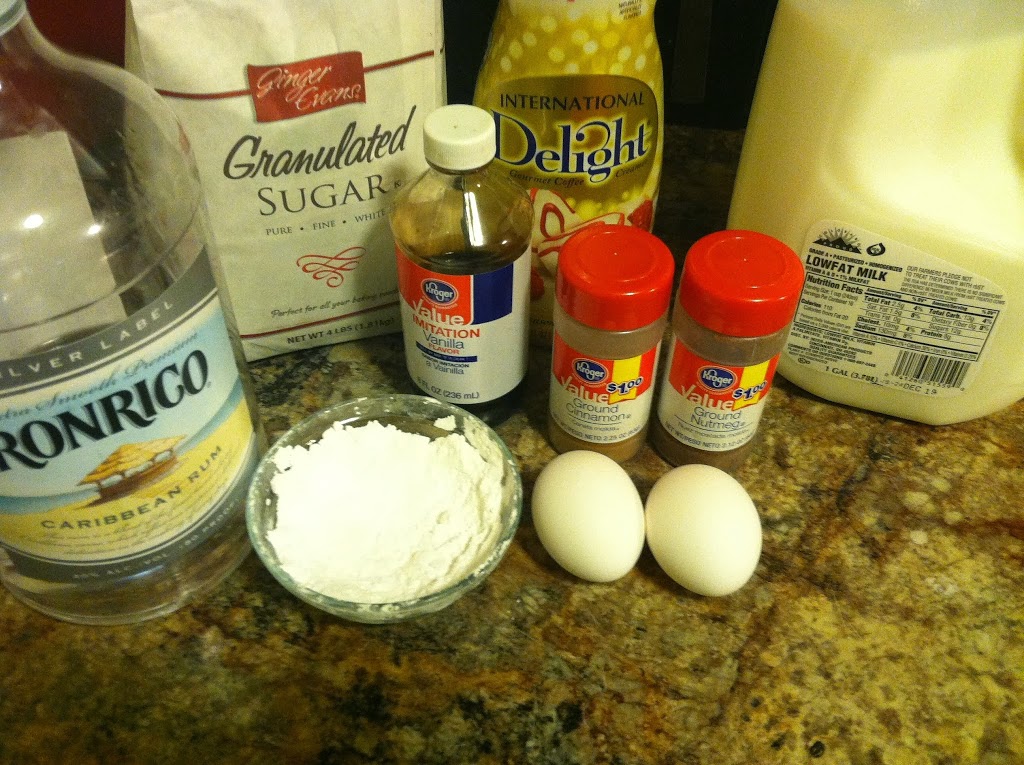
Ingredients:
2 cups milk
4 tbsp creamer (flavored kinds will add that extra something)
1 tbsp sugar
1 tbsp powdered sugar
2 whole large eggs
1 tbsp vanilla flavoring
Cinnamon & nutmeg to taste
*For an adult version, add 1 cup rum or liquor of choice

Step 1: Pour all the ingredients into a blender. Blend on high for a few seconds. Pour into a mug and dust with cinnamon. This makes enough for about 4 glasses.
Do you have any other favorite holiday drinks?

Mashed cauliflower & potatoes

One of my favorite healthy foods to hide is cauliflower. Because of its subtle taste and versatile texture, cauliflower can be hidden in many foods, the easiest of which is mashed potatoes. Most people cannot jump right into mashed cauliflower alone, so a 50:50 mixture is a good place to start.
From the family “Brasicaceae” (I don’t know how to say that either), cauliflower is related to broccoli, kale, cabbage, brussels sprouts and collard greens. For the long history of cauliflower breeding, see Wikipedia. In one cup of raw cauliflower alone, there is only 25 calories, yet 10% of your daily recommended fiber and over 75% of your daily vitamin C! Bet you didn’t think a boring white veggie could help fend off colds, but it’s true. It has no fat of course, but also not much protein, which is acceptable. I don’t recommend mashed cauliflower alone as a meal. The World’sHealthiestFoods website recommends cruciferous vegetables like cauliflower a minimum of 2-3 times per week. Cauliflower has nutrients that help support the immune system, anti-inflammatory system, and antioxidant systems. It has been linked to some amount of cancer protection, likely because of these protective effects.


Ingredients:
1/2 head of cauliflower
4-5 potatoes
1 1/2 cups stock (chicken, beef, veggie, homemade)
Garlic salt

Step 1: Peel the potatoes, dice them, and cut the cauliflower head into florets.

This is veggie stock I made myself in a slow cooker earlier.

Step 2: Put the stock (or water) into the crock pot and then add in potato and cauliflower.

The cauliflower should break apart easily in your hands.

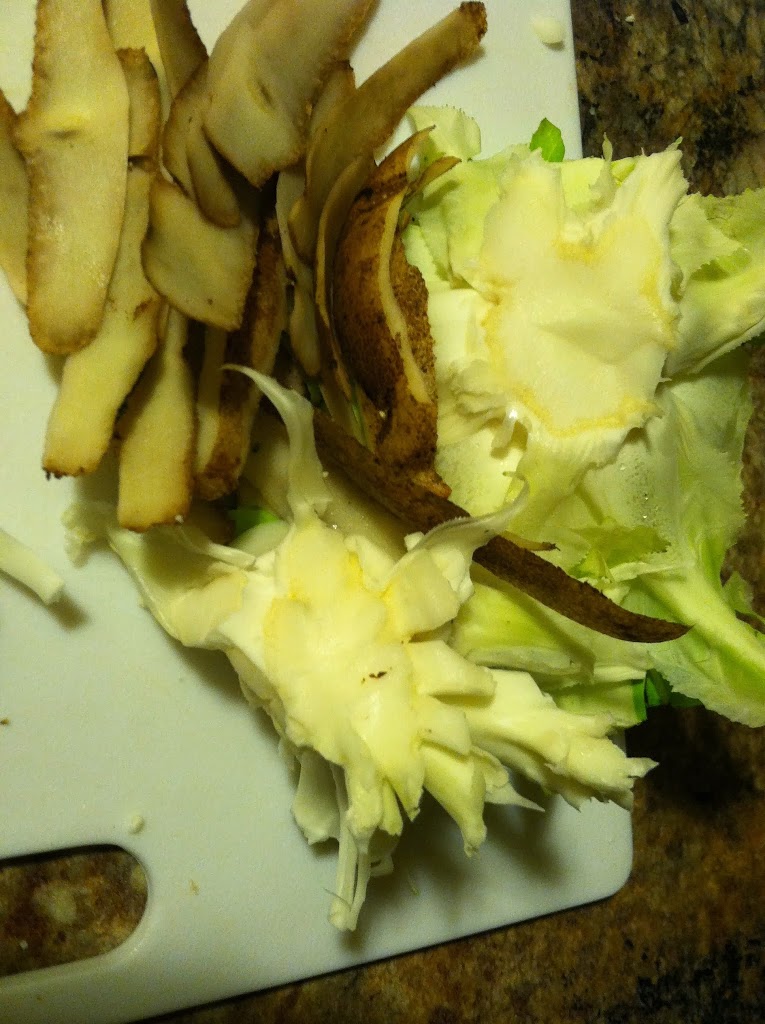
Leftover scraps of potato and cauliflower will go in the freezer until I have enough to make another batch of vegetable stock.

Step 3: Cook on low 2-3 hours or high 4-5 hours. Mash the potato and cauliflower together, adding any spices or more liquid if needed. You can now serve or doctor however you would normally use mashed potatoes. If you don’t tell, no one will even know the difference! 


What’s you favorite way to use cauliflower?

The fusion of food, fun, frugality, and curiosity.