Category Archives: Slow cooker

Slow Cooker Red Pozole with Pork


So I’ve been tutoring a high school kid in Biology for a year. He’s great, as are his parents. And his mother is a large part Native American. She is an amazing cook, I often show up to tutor and/or leave to tempting smells wafting from the kitchen. They are kind enough to ask me to share their dinner with them quite often.

As I love cooking myself, typically I have dinner already started in the Crock pot or at least plans, so I decline. However, one night she was serving up this thick, red stew that smelled too irresistible. This was my first introduction to pozole.

IMG_2065

Pozole means “foamy”; also spelled “pozolli” or “posole”. It is a traditional stew originally from Mexico, which once had ritual significance due to its use of maize, called hominy. The word “hominy” comes from the Powhatan language word for prepared maize. (Maize is corn).

Hominy is a very interesting thing. To make it, you take regular corn kernels, dry it, and then treat it with an alkaline agent to break down the cellulose in the corn. The result is puffy, chewy, soft kernels that look a little bit like corn-shaped popcorn.

Well, this tomato-pork-hominy stew was unlike anything I’d ever had, so of course I had to ask for the recipe. She had gotten it from the Denver Post a few years back, and was more than happy to share it with me.

red posole with pork

The red pozole with pork is the recipe I used and show here, but there is also one for Green Pozole with Chicken. I’ll save that for another day.

IMG_1883

I wanted to try this right away, but I forced myself to be patient. Normally I just center my grocery shopping around sales, but this time I kept an eye out for the ingredients I needed. Anytime I want to make something with a unique or expensive ingredient I try to wait to maximize my food dollars. As soon as I saw hominy on sale at the local Save-A-Lot I snagged a can.

As is my way, I took the recipe, tweaked it a bit to what I like and what I had in the house, and it turned out wonderful! I don’t like spicy foods, so I left out the peppers, but I did throw in a pinch of dried chipotle pepper to keep the Native American feel of the recipe. If you want to go all the way and buy the exact spices called for, be my guest. But I omitted the Mexican oregano, and used regular paprika, not Spanish. I also added a can of red beans for extra fiber and filling power.

Slow cooker red pozole with pork:

  • 1.4 pound pork roast
  • 2-3 tbsp garlic powder
  • 1/2 tbsp cumin
  • Pinch chipotle pepper
  • 1 tbsp chili powder
  • 2 tbsp paprika
  • 1 whole white onion, diced
  • 1 can diced tomatoes, with liquid
  • 1 can red beans, drained
  • 1 29oz can hominy
  • 6 chicken bouillon cubes and ~24 oz water
  • 3 tbsp flour
  • 1 bottle beer (Colorado native)

IMG_2048

Step 1: In slow cooker, mix flour, beer, spices, diced onion, and tomato.

IMG_2049

Step 2: Heat water in the microwave for 2-3 minutes, dissolve the bouillon cubes and add to crock pot. Or just use chicken stock.

IMG_2050

Step 3: Dice the pork roast into bite-sized cubes. I had a 1.4-pound roast defrosted, so I used that. But you could use chops also.

IMG_2052

Peel or cut off fatty pieces to make it more lean.

IMG_2053

Step 4: Add the pork and hominy to the slow cooker. Cook on low 6-8 hours, or high 2-4 hours.

IMG_2062

The finished product is a complex but light stew, with an amazing depth of flavor. You can obviously add more spice to your taste, but I loved it the way it was. I also didn’t have ground cumin, so the little pieces were annoying at the bottom, but the flavor they added was worth it.

IMG_2066

I made some biscuits to serve with the posole, and my s.o. loved it too. The recipe suggests shredded cabbage, radish, cilantro, cheese, or sour cream as garnishes. If you add extra flour or cornstarch you can make it thicker, add more stock to make it more soup-like.


What’s your favorite slow cooker meal?


Under 100 Calories per Bowl: Cruciferous Vegetable Soup


I’m always a big fan of recipes that help “clean out the fridge or pantry“, and if they are healthy as well then bonus! We all have some assorted cans, boxed, half bag of frozen mixed vegetables, etc. that have been sitting around since approximately we moved into whatever abode we inhabit.

Even the most strict, list-making, meal-planning, leftover-eating of us have odds and ends we need to try to use up before expiration dates. It is especially hard with produce. I have a bad habit of buying everything that’s on sale, I want to cook eventually, sounds healthy… and then I have a fridge packed full of five-day-old veggies beginning to wilt and lose nutrients. Sad face. 

That’s why this soup is fantastic! You can mix and match what vegetables you add based on what you have waiting to be used, and choose whatever protein and grain is in the half-empty box in your cupboard. There is of course a few caveats.

You need a huge ratio of veggies to other stuff, and a large portion of it must be water IF you are going for a filling, vegetarian, healthy, low-cal, low-fat soup.

Try to choose mostly cruciferous vegetables and/or leafy greens, as those pack the most nutrients and fiber for the least carbs and calories. Cruciferous vegetables include cauliflower, broccoli, brussels sprouts, etc. Limit the beans and grains to one cup each to keep calorie counts low. If you have a “meat tooth” feel free to throw in some cooked shredded chicken or steak.

Ingredients:

  • 1 whole head green cabbage, shredded
  • 1/2 head cauliflower, cut into florets
  • 1/2 bunch kale, chopped
  • 1 cup fresh spinach
  • 1 cup barley
  • 1 cup pinto beans
  • 1 can diced tomatoes
  • Garlic salt
  • Lots of water (stock or bouillon for extra flavor)

Step 1: Chop all your veggies and add to the crock pot. Add the grain (barley) and protein (beans) as well as diced tomatoes. You can sub fresh chopped tomato or tomato sauce, or forget the tomatoes. I just super love diced tomatoes in all the things.

Step 2: Cook on low for 4-6 hours, until veggies, barley and beans are tender. Add any other seasonings you like. Enjoy for under 100 calories per bowl as often as you are hungry!


*Disclaimer: I do not recommend crash diets like the cabbage soup diet where this is all you eat all day, but I do believe that soup before a full meal will help dampen hunger and make it easier to eat healthy and manage a healthy weight, and broth based soups should be incorporated into your meal plans to keep total grocery costs for the week low.

Curry curious

Ever since I did my master’s degree with a Taiwanese adviser, I have been what I call ‘curry curious’. She would occasionally bring homemade Thai food for the lab, and it was always divine. I love ethnic food because they use so many spices which are usually not found in the typical American palate.

But contrary to popular belief, being spice-ed doesn’t have to mean spice-y (as in too spicy to eat, mouth on fire, tears running down your face). Wikipedia actually has quite an extensive list of curries from various cultures, the cooking methods, ingredients, and spice mixtures if you’re interested.

I think the most interesting tidbit is that the “curry powder” spice mixture, popular in the West, dates to the 18th century and is thought to have been prepared by Indian spice merchants to sell to the members of the British government and soldiers.

I have attempted Green Curry Chicken, and it turned out amazing. I began experimenting with different cuisines and techniques, like the Crock Pot Indian Chicken Curry and then more Thai with pineapple Peanut Chicken Curry. Clearly I need to try something other than chicken in my curries… anyhow.

All have been unique and delicious. I love the punch of spices, and the ease of a crock pot lends itself to long, slow cooking these curries taste best with.  I definitely will keep curries as part of my regular meals.

Especially because they are so easily customizable. Whatever meat is around, literally any vegetable, and some standard sauces (yogurt, coconut milk, stock, and/or tomato base) plus the combination of spices and I have a thick, complex stew to serve over rice or noodles.

Also, thought it seems like quite an investment, the spices are worth it. You don’t need to use much, so they will last a long time. Without further ado, enjoy my latest curry creation.

Ingredients:

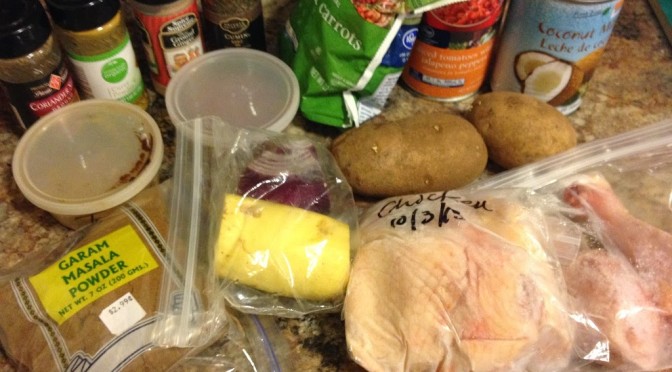
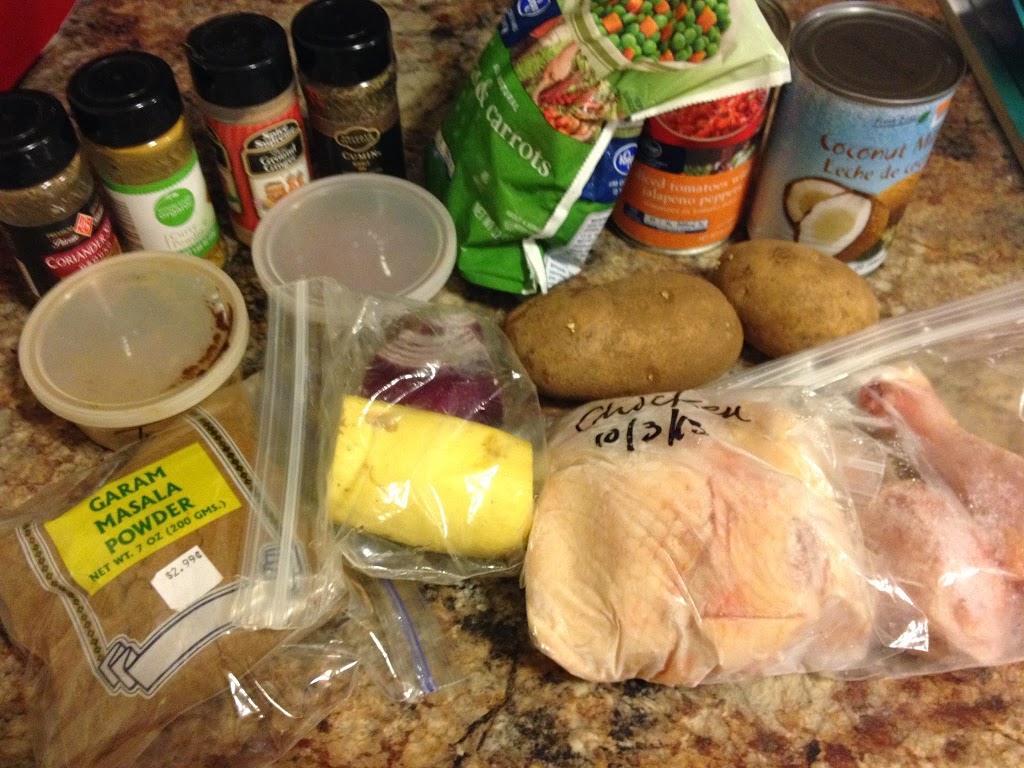
  • ~6 pounds chicken (I used 2 thigh, 2 breast, and 2 drumsticks)
  • 1 can coconut milk
  • 1 can diced tomatoes with chilis
  • 2 potatoes, peeled and diced
  • 1/2 yellow squash, diced
  • 1/2 red onion, diced
  • 1/2 cup peas and carrots
  • 2 tbsp garam masala (Indian spice mixture)
  • 1 tsp cumin
  • 1 tsp coriander
  • 1 tsp ginger
  • 1 tsp curry powder
  • 1 tsp turmeric

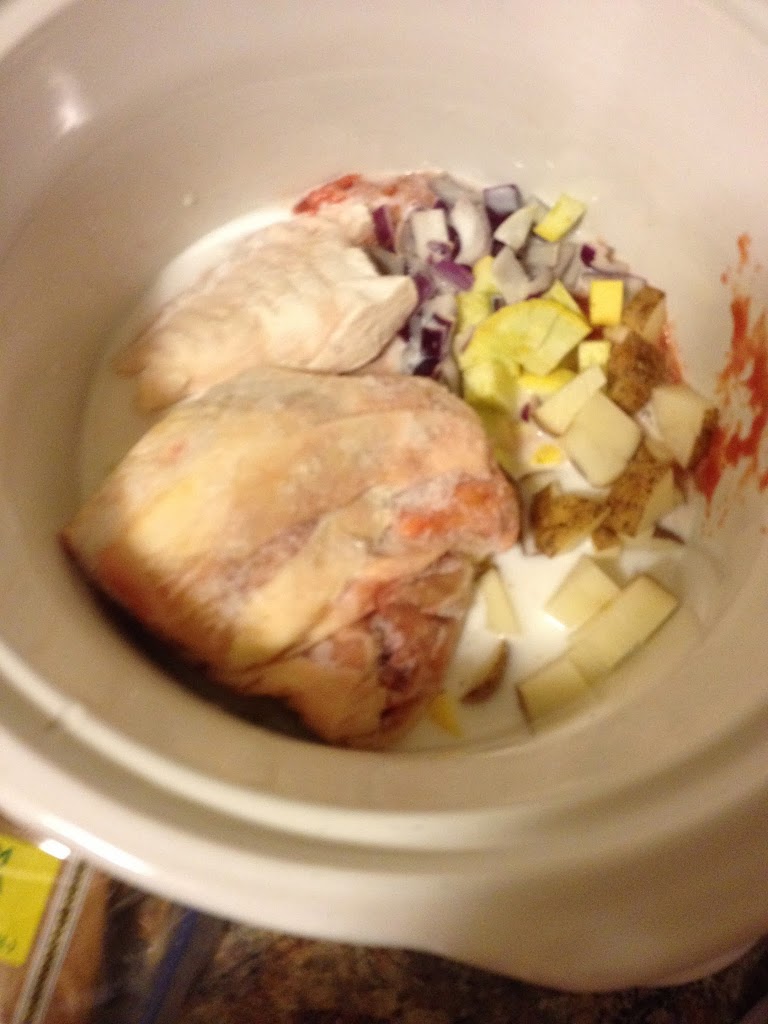
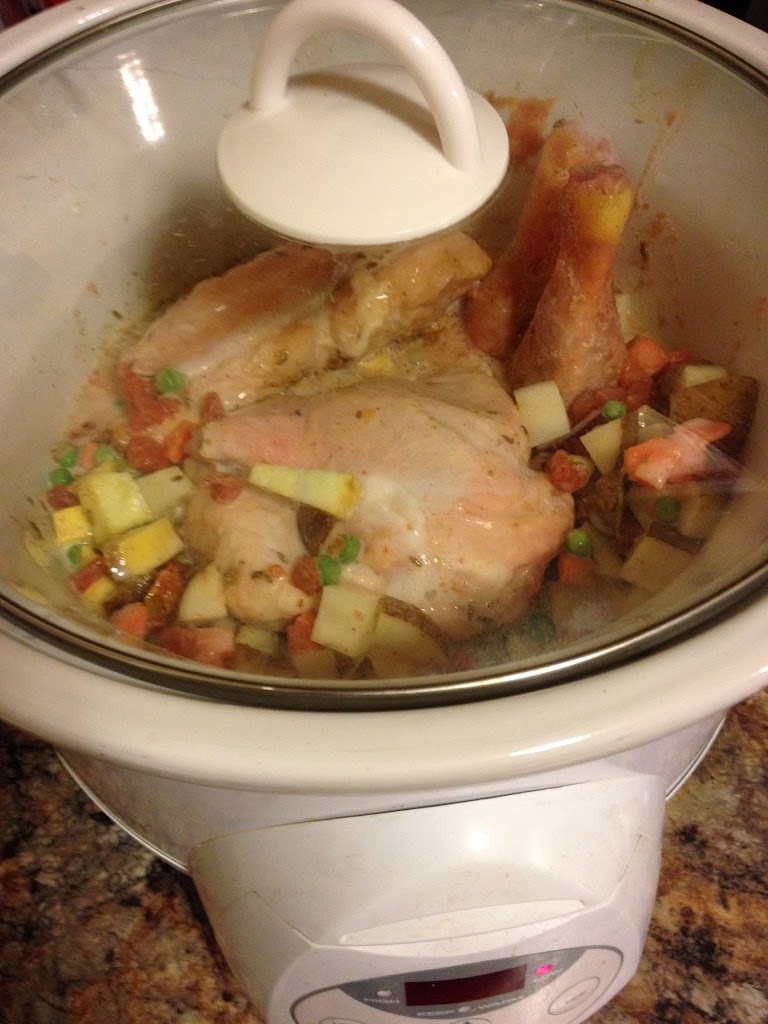
Step 1: Spray a crock pot. Add the coconut milk and diced tomatoes. Then add the chicken and all your diced vegetables.

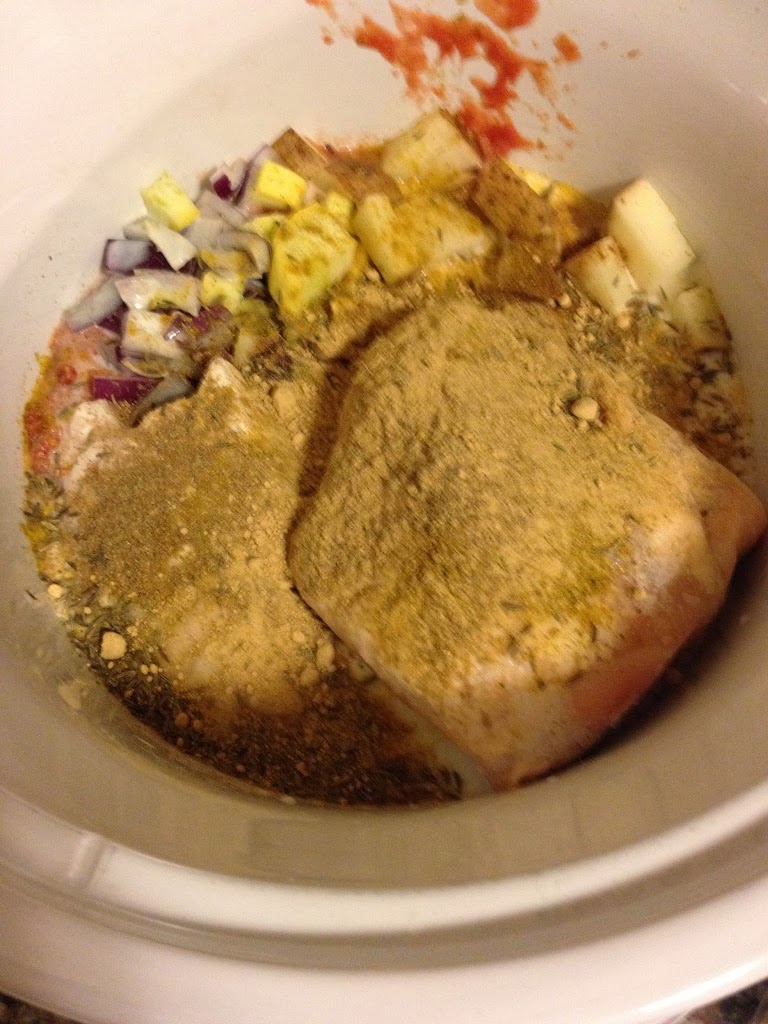
Step 2: Douse it all in the spices you’re using. Give it a stir.

Step 3: Cook on low 4-6 hours, mixing a few times if possible.

Serve over rice, noodles, or bread. Enjoy!


Do you have a favorite ethnic recipe?


Crockpot White Bean Chicken Chili

Chili is definitely in my top ten favorite winter dishes. I suppose really all year, but especially in winter it’s nice to cook up a hot batch of thick, delicious chili to enjoy at the end of a chilly day. (See what I did there?)

There are also endless variations, from vegetarian chili, to Skyline chili like in southwest Ohio (go to Columbus or Cincinnati and have some if you don’t know what I’m talking about), chili over noodles, meatless chili, bean-less chili, sweet chili… you get the idea.

There are chili cook-offs all over the nation, there is even an International Chili Society. That’s how serious some people take this stuff. Their webpage explaining the history of chili is pretty fascinating.

Now, hardcore chili con carne people who believe beans have no place in chili and pasture raised longhorn beef is the only meat good enough to earn the name, will not like my laissez faire approach to chili. I’ve been known to throw in all manner of vegetables, use various preparations of tomatoes besides juice, and use all kinds of types of meat.

This version is a kind of white bean chicken chili, but it got a little Jen makeover, as most things coming through my kitchen do.

Ingredients:

  • 2 large boneless, skinless chicken breasts
  • 1 can diced tomatoes with chilies
  • 1 can corn
  • 1 can navy beans
  • 1 can kidney beans
  • Dash chili powder
  • Optional: 1/2 cup milk


Step 1: Spray the Crockpot and add the chicken breasts. Turn it on low.

Step 2: In a blender or food processor, liquefy the can of kidney beans (or any other type really. This just adds a thicker, creamier texture) after you drain the can. Add water or some milk if you need to.

Step 3: Add the liquid beans plus all the other cans, milk, and any spices you want. (Garlic, onion, hot sauce, etc)

Step 4: Cook on high 4 hours or low 4-6. Take the chicken breasts out and shred them with two forks. Put back into the chili, stir and let sit another hour or eat immediately.

Top with whatever you like. I used plain Greek yogurt and shredded cheese, but salsa, cornbread, or avocado would also be delicious.

This chili is such a perfect combination of creamy and light. It has just a hint of spice from the diced tomatoes with chilies, but you could kick it up a notch easily by adding jalapenos or other peppers, or sprinkling on some hot sauce.

You could also use two cans white beans, kidney, black beans, whatever you have in the pantry. I’d really recommend not skipping the pureeing though, it totally adds that little ‘something’. I had leftovers for three days, and was not upset about it!

What’s your favorite kind of chili?

Soups for the Super Bowl


Happy Super Bowl Sunday, world! 
Today the Denver Broncos meet the Seattle Seahawks at MetLife stadium in New Jersey, far from either team’s hometown. And in case you missed it, yes, both teams are from state which have recently legalized marijuanna. However, the game is not being played in a state which has that legalized, so fans beware. Also, I’ve never heard it being accused of enhancing performance in sports, so anyone who thinks that is unfair clearly doesn’t know its effects.

Photo from the Up & Under Pub website
 

Regardless of who you are rooting for, you are likely either at home with a huge buffet of finger foods, or going to a pub/bar with copious amounts of burgers, chicken wings, beer, and french fries. And, may I say, I am jealous. Since I will be home, working on a midterm exam for my neuroscience course. Nonetheless, as a Denver transplant, I think I’m legally obligated to say, Go Broncos! 
.
Once the game is over, and the dreaded Monday rolls back around, all the office gossip will be who caught what pass, how many touchdowns were scored, and which commercials were the funniest/best/worst. And it’s likely many will have a bar food/beer/ buffet hangover.

The Big News!

Not to worry, just in time for the Super Bowl I’ve rolled out my first ever e-cookbook, and this one’s on the house! Seven Souper Soups, packed with recipes like my spicy Mexican-inspired Chicken Tortilla, the classic winter Butternut Squash Soup, hearty yet healthy Sausage and Kale, thick & creamy Baked Potato and more! Including a bonus Peach dessert soup, and cover drawing by Mike over at WebDonuts comics.

So if you would like a copy of 7 Souper Soups for your very own, I’ve added it to my Google Docs and made it public for anyone to view and comment on: 

You can also email me at BudgetEpicurean (at) gmail.com and I will send you the PDF as an attachment. I hope you enjoy these favorite recipes of mine and share with family & friends. Enjoy today’s festivities, and keep coming back for more! There are several projects in the works, so keep an eye out.

Bacon-wrapped pork roast

Does that title say what I think it says? Firstly, BACON. So that’s a magic word in its own right. Then, pork roast. Those are fantastic. Combined? *Cue fireworks*

This happened because bacon was on sale, and that’s the kind of thing you just don’t pass up, regardless if there’s a plan for it yet, because there soon will be. So I had a pound of bacon in the refrigerator. After thinking a long time about the endless possibilities, I decided that bacon-wrapped other meats is always delicious. (I apologize, any vegetarian or vegan readers. I’ll have a vegetarian lasagna post or something for you soon, I promise). If you’re interested in knowing more about what you can do with a part of a pig, see my New Year’s Eve post.

Ingredients:
1 2-3 pound roast
1 head garlic
1 pound bacon

 Step 1: Brown the roast on all sides, just to char it. Slice slits in it and insert garlic cloves randomly. This will infuse the meat with garlic flavor, yum!

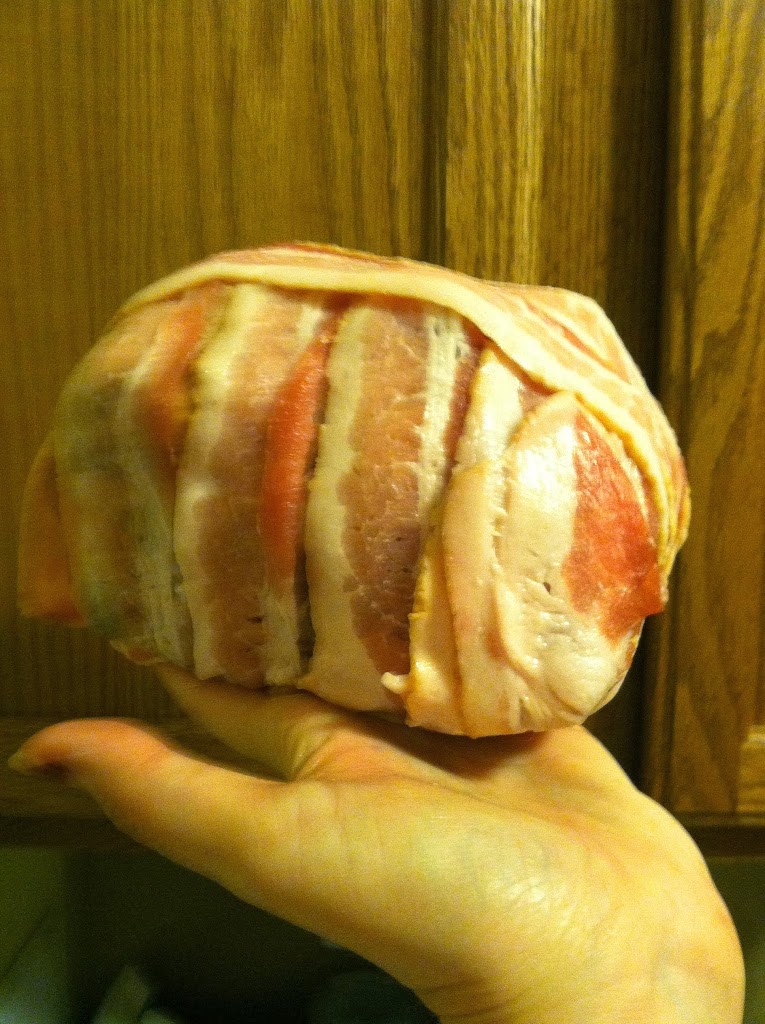
Step 2: Wrap the roast in bacon. I used four pieces width-wise then three pieces length-wise overtop. Oh yes. I took a piece of a pig, and wrapped it in another piece of pig. The rest of the pound of bacon became part of breakfast.

 It’s like a little bacon-wrapped-pork football.

 Men of the world, behold its splendor.

Step 3: Place in a crock pot on low ~6 hours or high 4-5. Mine was still partly frozen so I left it in there on high for about 7 hours to make sure everything cooked fully.


Serve with whatever carb you like or just eat it alone with your hands, whatever suits you. No judgment.


What’s your favorite way to use bacon?


New Years’ Day Lucky Tradition: Kielbasa and Sauerkraut

It’s almost 2014! 

I must admit I am a huge fan of almost all edible things pig. Bacon of course is in a league of its own. But ribs, chops and roasts are also all delicious and versatile to prepare. For New Year’s Day, my family has always had kielbasa and sauerkraut for good luck. You could also make a pork roast and sauerkraut.

According to a Nosh blog, the reason for this good luck is because pork from a “fat” pig represents an abundant year to come, and the sauerkraut from ‘green’ cabbage represents wealth. Thinking about this tradition made me wonder what was in sauerkraut and where it comes from. This lead to hours of research into the various parts and cuts of pork.

Stay tuned after the recipe if you want to know more! =)

Kielbasa & Sauerkraut Recipe

  • Ingredients:
  • 1 small pork roast (2-4 lb) or 2-4 pounds kielbasa
  • 1 bag of sauerkraut (or jar, or if you’re ambitious you can ferment your own)
  • 1 can/bottle of beer, 12 oz
  • 1 cup brown sugar

Step 1: Place roast or kielbasa in a slow cooker. Mix the beer and brown sugar. Pour over the pork, then cover with kraut. Cook on high for ~4 hours or low 6-8 hours.

Enjoy on NYD! May your 2014 be full of success and joy.

Photo from Pressure Cooking With Lorna Sass
Pork roast & sauerkraut on NYE


So what about the rest of the pig?

Generally speaking, pork tends to be less expensive than beef. For reasons I won’t discuss in this post, it is always a good idea to look for humanely raised pork, or best case scenario to be part of a CSA (which stands for Community Supported Agriculture) and get part of a farm-raised pig. Find one near you here.

They usually raise a set number of pigs based on how many shares are purchased, then will slaughter them and divide up the meat for you. However, I understand most people don’t have the time, space, money, or energy to commit to a half or whole pig, wait half a year, then bring home a hundred pounds of meat in various cuts and store it. Therefore, this is more of a guide to what you’ll find at a typical grocery store and what you can do with it.

This photo is from CloveGardens website and shows the various cuts of pig.

The CloveGardens site also has photos of every cut of meat, including less well-known cuts and parts you wouldn’t normally think of using like the feet, snout, and organs. If you’re feeling adventurous you can ask your butcher, or try an ethnic market. The most typical cuts you find at a North American grocery store are chops and roasts. 

Ham

This is the upper part of the thigh, and is what we think of when we think of a holiday ham. Often oven roasted and marinated or glazed. Holds up to slow cooking methods, and tastes great paired with sweet glazes like brown sugar, maple, honey and/or pineapple.

Pork Chops (aka pork loin end chops, center loin chops, rib chops, end cut chops, top loin chops, pork blade chops)

Many different cuts of meat can be called pork chops. They can be bone-in or boneless, in various sizes and thicknesses. Typically, thicker-cut chops with the bone still in tend to be the juiciest and most flavorful. These are great for pan-frying and grilling. Boneless chops are also great for frying or grilling, but can fall apart easier in longer methods like slow cookers or braising. Pork blade chops are from the blade roast, and tend to be fattier and tougher than chops from other cuts. They can be tenderized by marinating beforehand, and can be cooked with longer methods.

Pork Roast (aka pork tenderloins, rib roasts, pork legs, top loin roast, sirloin roast, hipbone roast, end roast, butt and shoulder-see below)

Like chops, there are many cuts that get sold as a roast. They are defined as cuts which stand up well to oven or slow cooker roasting. 

Pork Rib Roast(aka pork center loin roast, pork roast)

The ribs can still be inside or the ribs may have been removed. These cuts are extremely flavorful and juicy, but still pretty lean. If you want to cook it with the slab of attached fat for flavor, simply carve it off before serving. 

Pork Blade Roast (aka pork rib end roast, rib end pork loin, 7-rib or 5-rib roast)

The blade roast comes from the back/shoulder areas, and is fattier than most other cuts. This makes it less expensive but very flavorful. If the bone is still in, you can ask the butcher to crack it between the ribs to carve it easier.

Pork Loin (aka tenderloin, loin chop)

Cuts from the loin come from along the back and sides of the spine and are the leanest, most tender cuts. This makes them easy to overcook, so try to avoid long cooking times. There are three sections, the Blade end, Center portion and Sirloin end. The Blade end is closest to the shoulders and like the Blade Roast tends to be fatty. The Center portion is in the middle, it is the leanest and most tender, which makes it usually the most expensive. The Sirloin end is nearest the rump, and is typically bony and lean. All can be pan-fried, braised, or slow cooked.

Hocks and Shanks

This is the shin area of the pig’s legs. A hock with skin removed is called a shank. They are often smoked, and make good additions to soups to add flavor. 

Pork Ribs 

The ribs are generally cut into three seperate sections, all of which are great for smoking, braising, oven roasting, or grilling. And all are great slathered in BBQ sauce. Country-style ribs or pork blade end ribs are the meatiest and fattiest of cuts, but they aren’t as easy to eat with your fingers. They can be bone-in or boneless. Pork back, or baby back ribs are the middle ground of meatiness and easier to pick up. Pork spareribes are the least meaty, but have the most popular texture for finger foods. They are tender-chewy, and are the least fatty cut.

Pork Shoulders & Butts

Though named differently, both cuts are from the shoulder of the pig. Technically they are different cuts. The “butt” (aka Boston butt or shoulder) comes from a thicker section with more marbling. This makes it ideal for pulled pork or other barbecue styles. The “shoulder” is usually the triangular piece of meat attached to the butt. Both are great braised, slow roasted, BBQ-ed, slow cooker style, or in stew. They can essentially be used interchangeably.  

Bacon and Sausage

Ahhh the longtime favorite, bacon is unique in taste and is revered worldwide for it meaty, smoky deliciousness. Used to flavor all types of dishes and soups, as a centerpiece of breakfasts, and wrapped around just about anything, bacon is a versatile meat. It does not come off the hog looking like bacon. First the ribs and belly are removed from the loin. The belly here does not refer to the actual stomach but rather the fatty underside of the pig. The spare ribs are cut away, then the pork belly is sent through the long process of curing, smoking and eventual slicing up into bacon. Sausage on the other hand, can be made from just about any part of the pig that is not used elsewhere. Anything that was left from de-boning other cuts, high quality meat that can’t be turned into a roast or chop, or pieces that didn’t end up elsewhere all get mixed together. They are seasoned in various ways and ground, sometimes multiple times. This is then sold as bulk sausage, patties, or put into casing for links, most often the pig’s own intestines. (Seriously).

For a great, thorough article on the various parts of the pig and how to use lesser known cuts see this website for Sugar Mountain Farm in Vermont, which has its own USDA approved butcher site on the farm. They use as much of the whole pig, nose-to-tail, as they can, which I totally approve of!

For an article which sub-divides these types of cuts even further and includes photos, see here. They also have pages for cuts from beef, lamb, and veal if you’re curious and I don’t cover them soon enough. 

If you have a solid stomach and want to see photos and a description of each step in the pork processing process (redundancy, check), check out this blog post from Chico Locker & Sausage Co.


Nutrition information such as calories, protein and fat content will vary greatly depending on the type of cut and how it was prepared. According to Nutritioninfo.com the average nutrition data from one pound of raw meat cooked is:

Pork contains plenty of protein, iron and selenium and no gluten. However it is high in cholesterol, so you should try to control portion sizes to 3-6 oz per serving, and as in all things use moderation. Pork is safe to eat when cooked to an internal temperature of 160 F, so use a meat thermometer if you have one. Generally speaking, when oven roasting you should cook it at least a half hour per pound of meat. 

Do you have any New Year’s Eve or Day traditions?

Mashed cauliflower & potatoes

One of my favorite healthy foods to hide is cauliflower. Because of its subtle taste and versatile texture, cauliflower can be hidden in many foods, the easiest of which is mashed potatoes. Most people cannot jump right into mashed cauliflower alone, so a 50:50 mixture is a good place to start.
From the family “Brasicaceae” (I don’t know how to say that either), cauliflower is related to broccoli, kale, cabbage, brussels sprouts and collard greens. For the long history of cauliflower breeding, see Wikipedia. In one cup of raw cauliflower alone, there is only 25 calories, yet 10% of your daily recommended fiber and over 75% of your daily vitamin C! Bet you didn’t think a boring white veggie could help fend off colds, but it’s true. It has no fat of course, but also not much protein, which is acceptable. I don’t recommend mashed cauliflower alone as a meal. The World’sHealthiestFoods website recommends cruciferous vegetables like cauliflower a minimum of 2-3 times per week. Cauliflower has nutrients that help support the immune system, anti-inflammatory system, and antioxidant systems. It has been linked to some amount of cancer protection, likely because of these protective effects.


Ingredients:
1/2 head of cauliflower
4-5 potatoes
1 1/2 cups stock (chicken, beef, veggie, homemade)
Garlic salt

Step 1: Peel the potatoes, dice them, and cut the cauliflower head into florets.

This is veggie stock I made myself in a slow cooker earlier.

Step 2: Put the stock (or water) into the crock pot and then add in potato and cauliflower.

The cauliflower should break apart easily in your hands.

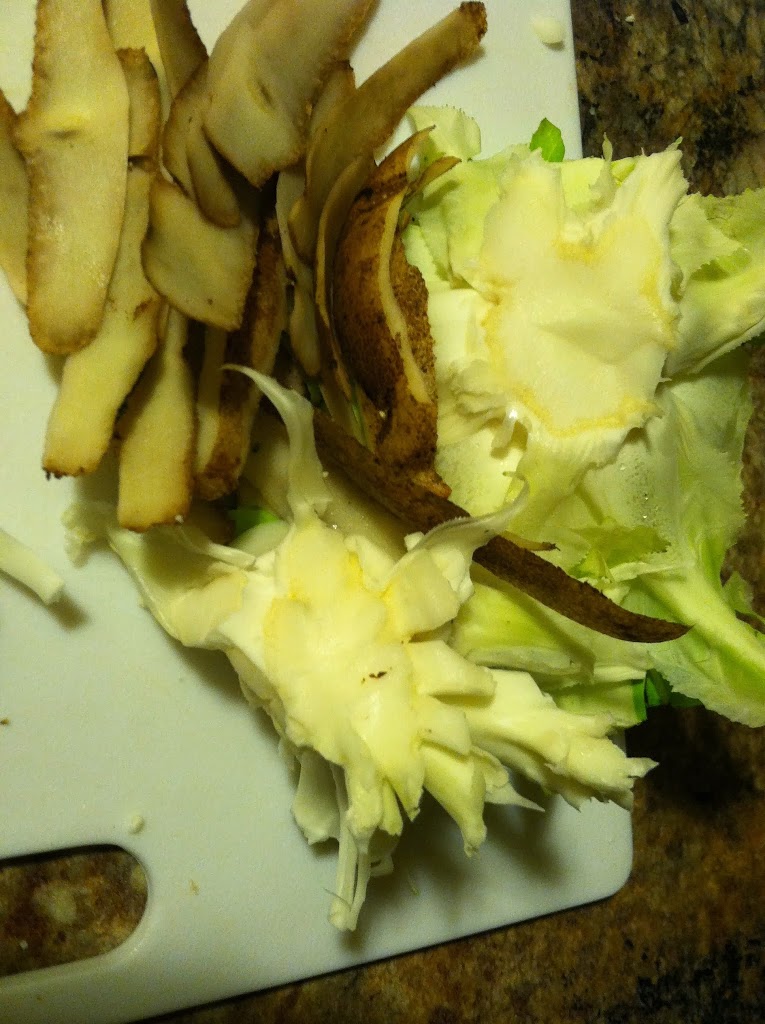
Leftover scraps of potato and cauliflower will go in the freezer until I have enough to make another batch of vegetable stock.

Step 3: Cook on low 2-3 hours or high 4-5 hours. Mash the potato and cauliflower together, adding any spices or more liquid if needed. You can now serve or doctor however you would normally use mashed potatoes. If you don’t tell, no one will even know the difference! 


What’s you favorite way to use cauliflower?

What to Do With Vegetable Scraps

With one big cooking holiday down (Thanksgiving) and another mammoth of a food-waster coming up quick (Christmas!) most households probably have a lot of food and vegetable waste.

What should you do with leftover vegetable scraps?

You know, the butt of carrots, potato peels, mushy tomatoes. If you throw it into the trash can and send it down to the curb, it’s out of your house, but then what?

Channel4 in the UK wrote an article about visiting a landfill, a common feature of pretty much every country in the world by now. It’s something we don’t think about too much in our hectic, fast-paced, self-centered world these days. 

According to an article by the Huffington Post, Americans throw away nearly half the food we buy each year.

This is a waste of good food, a waste of hard earned money, and a waste of valuable and diminishing space on this planet.

But if something in the back of your mind nags you every time you replace the trash bag, then this is one small step in the right direction for you.

We can all try to reduce the amount of food we buy at one time, plan properly to use the food we do buy each week, eat leftovers and creatively use leftover food, and find uses for even the most seemingly unusable scraps.

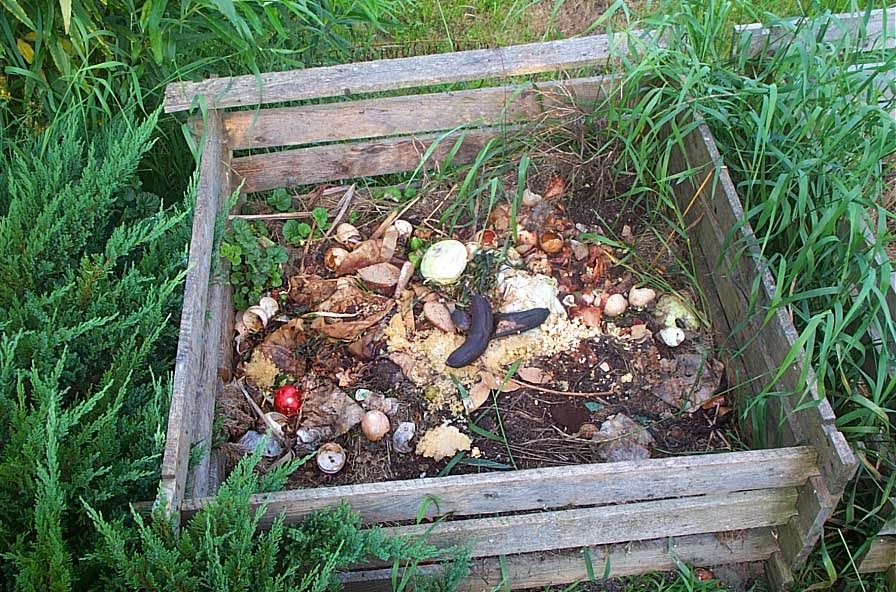
1. Compost
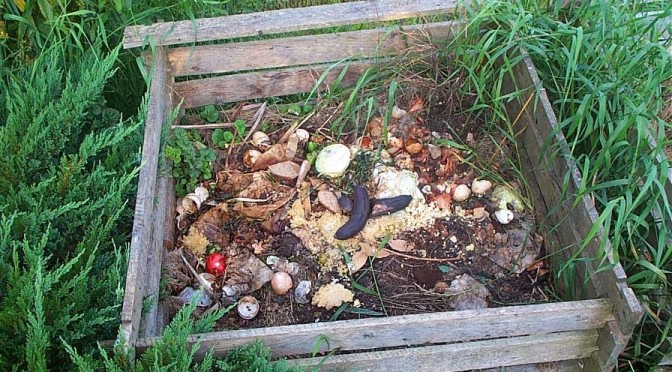
If you’re lucky enough to have a yard, then there isn’t much excuse to not have a compost pile.

Even if you ‘don’t have time’ or ‘don’t have space’ or ‘don’t have energy’ to have a garden, composting just makes sense, and you can spread it around trees or in flower beds or even give it away on Craigslist once made.

If done right it doesn’t smell bad, and merely requires occasional turning to aerate. There are certain things that are great for compose and others not so much. NEVER put meat or animal bones or fat into compost because they will attract wild animals and cause unwanted reactions.

For more information about how to build a proper pile see here.

Photo from I Dream of Eden.

2. Muffins
This of course depends on the type of food scraps you have.

Carrot peels or leftover sweet potato can become carrot cake muffins, or be added to homemade coleslaw. If you have veggie pulp because of using a juicer, you can substitute that for part of the wet ingredients in a muffin mix.

Pay attention to what was in the pulp you juiced though. I think cucumber/grapefruit/kale muffins might be a little weird.

But who knows.


3. Vegetable stock
This is by far my favorite option, since I live in an apartment and don’t have composting access yet.

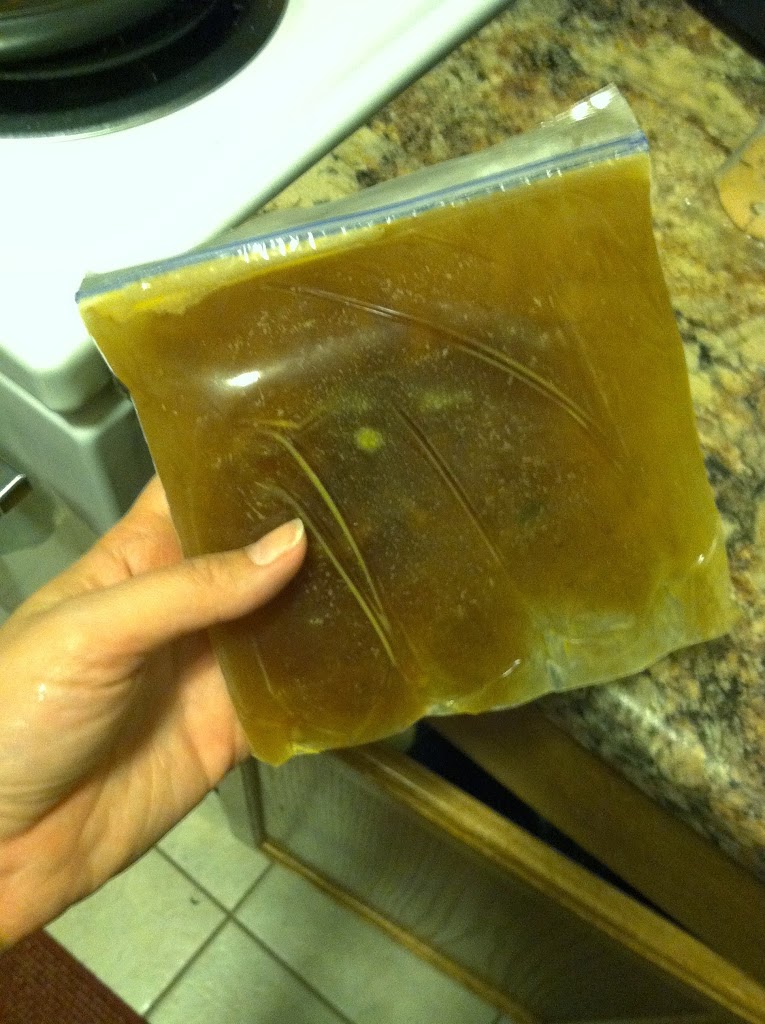
What I do is store all the scraps in a bag in the freezer as I make recipes. Potato peels, slightly brown pieces, ends of veggies, etc.

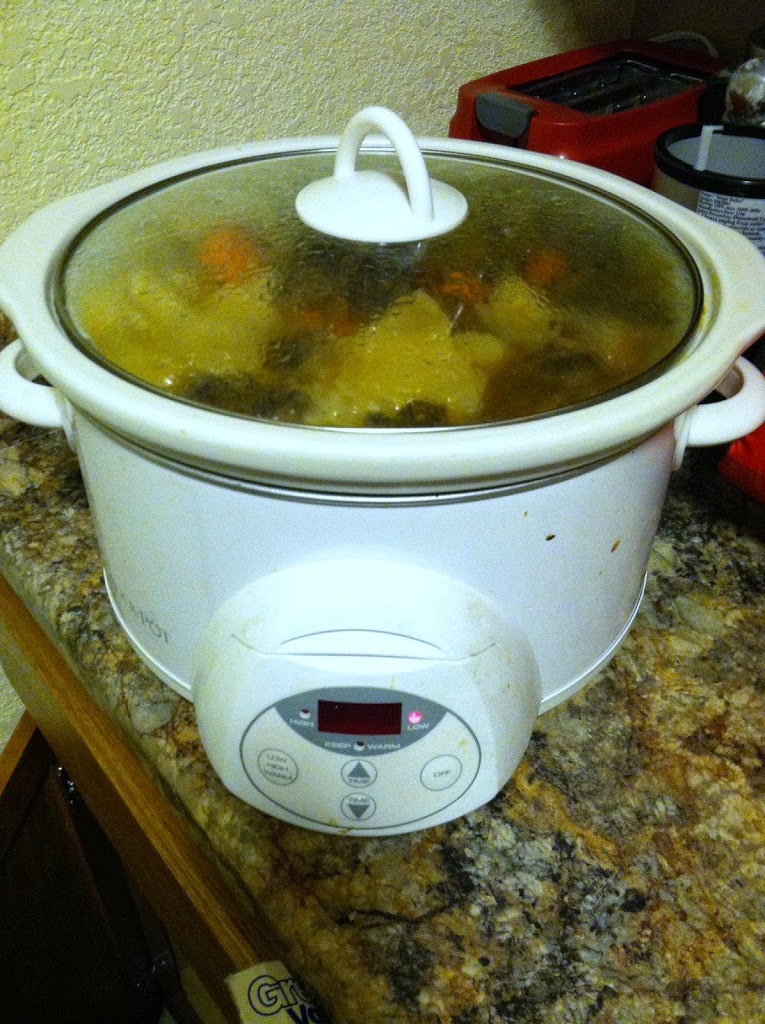
Once I have a full bag I put it in the Crock Pot and cover it with water, adding any other herbs and spices that sound good. Then just leave it on low overnight or all day, usually at least 8 hours.

The nutrients and flavors will boil out of the veggies and create a beautiful, healthy, salt-free stock you can then use in future recipes. The best part? It’s totally free!

Just freeze the stock in plastic bags laid flat in the freezer, or in ice cube trays to make little cubes.

You can then pop these into soups, stews, flavor rice, or in whatever you normally use stock. This same theory works for meat as well.

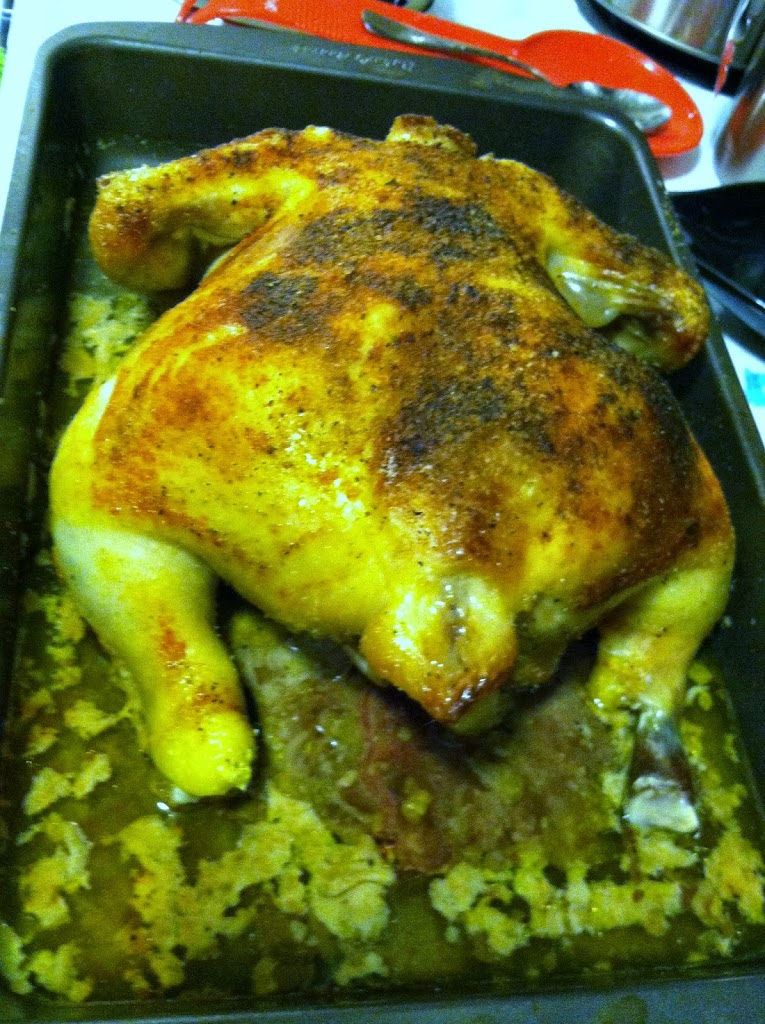
If you’ve made a lovely roast chicken and have the carcass left over, toss it in the slow cooker with some water for several hours. If you have shrimp tails, a bone-in pork roast, corn cobs, or some T-bones, do the same for some flavorful bases to use in the future.


If you know of a way to use leftover scraps not mentioned here, please share with us!


Slow cooker chicken soup: “Just like grandma used to make”

When I was younger, Sunday was always early dinner, and almost always chicken noodle soup. Grandma or mom would put a pot of soup on to simmer, we would go off to church or on a Sunday drive around town, and come home to a house that smelled delicious and a pot full of warm delight. I like continuing that on my own, though I use the modern miracle of the crock pot so I don’t have to worry about it burning on the stove (that’s a hilarious story for another time…).

Since I had recently roasted a chicken, naturally I made soup from what wasn’t eaten the first day. We had eaten the legs and drums, so I cut off and saved the whole breasts for sandwiches for lunch the next day. The rest of the bird plus a few extras was made into a huge crock pot full of chilly weather goodness. There is nothing like coming home to the smell of homemade chicken soup!

Ingredients:
1 chicken carcass
3 large carrots, sliced
2 potatoes, diced
1 whole onion, sliced
3 stalks celery, chopped
1/2 pint fresh mushrooms
1 cup barley
1 tbsp butter
Water

Step 1: That gorgeous roasted chicken had a tray full of juices and spices that I added into the crock pot first. Waste not want not, and that’s some powerful flavor I don’t want to waste.

 Step 2: I diced up all the assorted veggies and added them and the chicken (skin, bones, extra meat and all) into the crock pot. I added water all the way to the top and put it on low all day (about 8 hours).

When I came home, the house just smelled amazing. The chicken had been brined in all that lovely salt and sugar and pepper and spices, so I didn’t even really need to add anything to the broth.

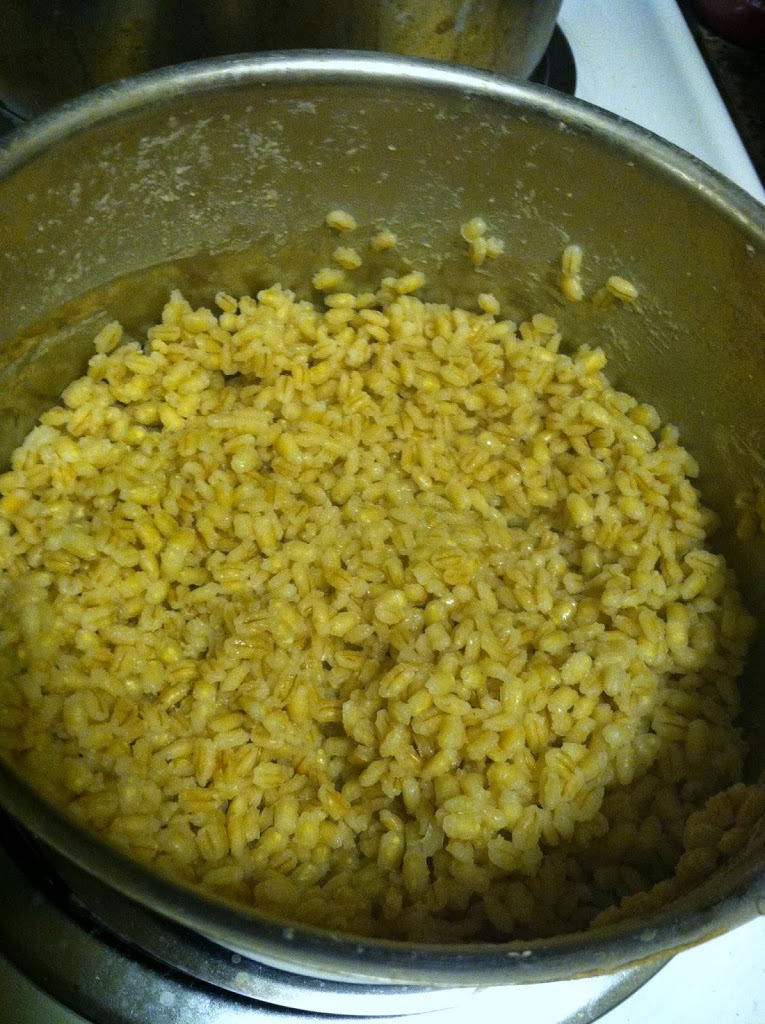
Step 4: I boiled 1 cup of barley in 1 1/2 cups of water with 1 tbsp butter for 45 minutes. 

Barley is a bit chewy, and I added some of the broth after 40 minutes to let the flavor soak in for the last 5 minutes. Maybe a 1/2 cup.


Just look at all those gorgeous veggies! And the sheen on the surface, that’s from the natural chicken fat that dissolved into the broth. Sure it isn’t the healthiest thing in the world for you, but boy howdy does it taste great! And you can let it cool in the fridge then skim the extra fat off the top.

The barley was surprisingly perfect for this soup. Normally I use egg noodles but didn’t have any on hand. The flavors blend so well and are perfect for nippy fall nights. It is so easy to make, and you will have leftovers for days (unless you share). I guarantee* you won’t get sick, or if you already are you will immediately feel better.

*Guarantee based only on personal experience, not actually backed by anything or redeemable for anything. But other experiences and comments are welcome to be shared. =)