Food allergies

Development of food allergies 

If you’ve been paying attention at all the past decade or so, you will have noticed an increase in food allergies. From peanuts to milk, it seems everything edible is able to kill someone somewhere. Or at least make them very unhappy. Allergies to anything is an immune response to a foreign thing your body wants to get rid of. In the case of food allergies, some chemical or ingredient in what you eat can cause anything from mild stomach upset to severe anaphalactic shock and airway closure. 

It is estimated by the NIH that 20% of children under the age of 5 suffer from food allergies, and 25% of adults have one or more. Sometimes you can ‘grow out of’ allergies, but you can also develop new allergies as an adult. There are also allergies which are exercise-induced, or cross-reacting allergies. Mayo Clinic’s website has this handy table:

If you are allergic to: Birch pollen Ragweed pollen Grasses Mugwort pollen
You may also have a reaction to: Apples
Carrots
Celery
Hazelnuts
Peaches
Pears
Raw potatoes
Bananas
Melons
(cantaloupe, honeydew and watermelon) Tomatoes
Tomatoes Apples
Carrots
Celery
Kiwi fruit
Peanuts
Some spices (
parsley, coriander, or caraway, anise, and fennel seeds)


Food allergies are also on the rise, making the public more aware. We probably all know at least one friend or family member who is lactose-intolerant, can’t eat eggs, or will swell up like a balloon if you give them Pad Thai. (Because of the peanut sauce.)

This comic is from the talented Tyler at Forbidden Ferret, a daily educational webcomic.

How do you become allergic?

Allergy development is a two-step process. The first time you are exposed to an allergen, your immune system recognizes the invader and produces antibodies which specifically bind to that one molecule. These antibodies then circulate in your blood and body for a long time. If you are exposed to the same antigen (food) again, those antibodies recognize it, bind to it, and signal your body to attack by releasing things like histamines. Those cause swelling, inflammation, redness, itchiness, etc. 
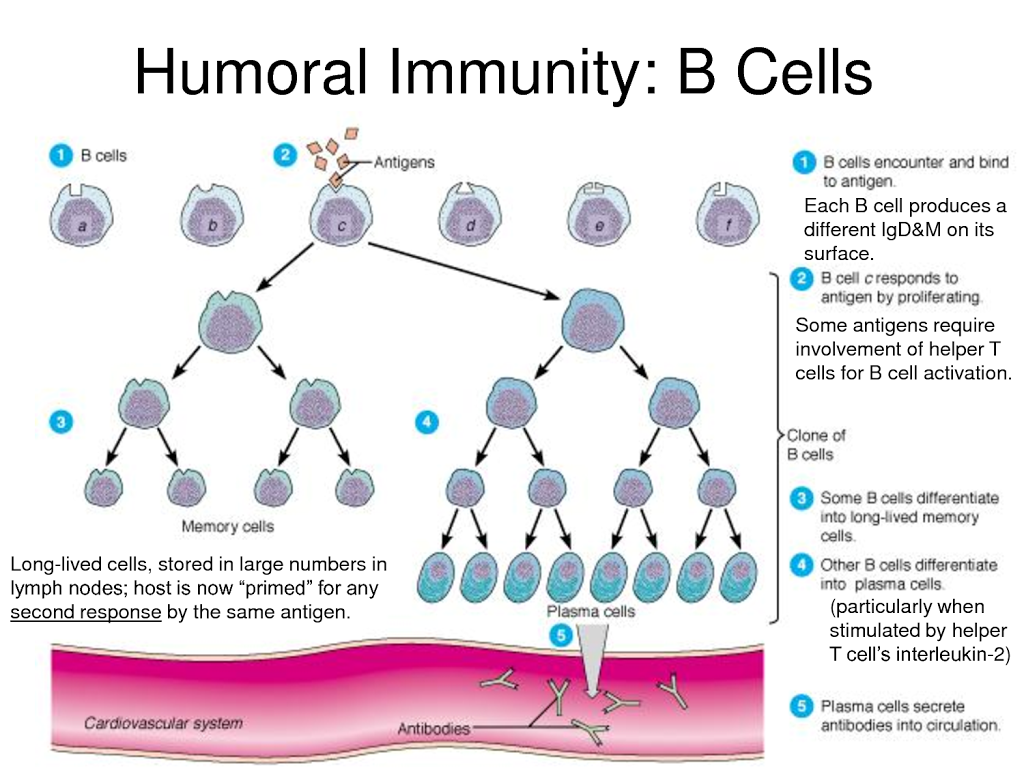
Image from a document titled Specific Resistance Immunity.


Ironically, allergies tend to happen with a food that is eaten often. For example, Japan has a higher incidence of rice allergy than the US. If someone you are with eats a food and begins to have trouble breathing, breaks out in hives or a rash, faints, or begins vomiting, you should seek medical help immediately. For a full background of allergies, causes, symptoms, and how you should react to an allergy in someone, see the NIH booklet. 

In infants and children, the most common food allergies are:

  • Eggs
  • Milk
  • Soy
  • Peanuts or tree nuts
  • Wheat

While in adults, the most common food allergies are:

  • Shellfish (shrimp, crab, oyster, lobster, crayfish)
  • Peanuts and tree nuts
  • Fish, such as salmon

Children tend to outgrow egg, milk and wheat allergies. Peanut allergies tend to be for life, and allergies developed as an adult tend to stick around as well. Food allergies are also not the same as a food intolerance. As I mentioned lactose intolerance earlier, it is important to note that the immune system is not involved, there are no antibodies made to milk. You body simply cannot digest the lactose in milk, thus meaning you are intolerant, not allergic. Other common intolerances are MSG, gluten, and sulfates.


What can I do?

For pregnant women, it is recommended that you breast-feed newborns for at least the first four months. There are many, many health benefits to this practice, plus it is far more economical than formula. Not to mention the bonding time. There is no conclusive evidence yet that the mother avoiding common allergenic foods will prevent the child from developing allergies. So go ahead and have your cereal with milk, toast with peanut butter, and an omelet. 

One way to identify what you are allergic to is to keep a food diary of how you feel after eating different types of foods. This could identify triggers. Then you can try an elimination diet, where any foods which caused an allergic reaction are eliminated one by one so you can see if that causes your reactions to stop. You should always consult your healthcare provider before altering your diet significantly. To test reactions to specific foods, you can request a skin prick test. Your health care provider will prick your skin with a needle and place a small amount of food extract under your skin. If you have swelling and redness, this is a positive reaction, meaning your immune system responded. A blood test is a bit more extreme, where the actual levels of IgE antibodies to a specific food are measured in your bloodstream. 

The easiest way to avoid allergic reactions if you already know you’re allergic is to keep your living area clean. If you are allergic to peanuts, even the dust, keep peanuts out of your kitchen, wash surfaces and vacuum regularly. You can also obtain a medical warning bracelet from your doctor, as well as an epinephrine pen. Commonly called “Eip Pens”, using these is the best immediate way to counter-act anaphylaxis. It will flood your system with epinephrine, which calm down the histamines and hopefully allow you to continue breathing. 

Where can I learn more?


The next Food Allergy Awareness Week is May 11-17, 2014. The Food Allergy Research and Education (FARE) group has all kinds of fun activities and information. They also have lots of great resources about how to deal with allergies in children, in public places like camp and restaurants, allergy statistics, how to read food labels, and more.

MedLinePlus has a link to the NIH overview PDF, as well as links to various clinical trials that have been done for different allergies, management help, and specific resources for each type of food allergy.

Of course we always have WebMD for various symptoms, treatment, and related diseases. 

Please feel free to share any allergy-related stories or advice you have!

Featured Cookie: Cranberry Nut Sugar Balls

As I was researching easy recipes for an earlier post, I came across several cookie recpies I wanted to try. However, I don’t have the time, money, or calorie allowance to try them all. So only 2 or 3 will get chosen and featured in December.

This one came up repeatedly with variations, and I had most of the ingredients already, so I decided to try my own version. 

Ingredients:

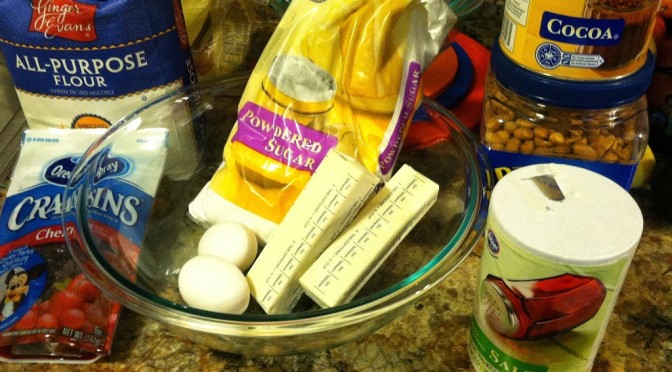
  • 1 cup powder sugar (+ extra)
  • 2 sticks of butter, melted
  • 2 egg yolks
  • 1 cup nuts
  • 1/2 cup dried cranberries
  • 1 tbsp cocoa powder
  • 1 tbsp vanilla
  • 2 cups flour
  • 1 tsp salt

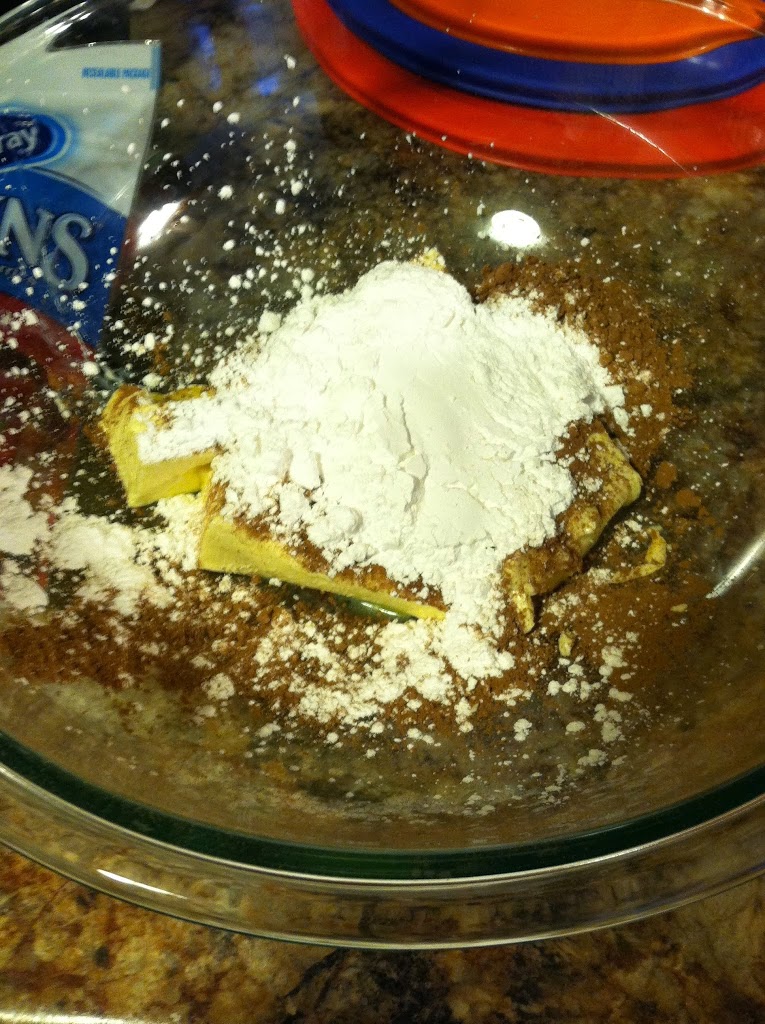
Step 1: In a large bowl, beat the powder sugar, butter, and cocoa powder until smooth and creamy.

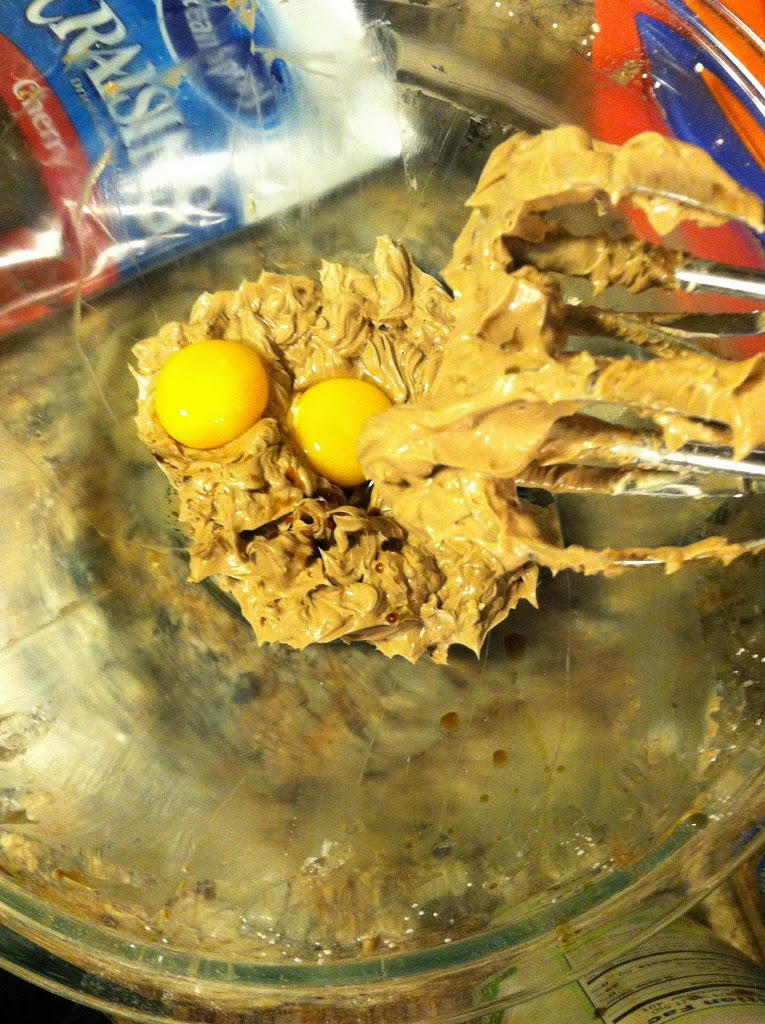
Step 2: Use a spatula to scrape down the sides. Add the egg yolks and 1 tbsp vanilla and mix again. I saved the whites for the next day’s breakfast.
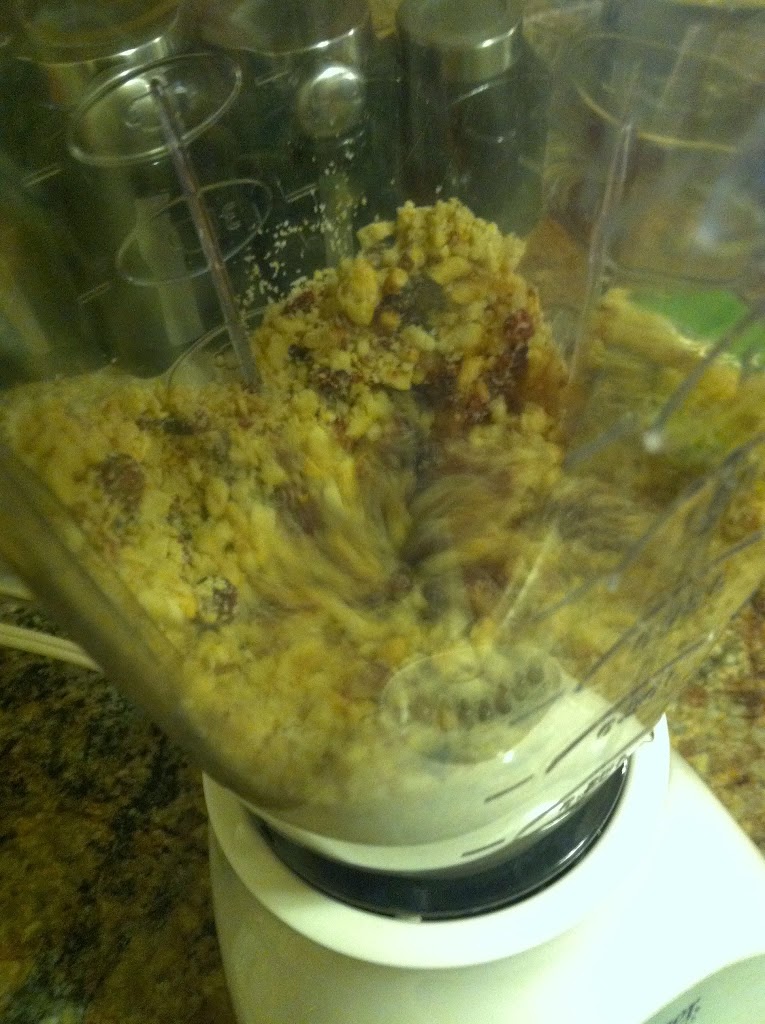
Step 3: In a blender, combine the nuts and cranberry and pulse until you get a paste-like mixture. You can use whatever kinds of nut you like, I had cashews and almonds.

Step 4: Mix the nut/berry and flour into the chocolate/ sugar/ butter mixture. The dough will be sticky and very thick. Refrigerate for 30-60 minutes.

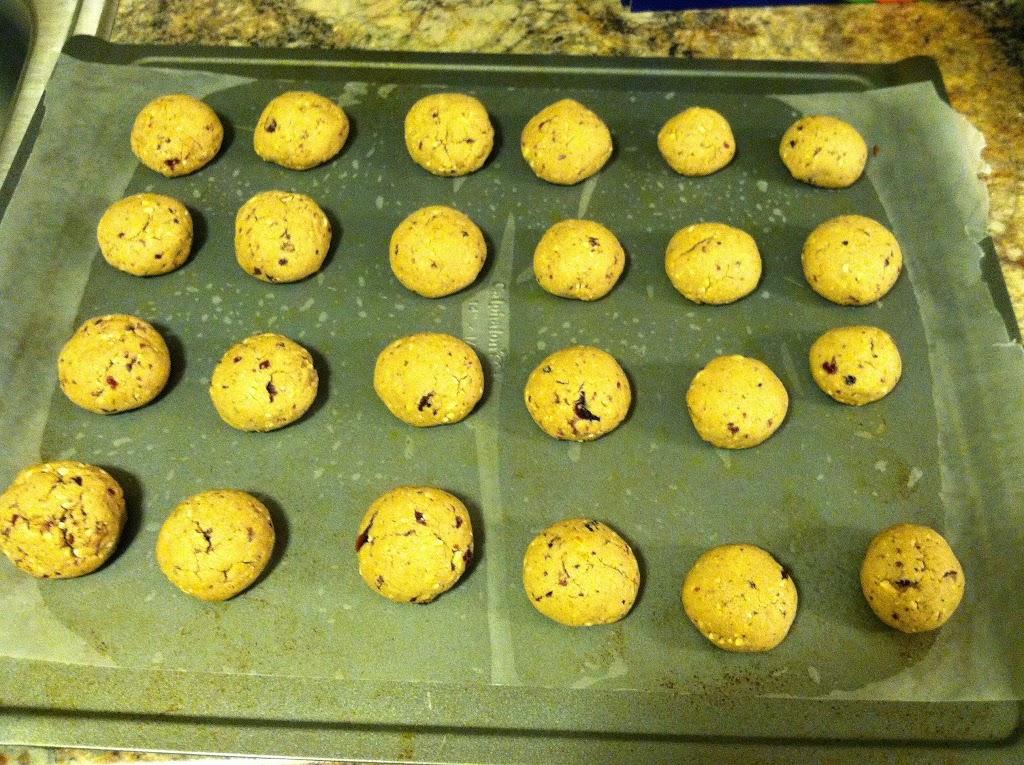
Step 5: Drop by teaspoons onto a cookie sheet lined with wax paper. Bake at 350 for about 40 minutes, or until solid.  

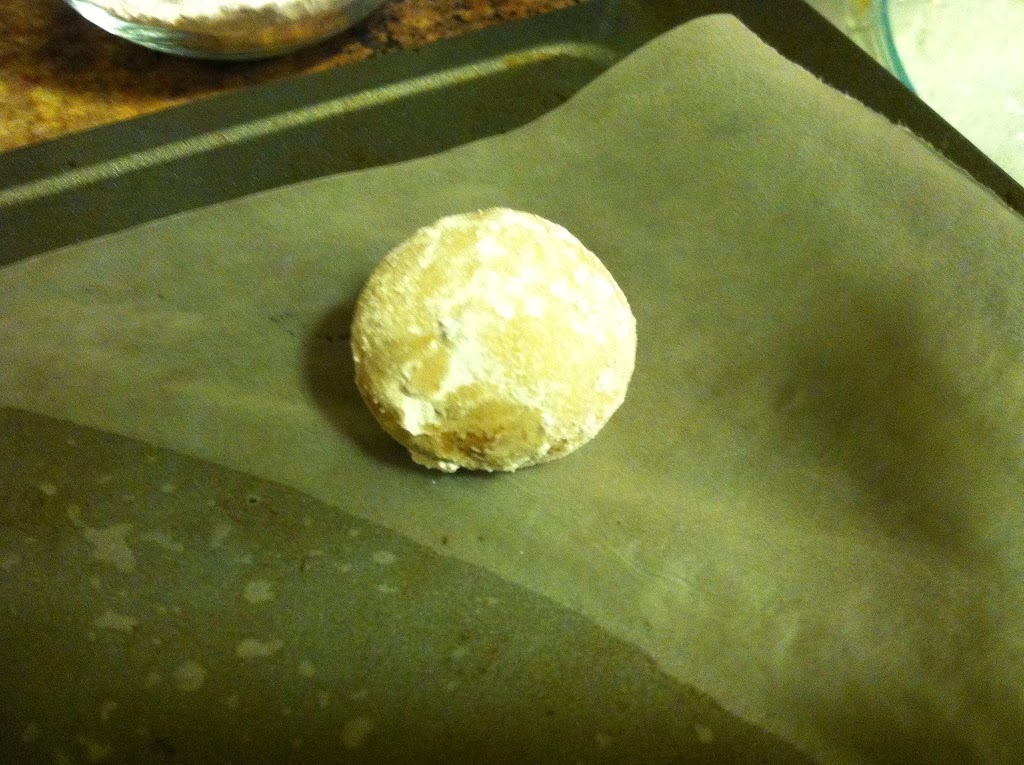
Step 6: Let cool completely, then roll in powdered sugar.


These light little sugar balls are mostly solid but a little crumbly. The cranberry’s tartness is enhanced by the nuttiness, subtle cocoa flavor, and sweet, smooth powdered sugar.

They are the perfect size to pop in your mouth, try to keep track of how many handfuls you’ve had!


Do you have any favorite cookie recipes to share?

Easy Christmas Cookie Recipes


COOOOOOOKIES!!!

‘Tis the season to bake cookies, fa-la-la-la-la, la-la-la-la. Then we eat them by the dozen, fa-la-la-la-la, la-la-la-la.

As December marches by and we scramble for last-minute gift ideas, deck the halls, and trim the tree, we also spend more time in the kitchen whipping up seasonal sweets and indulging in others at the office, family parties and get-togethers.

Some are ambitious and organized and already have seven dozen of seven different kinds stocked away in the freezer. Others whip out the plastic at the bakery to save themselves time and hassle. 

This tree gave its life to make our living room look awesome last year.

But if there’s anything my family rocks at, it is Christmas baked goods! I was raised in a sugar-filled, flour-covered kitchen during the holidays and would have it no other way. We have plenty of unique cookies due to our Hunkie heritage (is that a real word? It means Slovak/Polish/Hungarian) like the finger-scalding Lily my aunt and brother sacrifice layers of skin for each year, the much-fought-over Clothespins using actual wooden clothespins which have the spring air of yesteryear soaked up inside them, the hours-long, love-filled process in which you can NEVER have too much apricot filling that creates epic Kolachi rolls,  and my personal favorite sugar-filled and sugar-coated diabetes-inducing dream, the simple, buttery, Cracker Cookie.

Christmas dessert spread, awwyeah.

I personally have assisted in the making of each of these treats in years past as well as several others, and as I’m sure you know there is quite a variety of difficulty levels in cookie-baking. But let me assure you that no matter how pressed for time, nor how tiny your kitchen, you can create some Santa-worthy treats in no time.

Pre-mixed dough

Your first option is of course the pre-mixed dough you cut and stick in the oven. I am definitely not going to scoff at that, most are darn tasty, plus you can save some in the fridge to just nibble on. Chocolate chip is of course a favorite, but sugar and other types have a strong presence too. They have rolls of it, blocks, whole tubs if you have an appetite or lots of guests. You can get creative with cut-outs and shapes, add your own mix-ins like coconut, mint, or toffee, or just go old-school.

Brickles and Brittles

Brickles and brittles are typically any liquid syrupy mixture poured over a solid base. The syrup hardens, and you then break it apart into chunks. There are many variations, and most are quite simple and quick. Here are three favorites:

Saltine cracker simple brickle
This disappears faster at our house than the paper wrapping off of gifts. It is overwhelmingly rich and sugary. You might want to make two batches…

Ingredients:
1 box of saltine crackers
1 cup sugar
1/2 pound butter
1 tsp vanilla
3 cups chocolate chips

1. Line a pan with heavy-duty foil and preheat oven to 350. Lay out the saltines in a single layer.
2. Melt the butter and sugar in a pan, stirring constantly. Once smooth and bubbling, remove from heat and stir in vanilla, quickly pour over the layer of crackers. 
3. Bake for 7 minutes, the sugar and butter will melt and bake into the crackers. Spread the chocolate chips evenly over the hot butter with a spatula and it will melt. Bake another 2 minutes, then let cool. Place in the freezer overnight, then break into pieces. Store refrigerated or frozen.

Peppermint Bark
For those who like white chocolate and enjoy the minty symbol of the season, the peppermint, this is a perfect present. With only five ingredients and two steps, you can have a batch of this made in about two hours. Just in time for guests to arrive, or to wrap up some in pretty packages for a party hostess gift.


Ingredients:
2 tbsp oil, divided
8 oz semisweet or dark chocolate
1/2 tsp peppermint extract
8 oz white chocolate, divided
25 crushed peppermint candies or 10 canes

1.  Grease a 9×9 pan and line with wax paper. In a double boiler melt the dark chocolate and 1 tbsp oil until smooth. When completely liquid, add 1/4 tsp peppermint extract and pour evenly into the covered pan. Spread half the peppermint over the chocolate and refrigerate until hard. 
2. In a double boiler melt the white chocolate and other tbsp oil. When smooth, add the other 1/4 tsp peppermint extract. Pour over the dark chocolate layer, and add the rest of the peppermint and press in. Refrigerate until fully hardened, and break into small pieces.


Peanut Brittle
This one is a bit more time intensive, but still simple. It is also a great frugal gift, everyone loves homemade candy. Be sure to have all the ingredients ready and measured out, you have no time to waste once begun. From BettyCrocker recipes.

Ingredients:
1 1/2 cup sugar
1 cup corn syrup
1 cup water
3 tbsp butter
1 pound unroasted peanuts
1 1/2 tsp baking soda
1 tsp water
1 tsp vanilla

1. Mix 1 tsp water, 1 tsp vanilla, and 1 1/2 tsp baking soda and set aside. Heat oven to 200 and keep two cookies sheets warm inside the oven. 
2. Mix sugar, water and corn syrup in a pan. Stir over medium heat until 240 or a small amount dropped into cold water forms a ball. 
3. Stir in butter and peanuts, cook further until 300 degrees or a small amount dropped into cold water forms brittle threads. 
4. Remove from heat, and quickly stir in baking soda mixture. Pour half mixture onto each heated cookie sheet, and let cool completely. Break into pieces and store in air-tight container.

My favorite no-bake recipe:

This chocolate peanut butter no-bake cookies recipe from AllRecipes is one of my favorites.

Ingredients:
1 3/4 cup sugar
1/2 cup milk
1/2 cup butter
4 tbsp cocoa powder
1/2 cup peanut butter
3 cups quick-cook oats
1 tsp vanilla

1. Combine sugar, milk, butter and cocoa in a pot and bring to a boil for 1 1/2 minutes. The recipe cautions against boiling too long, or not long enough.
2. Remove from heat, stir in the peanut butter, oats and vanilla. Drop by teaspoonfuls onto wax paper and let cool.

Simple chocolate chip cookies

Chocolate chip, the classic all-American cookie. Amazing any time of the year, they are a crucial part of any holiday dessert spread. You can use semi-sweet, sweet- or dark chocolate chips, or get real crazy and use butterscotch, white chocolate, or a mixture. This quick recipe from Cookie-Smart makes about 2 dozen.

Ingredients:
2 cups flour
3/4 cup brown sugar
3/4 cup sugar
1 cup chips
1 tsp salt
1 tsp baking soda
1 egg
1/2 cup butter
1 tsp vanilla

1. Preheat the oven to 375. Mix the flour, sugars, chips, salt and baking soda in one bowl. In a separate bowl, mix the egg, melted butter and vanilla.
2. Mix both bowls together well, use your hands if you don’t mind. Dough should be slightly sticky yet firm. 
3. Drop by rounded tablespoons onto a greased cookie sheet or wax paper. Bake at 375 for 8-9 minutes until golden brown.

Simple sugar cookies  

Endlessly versatile, sugar cookie dough can have any number of mix-ins added to it. But it is also a classic on its own. Adapting to cookie cutters as though made for each other, sugar cookies can become blank canvases for snowmen, Santas, wreaths, and tree creations. This recipe from RealSimple is real simple.

Ingredients:
2 1/2 cups flour plus extra
1/4 tsp baking soda
1/4 tsp salt
1 cup butter
3/4 cup sugar
1 egg
1 tsp vanilla

1. In a bowl, mix the flour, baking soda, and salt. In another bowl, beat the butter and sugar until smooth, then whisk in the egg. 
2. If you have a stand mixer, lucky you! Use that and slowly add in flour while mixing. Otherwise, loosen up those biceps and slowly mix the flour into the sugar/egg/butter mixture. Dough should be stiff. Refrigerate about an hour before rolling out to 1/4 inch thick and cutting into shapes.
3. Bake at 350 for 12-15 minutes, until beginning to brown. Let cool and decorate.

Turn round sugar cookies into snowmen with big marshmallows and creative decorating!

What about vegetarian/vegan goodies?


In case you are vegetarian/vegan or someone in your family is, there is this vegan, gluten-free version from TwoPeasAndTheirPod. By using almond milk and coconut oil it eliminates the butter and dairy products. I think shredded coconut comes from the devil, but if that’s your thing then enjoy!

The website OhSheGlows also has oodles of vegan, raw, lowfat, gluten-free, etc recipes so check it out!


Do you have any simple to make holiday treats you wait all year long to indulge in?

Vegan acorn squash & potato gnocchi

Acorn squash is a cheap, healthful, tasty, nutrient-packed way to get your fiber. It stores for pretty much forever on a shelf or in a cellar. The most common variety is deep green with an occasional orange spot on one side, though yellow, white, and variegated varieties have been bred. According to Wikipedia, though it is considered a winter squash it is in the same family of summer squash which includes zucchini and yellow squash. 

According to SELFNutritionData, one 4 inch squash has only 172 calories, a mere 4 of those are from fat. Zero cholesterol, and nearly no sodium as well. A single squash has a quarter of your daily recommended fiber, 30 percent of vitamin A, and nearly 80 percent of vitamin C. And as if that weren’t enough, it is mildly anti-inflammatory, gluten-free, and extremely low glycemic index. If I haven’t yet convinced you of what a super food acorn squash is, check out more Healthy Facts About Acorn Squash from the Healthy Eating website.

I had picked several squash a few months back at a local farm where for $30 you get to keep anything you can fit in a little red wagon. With some creative pyramid skills, I and some friends split quite a haul. I still had three acorns left, so I was trying to come up with something to do with it besides oven roasted with butter and brown sugar. Not that I don’t love it like that, I do, but I’d had that twice already in the past month. My mom suggested a recipe out of the blue for acorn squash gnocchi. As a good Slovak/Polish girl, I had grown up loving all types of pasta, gnocchi especially. The chewy, thick texture is completely unique.

She didn’t remember where the recipe came from so rather than try to remember it all, she told me to just Google it. My favorite current verb, “to Google”. I wish I could invent something so widely famous that the name becomes a verb. Anywho… The most intriguing recipe I found came from the blog the Girl in the Little Red Kitchen. This is someone who thinks like me, working in a very tiny place, using what she’s learned and instinct and creativity to come up with new and inventive recipes. Based mostly on that but with my own spin (mostly since I’m out of eggs currently), I present to you my Vegan Acorn Squash and Potato Gnocchi recipe.

Vegan Acorn Squash and Potato Gnocchi 

Ingredients:
1 acorn squash
3 medium potatoes
1 1/2 cup flour (plus extra)
2 tbsp water
1 tbsp oil
2 tbsp baking powder
1 tbsp salt

Sauce:
1 jar pasta sauce
1 can chickpeas
2 carrots
1/2 bunch celery


1. Cut the acorn squash in half and scoop out the seeds. If you like, you can rinse the seeds and save them for roasting at 350 for 15 minutes as a light snack.

2. Put the squash in the microwave cut side up with some water in the hole, microwave 5 minutes. Pour out the water, place cut side down and microwave another 5 minutes, then another 5 minutes for 15 minutes total. Squash should be soft when poked with a fork. Remove and set aside to cool.

3. Rinse three potatoes and stick on all sides with a fork. Microwave in 3 minute bursts for a total of 9 minutes.

4. Peel the squash and mash the insides in a large bowl. The peel should slip right off using your fingers, you can use a fork to help lift the squash out.

5. Peel the potatoes as well. If you grab it in both hands and twist, the peel should slide off easily if fully cooked. Mash them into the squash. Get a large pot of salted water to boiling.

6. In a small bowl, mix 2 tbsp water, 2 tbsp baking powder and 1 tbsp oil. This replaces one egg, so you can use one egg instead. But this is what makes the dough vegan. It should bubble a bit. Add to the squash/potato mixture, as well as the flour (which, if you’re gluten intolerant, you should use gluten-free flour), and mix well. Your hands work best, dough will be slightly sticky.

7. Flour your work surface and take a handful of dough. Roll it with your hands into a 1-2 inch thick log.

8. Cut the log into small, 1 inch cubes. You can try to shape them with a fork but I just tossed them in the pot like so.

9. Boil the pasta for 3-5 minutes. They should begin floating to the top of the water when fully cooked. Boil in batches. Don’t leave them in longer than about ten minutes or they will become mush. Remove to a strainer to let drain. Meanwhile you can start the sauce.

10. Open the chickpeas and drain. Add to blender along with the pasta sauce and puree until completely liquid, adding some water to thin if needed. If you have a juicer, juice the carrots and celery to add. If not you can simply omit them, or boil them for 20 minutes then add to the blender. I also added in a dash of Italian seasonings.

The gnocchi are chewy and salty, just how I like it. This pasta dough could probably be used to create any kind of pasta, with varying degrees of success. I ended up adding quite a bit more flour to help it stay together and be less sticky. It still ended up a little slimier than I would like, but I will try again.

My boyfriend is a hard-core carnivore, so I added some ground beef to the sauce. I didn’t tell him what it was before he tried it (bless his heart he will try anything once if I made it), and he said he actually liked it and would eat it again! Trust me, that’s a stellar review! These have all the taste and texture of traditional gnocchi with an added dose of fiber and vitamins. Why not?

Nutrition Information

For the gnocchi alone, SparkRecipes nutrition info:

  • Servings Per Recipe: 4
  • Amount Per Serving
  • Calories: 345.1
  • Total Fat: 2.9 g
  • Cholesterol: 0.0 mg
  • Sodium: 2,017.5 mg
  • Total Carbs: 72.8 g
  • Dietary Fiber: 6.7 g
  • Protein: 8.4 g


For the pasta sauce (minus ground beef), SparkPeople nutrition info:

  • Servings Per Recipe: 8
  • Amount Per Serving
  • Calories: 90.5
  • Total Fat: 0.6 g
  • Cholesterol: 0.0 mg
  • Sodium: 357.0 mg
  • Total Carbs: 18.3 g
  • Dietary Fiber: 3.9 g
  • Protein: 3.5 g


Therefore a 1-cup serving of pasta with 1 cup of sauce is only 435 calories and yet 10.6 grams of fiber and nearly 12 grams of protein!


Do you have a favorite way to cook squash?

Chai Apple & Brown Sugar Oatmeal

What is this, a post on Thursday?!? Why yes, turns out I’m just brimming with ideas and recipes lately, so I decided to add in Thursdays to my weekly Sunday/Tuesday posts. This way you get 33% more flavor and information! I’ll keep this up as long as I can y’all.

Warm oatmeal is one of my favorite comfort foods for a cold winter’s day breakfast. You can buy the store packaged versions, or make your own at home for much cheaper. All you need is some oats and whatever you like in your hot cereal. Chai Apple & Brown Sugar is my favorite combo. But try dried apricots and orange juice, or banana and blueberry. Sky’s the limit!

Ingredients:
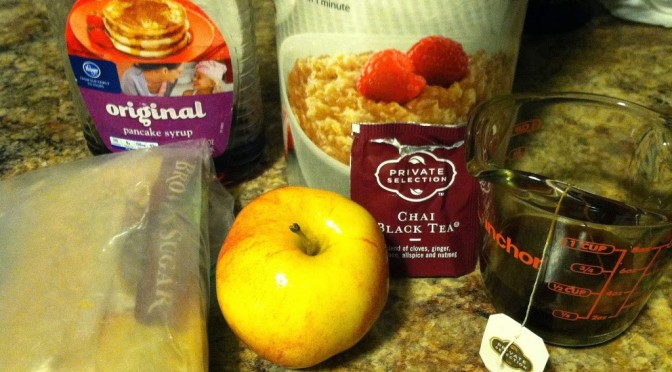
1 cup quick-cook oats
1/2 medium apple
1/4 cup chai tea concentrate (instructions below)
2 tbsp brown sugar
2 tbsp maple syrup
1 cup hot water or milk

Step 1: Place a chai tea bag into 1/2 cup water. Microwave for 5 minutes or boil on a stove, this will cause some evaporation and the chai tea flavor to concentrate. Chai tea has cinnamon, cloves, nutmeg and allspice in it which will add to the delicious taste and smell of the oatmeal! 

Step 2: Dice up the apple. In a bowl, mix the oats, tea, water or milk, sugar and apple pieces. Microwave for about 2 minutes. The apple will become soft, the oats cook, and all the flavors mix.

Step 3: Mix well and pour on a drizzle of syrup.
This warm, sweet, hearty breakfast will satisfy your taste buds and fill you up to keep you going until lunch.


What’s your favorite type of oatmeal?


What to Do With Vegetable Scraps

With one big cooking holiday down (Thanksgiving) and another mammoth of a food-waster coming up quick (Christmas!) most households probably have a lot of food and vegetable waste.

What should you do with leftover vegetable scraps?

You know, the butt of carrots, potato peels, mushy tomatoes. If you throw it into the trash can and send it down to the curb, it’s out of your house, but then what?

Channel4 in the UK wrote an article about visiting a landfill, a common feature of pretty much every country in the world by now. It’s something we don’t think about too much in our hectic, fast-paced, self-centered world these days. 

According to an article by the Huffington Post, Americans throw away nearly half the food we buy each year.

This is a waste of good food, a waste of hard earned money, and a waste of valuable and diminishing space on this planet.

But if something in the back of your mind nags you every time you replace the trash bag, then this is one small step in the right direction for you.

We can all try to reduce the amount of food we buy at one time, plan properly to use the food we do buy each week, eat leftovers and creatively use leftover food, and find uses for even the most seemingly unusable scraps.

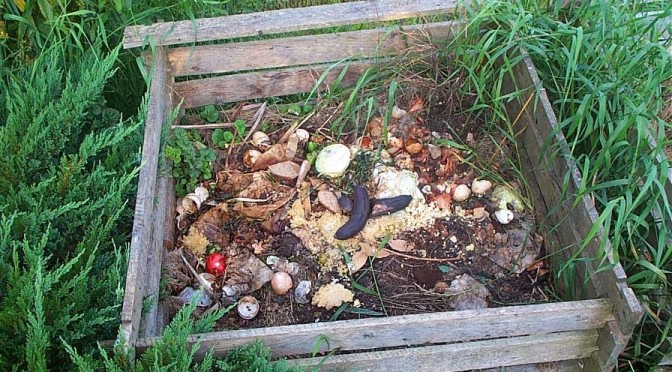
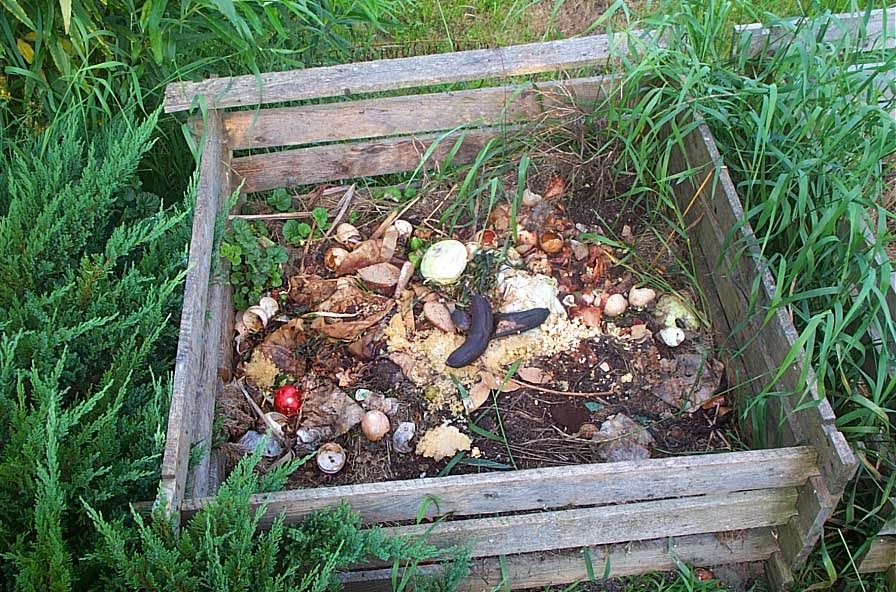
1. Compost
If you’re lucky enough to have a yard, then there isn’t much excuse to not have a compost pile.

Even if you ‘don’t have time’ or ‘don’t have space’ or ‘don’t have energy’ to have a garden, composting just makes sense, and you can spread it around trees or in flower beds or even give it away on Craigslist once made.

If done right it doesn’t smell bad, and merely requires occasional turning to aerate. There are certain things that are great for compose and others not so much. NEVER put meat or animal bones or fat into compost because they will attract wild animals and cause unwanted reactions.

For more information about how to build a proper pile see here.

Photo from I Dream of Eden.

2. Muffins
This of course depends on the type of food scraps you have.

Carrot peels or leftover sweet potato can become carrot cake muffins, or be added to homemade coleslaw. If you have veggie pulp because of using a juicer, you can substitute that for part of the wet ingredients in a muffin mix.

Pay attention to what was in the pulp you juiced though. I think cucumber/grapefruit/kale muffins might be a little weird.

But who knows.


3. Vegetable stock
This is by far my favorite option, since I live in an apartment and don’t have composting access yet.

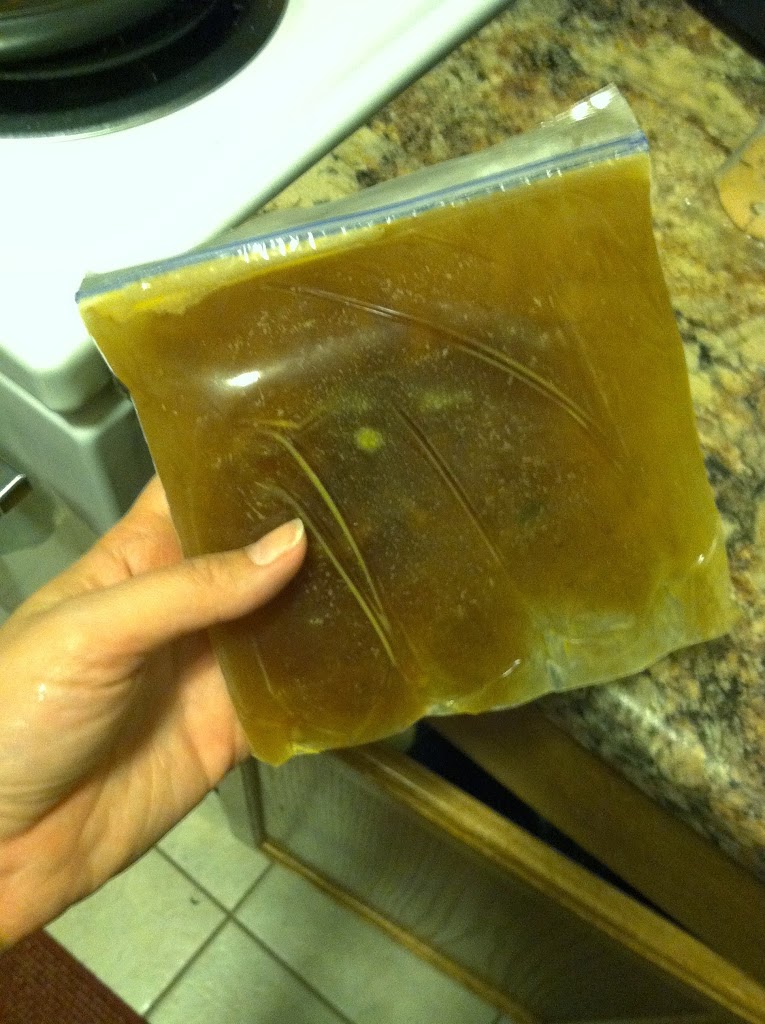
What I do is store all the scraps in a bag in the freezer as I make recipes. Potato peels, slightly brown pieces, ends of veggies, etc.

Once I have a full bag I put it in the Crock Pot and cover it with water, adding any other herbs and spices that sound good. Then just leave it on low overnight or all day, usually at least 8 hours.

The nutrients and flavors will boil out of the veggies and create a beautiful, healthy, salt-free stock you can then use in future recipes. The best part? It’s totally free!

Just freeze the stock in plastic bags laid flat in the freezer, or in ice cube trays to make little cubes.

You can then pop these into soups, stews, flavor rice, or in whatever you normally use stock. This same theory works for meat as well.

If you’ve made a lovely roast chicken and have the carcass left over, toss it in the slow cooker with some water for several hours. If you have shrimp tails, a bone-in pork roast, corn cobs, or some T-bones, do the same for some flavorful bases to use in the future.


If you know of a way to use leftover scraps not mentioned here, please share with us!


Avoiding Holiday Overeating

You’ve made it through Thanksgiving with a few pounds of meat, stuffing, potatoes, beans, cranberry and pie stuffed into your stomach. If you still made it under your daily expected calorie allowance, great job! We’re all proud of you.

If you didn’t, welcome to 90% of America. But don’t despair. Even if you had that extra slice (or three) of pecan pie, you still have time to make up for it before we ring in 2014. 

But how can I avoid overeating? you may ask, since Christmas is just around the corner, and everywhere I go tempting cookies, cakes, candies and buffets will be shoved in my face 24/7?

Never fear, dear readers, I have scoured the internets and personal experiences to come up with ways you can avoid the “December 15” (like the Freshman 15, except it accumulates every year and intramural soccer plus late teen metabolism no longer gets rid of it over spring break).


15 Tips to Avoid Overeating During the Holidays

 1. Have a plan
The best way to avoid any food traps is to have a plan of attack. Where are you going: an office party, a family reunion, a friend’s big bash? If you’ve been to a similar event, you’ll have an idea of what types and portions of food will be served.

Decide ahead of time how much and on what you expect to indulge, put that amount on your plate, and then avoid the food tables for the rest of the night.

2. Plan exercise
Part of a successful holiday weight maintenance plan is to follow your exercise routine, or start a new one. If you normally run three days a week, put it in your calendar in pen, and keep that appointment with yourself.

Even though holidays are crazy busy and all about spending time with family and friends, don’t forget that YOU time is important too. You can also make a more conscious effort to be more active in general. Go up and down the stairs for each ingredient you need, do squats while you mix dough, play with the pups or kids in the snow (or leaves, whatever your weather) and take an after-dinner stroll each day.

3. Bring your own snacks or meals
If you are going to a potluck, great! Whip up a healthy casserole or slow cooker dish you know won’t damage your waistline if you have seconds. You may even introduce someone else to a new favorite.

Stuff a small bag of nuts, cut veggies or fruit, or granola bars in your purse or coat pocket. That way you can tame cravings if hunger strikes without washing down bacon-wrapped-ham and double cheddar mashed potatoes with a gallon of egg nog.

4. Don’t skip meals
Remember that trying not to gain weight is NOT an excuse to skip meals. This actually slows your metabolism because you’re essentially telling your body that food is scarce now, to which it responds by holding onto every morsel you do eat in the form of fat. Be smart about what you eat, but please do continue to eat. Especially breakfast.

5. Be realistic 
It isn’t always possible to bring baby carrots and have a salad only while those around you nom on piles of holiday treats. Sometimes you have to judge the options and simply choose the best of what’s available. Holidays are busy, so there will also be days where you just can’t cook a healthy meal for yourself or don’t want to bother thinking about it. Just keep an eye on portion sizes and moderation is always key.

6. Allow occasional indulgence
As above, this is also important in “real” life. No one is perfect, we all have that holiday treat or two we wait all year for. Whether it’s Aunt Mary’s peanut brittle, grandma’s perfect pecan pie, or your family recipe for the perfect cookie, make sure to build some indulgences into your holiday eating plan. This helps keep you on track the rest of the time. 

7. Know your limits & when to say no
If there is a treat that you just cannot help yourself around, be mindful of that and remove the temptation. If you know you will eat every gingersnap in sight, don’t bake or buy nine dozen and leave them out on the table.

Also don’t accept and eat food just to be polite or out of a feeling of obligation. Learn how to say no politely, or say thank you and then move the treat along to someone else who will enjoy it.

8. Browse and graze
Before you hit a holiday buffet guns blazing and head back to your table with five plates full to the brim, take a lap. See what is there and prioritize the foods by what you like and don’t get to eat as often, then focus on those dishes.

Had green bean casserole seven times in the past week? Don’t waste space on your plate and in your stomach. Don’t really like stuffing, but feel it’s necessary? Forget about it.

On a similar note, you don’t have only one chance to eat each day. Pick a few tiny samples of things that look good and try them. Then stop. You can always go back for more or to try different things.

9. Focus on experiences, not the food
Rather than giving in to the holiday food-frenzy, make the season about the experiences. Take a walk in the wintry air, pick out a tree, share holiday stories with friends, or drive around to look at light displays.

Anything to take the focus off the sugar rush all around and create memories that will live in your mind and not in your abdomen.

10. Drink lots of water
This is just a solid tip every day of the year. Water is fantastic for your skin, hair, digestion, immunity, and more. It also helps you stay satisfied; a lot of the time we mistake hunger for thirst without realizing it.

Drink a big glass with lemon when you wake up, sip on some hot tea by the fire, have a glass o’ H2O between each alcoholic beverage, or challenge your cousin to a chugging contest. Do whatever it takes to get your daily 8 glass minimum.

11. Fill up on fruits and veggies
If there are any fresh, raw options, those are always your best bet. Allow some heavier foods too, but fill the majority of your plate with salad, cut veggies, and raw fruit. If you fill up on three cups of veggies, you’re still probably only 300 calories into your day!

12. Skip dips, dressings, and gravy
Some of the worst health offenders are well-known. Gravy, ranch dressings, fruit or veggie dips, anything cream or oil based. If you must have gravy on your potatoes, just go easy. They will taste fine with 1/4 cup versus 1 1/2 cups.

13. Observe yourself
Pay attention to trigger foods or situations. Don’t allow yourself to hang around near the food tables. Don’t eat if you aren’t hungry, just because the leftovers are there. Distract yourself by chatting with family you only see once a year, or making a new office friend.

14. Limit alcohol
Alcohol is a two-fold danger. For one, it has fairly high amounts of calories alone, and if you’re the type to enjoy fruity mixed beverages rather than the straight stuff the calorie count can become absurd quickly.

A 100 calorie shot or a 900 calorie peppermint kahlua with cream are both excess calories that don’t leave you feeling full.

Secondly, alcohol lowers our inhibitions. Who hasn’t gotten the “drunchies” after a night of partying hard, only to regret the next morning the 5000 calories’ worth of tacos we ate at 3am?

As above, drink a glass of water between each beverage, choose wine or hard liquor in small quantities, and behave yourself. Mostly.

15. Analyze your reasons
There are so many varied reasons for over-eating, what is it that prompts you to pick up that fork again? Are you hurt by family pokes about your current weight? Does being home make you feel like a kid again and you’re seeking comfort?

Do you feel left out if you don’t stuff yourself? Are you afraid that you’ll never have access to this particular kind of cookie again so you must eat two dozen tonight? Ask yourself why, be honest with the answers, and then be rational in how to deal with the issues.

Don’t forget: Forgive yourself for slip-ups
We are all human. That’s a fact of life. We all have goals and ideals, but we all will sometimes mess up.

And that is OK. Really.

If you just ate three days’ worth of food in one sitting before you even realized it, just acknowledge it happened, think about why, and resolve to not let it happen again. And probably seek some pink liquid help for the severe stomachache you now have.

For more great articles on holiday overeating and how to avoid it:

California Pacific Medical Center
GroupHealth
AmIhungry.com
Prevention Magazine
Huffington Post


How do you say “no” to seconds of the holiday ham or cookies that are calling your name?

Thanksgiving is for thanks-giving


In my previous post about Thanksgiving on a budget, I laid out the history of the North American Thanksgiving holiday. While it’s taken quite a while to get to this point, the more recent incarnation of this holiday has been centered around giving thanks for what we have. Or at least it should be. As with most holidays in the US, the big companies try to take over and commercialize the living daylights out of everything.

Now we can buy decorations, tablecloths, dinnerware, and all manner of turkey-themed knicknacks. The President of the United States even gets to issue a T-day proclamation and “pardon” a turkey, which ensures that particularly lucky bird will spend the rest of its life roaming freely and not trussed, stuffed, and roasted on a dinner table. Though there has been some suspicion involved in that whole process. The Huffington Post wrote a story last year about the fates of previously pardoned turkeys. Mental Floss also wrote a thorough post on the whole history of Presidential poultry pardoning.

There are also plenty of companies out there offering to cook part or all of your holiday meal. While that may be a good option if you’re hosting a huge amount of people and would rather spend time with them than spend thirty straight hours in a kitchen, that is not the case for most people.

And honestly, this holiday should be about spending time with your loved ones. They won’t care if you don’t have a perfect spiral, smoked, honey baked ham, if the turkey skin isn’t just-right crispy, if the stuffing is a little dry (that’s what gravy is for). We tend to put so much stress and importance on the perfect meal that we forget the purpose of having it: to be thankful. To count our blessings. To spend time with people we care about and share a meal together.

There have been tons of psychological experiments on the psychological and physical benefits of an “Attitude of Gratitude” with more being published all the time. People who practice gratitude consistently report stronger immune systems, more joy, optimism, and less feelings of loneliness. The Huffington Post wrote a great article on 10 Reasons Why Being Thankful Is Good For You. The reasons include better sleep, better grades, better relationships, improved heart health, and boosted immunity.

Gratitude has been purported to help in many chronic health diseases like depression, CFIDS and Fibromyalgia. The CFIDS & Fibromyalgia website has an article summarizing a well-know gratitude book “Thanks!: How the New Science of Gratitude Can Make You Happier” by Robert Emmons. The NYTimes also wrote a nice article about the main points in Emmons’ book.
 
The CFIDS & Fibromyalgia website also included a 5-point list of things you can do in your life to increase gratitude right now. To sum it up:

5 Things You Can Do To Increase Gratefulness Now

1. Keep a daily gratitude journal. Write down 3-5 things every day you are thankful for. You only need a sentence, and it could be as simple as the sunrise to a hug from a friend to a raise. 

2. Use a visual reminder. People are forgetful little things, out of sight out of mind. Write yourself post-its of all the good things and people in your life. Set an alarm to go off at different intervals to remind you to take a thank-you break.

3. Have a gratitude partner. Any habit is easier to maintain if you have accountability. Plus gr-attitudes are contagious. Make a point to cultivate relationships with other thankful people. One of your daily gratitudes can then be your thankfulness partner.

4. Make a public commitment. This goes along with #3 but is directly related to achievable goals and should be made more public, like a weekly thankful Facebook status, family, or join a support group.

5. Change your self-talk. Also known as an inner monologue, this is the voice running constantly in the back of your mind. Most people have lower mood when that voice is negative, “you’re not good enough”, “you’ll never lost that weight”, “that raise isn’t gonna happen”, etc. With conscious practice, you can rewrite the script to be more kind to yourself and the other people in your life. 

This list is at my desk in lab, where I see it every day.


The University of California, Berkeley is launching a 3-year long, $6.5 million initiative: Expanding the Science and Practice of Gratitude. This project aims to increase scientific knowledge of the process and benefits of gratefulness as well as to educate the general public on current knowledge and future findings. They will be exploring everything from the neuroscience of gratitude to gratefulness in romantic relationships to how thankfulness may reduce bullying. All good stuff I think. You can find out more about the project here.

So if the stuffing is a little dry, be thankful you have stuffing at all. If the bird is slightly burnt, be thankful the nine hours of roasting killed any harmful bacteria on it. If the family feud begins somewhere between “grace” and “pass the pumpkin pie”, be grateful you have a family to share this day with in the first place. I am so very grateful for my family, my amazing mother and grandmother who taught me how to cook and supported me through burnt popcorn and un-jelled Jello. My dad for teaching me the value of a dollar and good financial practices. My many friends and roommates over the years who suffered through many first attempts at recipes and recipe creations.
.
I am thankful for the ability to get in my working car, drive to a store which is less than twenty minutes away, fill a cart with fresh, tasty foods, and pay for it without worrying about overdrawing my credit. I am thankful that I now have the ability to cook healthy, hearty, delicious meals, and the ability to share that with the internet world. I will be giving many thanks this Thursday, and I hope you will too.
Thank you for reading! Happy Thanksgiving, readers.
More info:
For more information on ways gratitude is good for you, research, and ways to feel more thankful, check out Harvard Health’s article: In Praise of Gratitude, Psychology Today about Giving thanks: The benefits of gratitude, Happier Human’s blog The 31 Benefits of Gratitude You Didn’t Know About, and Berkeley’s video clip on the benefits of gratitude from Robert Emmon’s himself.


Please share: What are you grateful for?


Also if you’re willing, please take this short survey to help me improve this blog for you, the readers.  https://www.surveymonkey.com/s/H6PVBY9 

Thanksgiving Meal Under $20


The time of giving thanks is approaching! Everyone knows the beloved American holiday featuring a rather large, ugly bird. Kids drawn pictures of feathered Native Americans and buckle-hatted Pilgrims gathered around the cornucopia and a turkey drawn from your hand’s outline. 


But like most American holidays the original meaning has become commercialized and veered a bit from the original. The first Thanksgiving meal happened in fall of 1621, sometime between mid-September and mid-November. It was to give thanks for a successful harvest, and the Pilgrims joined the local Wampanoag tribe to eat fowl, fish and deer, and probably local plants like berries, plums and boiled pumpkin. 

After that, it was not immediately a national holiday. That didn’t happen until George Washington proclaimed Thursday, November 26, 1789, a “day of public thanksgiving and prayer” in honor of our new nation and brand new Constitution. Even then the holiday was not a set annual day. During Lincoln’s presidency, when he needed a way to unite the states, he turned to Sarah Josepha Hale, writer of the famous “Mary Had a Little Lamb” rhyme. She thought the holiday would be a way to infuse the nation with hope and belief in itself and the Constitution. Thus Lincoln declared the last Thursday in November a national holiday.

FDR caused a bit of a ruckus when he tried to change the date, causing TWO Thanksgivings in 1939 and 1940. Sounds awesome, two days of paid vacation, stuffing yourself and football right? Not so much, because some states kept the traditional date while others followed the President. Thus it caused some familiar discord as people had different days off, schools had to reschedule tests and vacations, and it sure is lucky airplanes weren’t around yet, because that would have caused a lot of date-change booking fees. Congress finally got around to making it into law that the fourth Thursday of November was the official and forever Thanksgiving Day.

If you’re heading into T-Day with a lot of things to be thankful for, but a large bank balance isn’t one of them, fear not. You can still have a stellar feast, and for less than an Andrew Jackson. 


Now, for the remainder of this post I will make a few assumptions. Don’t be offended if they don’t apply to you. Adjust the advice accordingly.

1. You will be feeding 2-4 people.
2. You want turkey and not a ham.
3. You want the most “traditional” American dishes.
4. You have twenty dollars.
5. You have basic cooking equipment and knowledge.
.

Ok, so for the “traditional” American feast, the most common dishes are:
*The Turkey
*Stuffing
*Mashed Potatoes
*Green Bean Casserole
*Cranberry Sauce
*Pumpkin Pie
.
That’s what we need to make, as inexpensively as possible. If those don’t sound right or aren’t quite what you want, try here for thousands more Thanksgiving day recipes. 
.
*The Turkey (free – $7)
Here we have a few options. You aren’t likely to find a whole bird under $20. There are a few ways around it. Some stores run specials leading up to T-day such that you purchase a certain amount of groceries and get a free bird. If you had planned spending $100 in groceries into your budget anyways, pick up that free bird! If not, you still have choices. One option is to purchase only turkey drumsticks rather than the whole bird. I just saw these at a store, four drums for $5-7. Your other option is to purchase mini hens/ducks or a whole chicken. If the people you’re cooking for won’t care what type of fowl they eat, this can get you a bird for $4-7 as well.

*Stuffing ($1 – $3)
If you’re good with boxed types, keep an eye on sales. These can be picked up for $1 or less per box, and you’ll probably need at least two. If you want to make your own, you’ll need a loaf of stale bread, 2 cups stock, seasoning, and 1 cup diced & sauteed celery/carrot/onion. all together the ingredients shouldn’t cost more than $3. Mix it all and bake at 350 inside the bird or in a casserole dish for 30-40 minutes.

*Mashed Potatoes ($1 – $3)
Again, if you don’t mind the boxed stuff, I’ve seen this at the dollar store as well as on sale for $1 or less. To make your own, peel and dice about a pound of potatoes per person. Boil the potatoes in salted water until soft, about 10 minutes. Drain and put back into the pot. Mash or use a hand blender. Add in garlic salt, butter, sour cream, and/or milk to your desired taste and consistency.

*Green Bean Casserole ($2)
A good old stand by favorite, this is nothing more than a can of cut green beans mixed with a can of cream of mushroom sauce. If you’ve been good about sales you should be able to get at least two cans of each for less than $2. You can also be fancy and use a pound or two of fresh green beans, cleaned and boiled. The fanciest is to add some french friend onions or crushed potato chips on top.

*Cranberry Sauce ($1 – $2)
Buy a can of this jello like fruity goop for $1 or less, it will probably not all be eaten. Or you can get yourself a bag of fresh cranberries on sale. Mix 1 cup water, 1 cup sugar and the cranberries in a sauce pot. Bring to a boil, then simmer for about ten minutes, or until cranberries burst. At this point you can add anything you like, such as cinnamon or nutmeg, chopped almonds or pecans, orange zest or blueberries or raisins. Cool and then put in the refrigerator until served.
.
*Pumpkin Pie ($1 – $3)
If you get lucky and find a frozen or fresh pie on sale you like, go for it. However if you want the homemade touch, take 1 can pumpkin puree, 1 can sweetened condensed milk, 2 eggs, and pumpkin pie spice (or combination cinnamon, nutmeg and allspice) and a pie crust. Mix all ingredients and pour into the crust. Bake at 425 for 15 minutes, then reduce heat to 350 and bake another 30-45 minutes, until set.
.
Total: $6 – $20
.
So you see you can indeed enjoy an all-American thankful feast for under $20. Also of note, there are lots of things that go on deep sale during the holidays that you use other times of the year. If you’re an avid baker and find a 4 for $1 sale on condensed milk, snap that up! If celery is .50 per pound, buy a whole bunch and freeze some for soup, or use it at Christmas. Especially if you have a big freezer, when the birds left are taking up space the day after Thanksgiving, head to the grocery store after your Black Friday shopping for steep discounts on fowl, and freeze it for Christmas or any time of the year. Happy bargain-hunting!
.

If you have any budget-friendly holiday tips, please share!
.

Also if you’re willing, please take this short survey to help me improve this blog for you, the readers.  https://www.surveymonkey.com/s/H6PVBY9 

Stuffed Pork Chops

What would Thanksgiving be without stuffing? Incomplete, in my opinion. I had never made stuffing myself before (I know, pause to gasp in shock) and so as per usual, I turned to multitudes of online recipes, compared that to what I had in my kitchen, and then just dove in with both feet. Hands, actually. You’re welcome. To prepare for next week’s big day, I made some stuffing and wrapped it in a slab of pig. Because ‘Murica.

Stuffing is also called ‘dressing’, and rarely ‘forcemeat’ (because who wants to eat bread mush with a name like that?); it is a mixture of carbohydrates and occasionally other meats, sometimes with eggs mixed in. It is usually stuffed inside the body cavity of an animal (hence the name) and baked within it, then served alongside the meat. Records of various stuffing recipes exist as far back as the Roman Empire, which published a kitchen anthology titled Apicius which lists thousands of Roman recipes. An article from Kitchen Project goes more into detail about the history and evolution of stuffing if you’re interested or want to try something different this year. But if you love the old easy standby, Stove Top, don’t feel bad. Introduced in 1972 and now owned by Kraft Foods, they sell nearly 60 million boxes every year around Thanksgiving. That’s a lotta stale bread.

So with that in mind, let’s get to the stuffing of meats! For stuffed pork chops, I made the stuffing, pounded the meat thin, then rolled it around a gob of the bread mush. It tastes way better than I’m making it sound, trust me! This recipe can also easily be doubled, tripled, whatever, depending on how many you’re feeding. It can also be a great way to use up leftover pre-made stuffing in the days after Thanksgiving when you’re tired of just having it with turkey.

Ingredients:
2 pork chops
3 sliced day-old bread, cubed
1 tbsp Italian seasonings
1 tsp dried onion
1 tsp paprika
1 egg
2/3 cup broth 


Step 1: Use fresh pork chops, or thawed if frozen. You’ll need to cover them with plastic wrap, then using a rolling pin or other such heavy, blunt object, pound the meat until it is about 1/4-1/2 inch thick. Ideally your chops will be wide yet long, so they can close around a cups’ worth of stuffing.

Step 2: Chop up the stale bread slices or lightly toasted bread into inch cubes. Put into a medium bowl, and mix in the broth and seasonings. You want the bread wet but not soupy. Finally add the egg to bind and mix it all well. This should make about 1 1/2 – 2 cups. 

Step 3: Divide the stuffing between the two chops, and scoop a handful into the center of one. Roll up both sides so they touch or cross on top and secure with a toothpick or twine.
 

Step 4: Put the stuffed chops in an oven-safe pan and bake at 350 for 45-50 minutes, until pork is totally done, at least 145 degrees. The chops should be nicely golden and tender, the stuffing soft inside and crunchy without. Serve with side dishes of your choice. I made some rice and poured my ‘special’ mushroom gravy over it. (Secret: It’s a can of cream of mushroom soup. For reals.)


If you have a favorite recipe which uses up leftover stuffing after Thanksgiving, please share!

The fusion of food, fun, frugality, and curiosity.